Tag: mahershala-ali

  • ‘Alita: Battle Angel’ is an Unexpected Blast

    ‘Alita: Battle Angel’ is an Unexpected Blast

    Twentieth Century Fox

    Alita: Battle Angel” first went into development by James Cameron in 2000, and Robert Rodriguez signed on to direct his script in 2016, but the themes of their adaptation of Yukito Kishiro’s 1990 manga of the same name could not feel timelier. A story of the redeeming power of compassion and positivity, Rodriguez’ film follows a young woman with more power than she realizes entering a complicated world unafraid and undeterred to fight for what she believes in. But it’s also a smart, rousing adventure that resonates unlike almost anything else being made right now, utilizing incredible technology to enhance amazing performances, and most of all, eclectic, compelling and sympathetic characters who embody imagination and inspire hope.

    Rosa Salazar (“Bird Box”) plays Alita, a cyborg “core” recovered by Dr. Dyson Ido (Christoph Waltz) from a great scrapyard where the floating city of Zalem disposes its trash. Rebuilt using a robot body intended for Ido’s late daughter, Alita awakens with no memory of her previous life, but an indefatigable appetite to explore Iron City, the cobbled-together community of poor and disenfranchised individuals upon whose backs Zalem thrives in the sky above them. Meeting Hugo (Keean Johnson, TV’s “Nashville”), a scrounger and street hustler, Alita quickly discovers Iron City’s hidden charms, but despite Dyson’s warnings, she soon also learns about its many dangers — including cyborgs like Grewishka (Jackie Earle Haley) who slaughter humans and robots alike for body parts, and mechanic masterminds like Vector (Mahershala Ali) who buy their spoils.

    Twentieth Century Fox.

    Inspired to become a protector of the innocent, Alita signs up to be a Hunter Warrior — a bounty hunter fighting against deadly predators and thieves. Facing a series of increasingly dangerous opponents, Alita soon begins to realize that she was quite literally built for conflict, and is more than capable of defending herself – first in the streets, and soon enough, on the Motorball track (imagine a hyper-violent, “Rollerball”-seque blood sport). But as Vector’s minions attempt to apprehend her by any means necessary, Alita’s memories (and sense of true purpose) come flooding back, trapping her between a past she cannot remember, a present where her very existence risks the lives of friends and family, and a future that she realizes must be liberated from Zalem and the mysterious puppetmasters who keep Iron City’s people dependent on its impossible dream.

    Amidst the film’s tremendous wealth of sci-fi mythology (which among other details involves cybernetic beings, floating cities and a centuries-old Martian war), “Alita” features a perhaps unplanned but strongly relevant political allegory about young people and the power they wield. The title character arrives in Iron City (a dystopic world full of people who have succumbed to cynicism, selfishness and desperation) unacquainted with those qualities in others, an interested only in life’s endless possibilities. But when she is challenged, Alita demonstrates that she quite literally possesses the ability to defeat almost any opponent, partially by virtue of internalized training, but most importantly by knowing the difference between right and wrong, committing herself to a cause that’s just, and retaining a sense of optimism that others will join the fight alongside her.

    On screen, that’s inspiring to the characters in her orbit — first Dr. Ido, who lets go of his own grief and fear when he sees Alita’s strength and independence, and later, to Hugo, who repents his life as a scavenger in a caste system that she eventually shows him is destructive and all-consuming. But what becomes most affecting, first on a visceral level and then later, an intellectual one, is the way in which the character is undiminished in her curiosity and her belief in basic goodness, even after she learns that evil is an inevitability. It feels like the last decade of filmmaking has been detailed and dedicated in its depiction and recreation of real-life evil but there is something undeniably powerful about a movie that dares to suggest the antidote is hope.

    Twentieth Century Fox.

    What’s more remarkable about that feat, however, is how streamlined and economical Cameron and Laeta Kalogridis’ script is in communicating that theme while accomplishing some of the most sophisticated and yet digestible world building I’ve seen since “Avatar.” Cameron’s particular gift is for conceptualization — creating a universe you’ll believe on a molecular level. The story that accompanies it reflects and reduces Kishiro’s source material to its most important elements, and he finds characterizations and motivations that keep the wheels in motion even when they seem like they’re grinding to a halt for some absolutely dazzling set pieces. Every fight scene, and every opponent serves a greater thematic idea, and drives the story forward, while also managing to be staged and choreographed beautifully.

    Like with “Sin City,” Rodriguez’ many talents seem to find a healthier impact when they’re balanced by the efforts of collaborators. (If some films seem to be driven by too many cooks, his often suffer from too few.) Cameron’s work on this project, which started almost two decades ago, is baked into every frame, but working with the likes of cinematographer Bill Pope (the “Matrix” trilogy), editor Stephen Rivkin (“Avatar”) and composer Tom Holkenborg (“Mad Max Fury Road”) seems to free Rodriguez from his normal multitasking in all of those roles and allow him to best serve each moment and the story as a whole. He’s always been a scrappy, imaginative director, but the combination of this film’s obviously-amplified budget in comparison to his homegrown projects and the constraints imposed by Fox to bring it all together showcases really how capable he is at creating something truly compelling and immersive.

    Although the film reaches a satisfying conclusion, it’s clearly set up for at least one sequel, and given its cost (and Fox’s impending sale to Disney) that open ending is punctuated by a much bigger question mark than when Cameron and Rodriguez embarked on this journey three years ago. But even if Cameron’s instincts for anticipating what audiences want are no longer quite as sharp as they once were, his ability to find the right people to tell his story the best way possible remain fully undiminished. Ambitious and earnest and unafraid to fail, “Alita: Battle Angel” is the kind of swing for the fences you wish happened more often, because it reminds us of the value of taking chances; it’s entertainment that not only has the ability to truly empower audiences, but give them something to believe in.

    4HgzZJRqLRKivV8blLO5Z4
  • Mahershala Ali: Bill Murray Spilled Vodka On Me at the Golden Globes

    Mahershala Ali: Bill Murray Spilled Vodka On Me at the Golden Globes

    Hollywood Reporter

    Good: Winning a Golden Globe and celebrating with Bill Murray. Not so good: Having vodka splashed in your eye.

    Talking to Ellen DeGeneres about his Globes experience, Mahershali Ali, who collected a trophy for his role in “Green Book,” laughed off the mishap.

    As captured in a video for The Hollywood Reporter,  Murray is seen enthusiastically toasting Ali, “Green Book” director Peter Farrelly and costars Viggo Mortensen and Linda Cardellini. So enthusiastically, in fact, that he splashed some vodka right in Ali’s face.

    “Bill was toasting us,” Ali told DeGeneres. “Bill toasted his glass on Viggo’s head, Linda’s head, and then toasts on my head and vodka spills all over my face and is running down into my eyes and in my mouth. And I’m doing the whole interview with an eye closed.”

    Ali, who doesn’t drink in the first place said that getting vodka in the eye “felt like hot acid rolling down my face. But, “Hey, it’s Bill Murray!” he laughed.

    Maybe Suntori Whiskey would have been less painful?

    [Via People, THR]

  • ‘Spider-Man: Into the Spider-Verse’ Review: This Is Unlike Any Spider-Man Movie You Have Ever Seen

    ‘Spider-Man: Into the Spider-Verse’ Review: This Is Unlike Any Spider-Man Movie You Have Ever Seen

    Sony

    Into the Spider-Verse” is unlike any “Spider-Man” movie or almost any superhero movie you’ve ever seen.

    Rendered like a four-color comic book and featuring spectacle that unfolds like the most abstract and boldest splash pages you’ve ever seen, and produced by “Cloudy With a Chance of Meatballs” and “The LEGO Movie” filmmakers Phil Lord and Chris Miller, their latest feels like a celebration — and perhaps overdue reminder — of all of the things that made them such an refreshing, inventive presence to both animated and live-action filmmaking.

    Bolstered by voice performances from a uniquely eclectic cast against a backdrop that defies description (and may possibly induce a few seizures), “Spider-Verse” offers a welcome new chapter that intersects and beautifully expands the series — and cinematic mythology — of existing Spider-films.

    Shameik Moore plays Miles Morales, a mild-mannered teen reluctantly shuttled to a new high school for academically gifted teens after demonstrating an exceptional aptitude for science and math. His dad Jefferson (Bryan Tyree Henry), a police officer, doesn’t know quite how to connect with him, choosing rigid discipline over gentle encouragement. But Miles ne’er-do-well uncle Aaron (Mahershala Ali) encourages his artistic impulses, even when they manifest themselves through graffiti and decidedly less legally suitable means of expression. After being bitten by a radioactive spider, Miles unexpectedly develops superhuman abilities, which he fails roundly to control, much less understand. But after his universe’s Spider-Man dies trying to save New York from Kingpin (Liev Schreiber), Miles decides to take up the hero’s alter ego and finish the task that he failed to complete.

    What Miles soon learns, however, is that Kingpin’s mysterious plan has brought multiple universes crashing together — including multiple versions of the superhero whose shoes he aspires to fill. There’s Spider-Man (Jake Johnson), a dumpy unmotivated divorcee; Spider-Gwen (Hailee Steinfeld), a spunky teenage musician; Spider-Noir (Nic Cage), a hard-boiled detective; Peni Parker (Kimiko Glenn), a Japanese orphan with a mech-suit possessed by her father’s spirit; and Spider-Ham (John Mulaney), a spider who was bit by a radioactive pig.

    As Kingpin gets closer to achieving his fiendish goals, this unexpected and unwitting team of Spider-People reluctantly decide to team up to stop him before his device unlocks their parallel universes, crashing them down upon one another and destroying reality as everyone in each of them knows it.

    Sony

    “Spider-Verse” feels like it takes place inside a comic book — so much so, in fact, that the colors and shading of the artist’s pens feel like a part of each character’s personality. But writers Phil Lord and Rodney Rothman do more than pay homage to the storytellers and artists who brought their own unique spin to on generation of Spider-Man comics after another: They deconstruct the very nature of continuity, of multiple universes and storylines that create the cinematic continuities we slavishly examine as moviegoers and fans. There are no fewer than six different origin stories, one for each universe’s Spider-Man, and they’re all different only by a matter of degrees. These speak to the universality not only of the character’s journey, but to the elements that motivate their choices as heroes. That the movie acknowledges this openly only further enriches its smart, sophisticated look at timelines and connective tissue between not just various Spider-People but heroes in general — it’s that sameness that we recognize and which resonates when their stories hit individual speed bumps.

    At the same time, there’s a very specific and unique story at the heart of “Spider-Verse” between Miles, his father, and eventually, his uncle Aaron, two viewpoints that don’t seem equally appealing to a rule-breaking teenager, but he doesn’t yet recognize want the same things for him. He’s thrilled by the prospect of becoming a superhero, and recognizes the responsibility he’s inherited; but from whom does he learn how to use his powers? He soon discovers that it takes a village — a village of Spider-People, no less — as well as the values instilled by his family, and eventually, his own innate goodness and altruism. This reflexively gets rediscovered by some of his Spider-counterparts, in particular Johnson’s middle-aged Spider-Man, whose failed marriage and loneliness led him away from the sense of simple do-gooding that made him such an effective and beloved hero.

    All of this adds up to much more than a conventional comic book movie. Though it’s aimed at kids, the complexity of “Spider-Verse’s” world-building makes it enormously appealing to grown-up fans of superheroes, especially those familiar with even a few of the variations that pop up. The film’s animated format — which seems like the best way to describe it, given its live-action adjacent mythology, which references almost all of the Spider-films that preceded it — creates a canvas that not only afford the filmmakers unique visual opportunities, but virtually reimagines the language used for Spider-Man himself. That two different Spider-Men can have a discussion down one side of a building and up the adjacent one, filmed vertically, and have it not only make sense but communicate details about each’s abilities and personality —  is no small artistic triumph.

    But what eventually works best (and resonates most) about this superhero story is its deepest message –namely, that in the right circumstances, anyone could be Spider-Man. Though it sounds superficial, in a cinematic world where heroes are black, white, Asian, female, young, old and yes, even porcine, there’s something powerfully empowering about seeing them achieve on their own, and work together towards a common goal.

    That’s what makes “Into the Spider-Verse” so special — it recognizes that with great power comes great responsibility, and the filmmakers are able to wield both with sensitivity and precision.

  • ‘Green Book’ Review: This Flawed, Feel-Good Oscar Hopeful Has Its Charms

    ‘Green Book’ Review: This Flawed, Feel-Good Oscar Hopeful Has Its Charms

    Universal

    Every time I see a movie like “Green Book,” I wonder how many more stories about overcoming racism Hollywood needs to tell. And then I glance at the news and realize it’s apparently a lesson that audiences keep needing to learn.

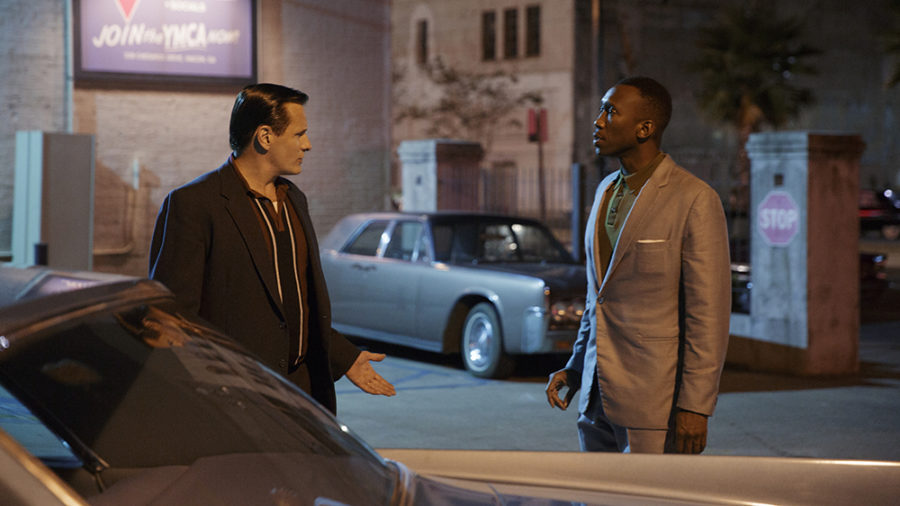
    Directed by Peter Farrelly — one half of the gentlemen responsible for “Dumb and Dumber” and “There’s Something About Mary“) — he indulges in the duo’s proclivity for road movies but otherwise restrains himself from turning the true story of a Jamaican classical pianist being driven through the 1960s Deep South by a foul-mouthed Italian bouncer into an unsuitably raunchy, lowest-common-denominator comedy. Mahershala Ali and Viggo Mortensen, as passenger and driver, respectively, form an occasionally discordant but ultimately satisfying pair as their characters’ real-life adventure offers a canny reversal of many of the tropes of movies about learning to see past skin color.

    Mortensen plays Frank “Tony Lip” Vallelonga, a doorman and bouncer who finds himself out of a job when the Copacabana closes for repairs. While scrounging for cash by challenging neighborhood heavyweights to eating contests, he receives an unexpected job offer from Dr. Don Shirley (Ali), a black pianist who needs a driver and valet to shepherd him through the Deep South for a tour with his trio.

    Frank’s insular life in New York — in the same neighborhood his parents lived in before him, and his children would after him — fails to prepare him for the opposition Dr. Shirley faces in towns where the musician cannot eat or use the bathroom in the same venue he is scheduled to perform. Nevertheless, he quickly proves valuable as an enforcer and one-man security team when Shirley, isolated in a different way from not just his band mates or the locals, but what is considered his own culture, occasionally forgets that he is unwelcome among whites as soon as he steps off stage.

    Soon, Frank and Dr. Shirley form an uneasy friendship as they cross the Deep South, discovering uncomfortable truths about each other, and eventually, themselves.

    Universal

    The first part of the movie takes place largely in Frank’s community — full of stereotypical wiseguys and the kinds of Italian caricatures I guess the world has collectively decided are inoffensive. Even so, it comes as a surprise that the performance that Mortensen gives as Frank is quite so broad. But the real Vallelonga’s son, Nick, co-wrote the script with Farrelly and Bryan Hayes Currie, so one imagines that at the very least it’s faithful to who he was. Mortensen gives him a vibrancy and a humanity that makes his transformation into a more tolerant person feel incremental instead of a grand epiphany. As Shirley, meanwhile, Ali taps into a Sidney Poitier-like character type — an exemplary and therefore “harmless” specimen of his race — and finds the frustration, and powerfully, confusion roiling beneath that placid surface.

    Shirley understands all too well what he must do in order to be able to play and enjoy the artistic freedom that his talent affords him, and understands the cost — to his relationships, and to his very sense of identity. He aims to hold both he and Frank to that impossible standard, correcting his driver’s diction, demeanor, behavior and even his worldview, and Ali communicates how exhausting, and exasperating, maintaining that can be.

    Conversely, and though the film seems to soften Frank’s racism (he always seems more frequently adjacent to the most offensive stuff instead of participating in it), he becomes a witness less to Shirley’s race than to his discipline, artistically and personally. He does so while still being able to enjoy the luxury of being a white man who can get into a scuffle or talk back to a mouthy jerk or even just ask for what Shirley has earned and deserves. “Dignity always prevails,” Shirley correctly observes, but Frank knows that it helps to fall back on the language of a tour rider — or, in a clinch, a revolver hidden in his waistband.

    Though they eventually narrow their view to one or two unlucky so-and-sos, Farrelly’s films are very often about families or large communities, and this one is the same — and in particular, it’s about learning that the community in which we live is bigger than we think. Such realizations with regard to race are, certainly at this date, more than a little bit hokey, but this film can be forgiven for showcasing average whiteness learning some important lessons from black exceptionalism, especially with two incredibly gifted actors behind the wheel, steering us towards the better angels of our nature.

    Ultimately, “Green Book” is maybe not a masterpiece, but it’s a master-class from two of our most talented actors. Most of all, it is a balm for times that seem determined to remain volatile, and often painful. It, like the many dozens of movies before it about the black-white relations of generations past, will not likely solve the problems of modern racism, but it’s still an important reminder that we can always learn new things about and from one another — in which case, it’s a good idea to keep one’s mind, and heart, open.

    RYQOk0teJoSoTG798eHJT7
  • 9 Movies You Should See Over Thanksgiving Break

    9 Movies You Should See Over Thanksgiving Break

    In terms of the winter movie cycle, Thanksgiving is a great time to get caught up.

    You have a couple of days off, are probably stuffed with, er, stuffing, and want to be prepared for the Christmas movie onslaught that is just around the corner, when both Mary Poppins and Spider-Man will be vying for your attention (amongst many, many others). So we’ve prepared a handy viewing guide for the Thanksgiving break, for when you want to escape to the theater with your loved ones, or leave them behind while they digest their turkey and watch whatever football game is on. And don’t worry, if you want to watch Netflix instead, we’ve got that covered, too.

    Fantastic Beasts: The Crimes of Grindelwald

    Warner Bros/Wizarding World

    Remember “Fantastic Beasts and Where to Find Them,” 2016’s ambitious but somewhat confusing fantasy romp that was supposed to serve as an extension of the lucrative Warner Bros. franchise but instead was kind of just huh? Well, they made another one! And this one is much better.

    With Newt Scamander (Eddie Redmayne, again) dispatched to Paris to track down the powerful Credence (Ezra Miller) and foil the plot of villainous wizard Gellert Grindelwald (Johnny Depp), the movie adds some international intrigue, a more admissibly knotty plot and, thanks to an appearance by sexy young Albus Dumbledore (Jude Law), some concrete connections between the various strands of this franchise. Just be warned — before you pile the family into the station wagon, it might be a good idea to re-watch the first movie. Consider that your magic spell for understanding “Fantastic Beasts: The Crimes of Grindelwald.”

    Widows

    Fox

    Given the pedigree, it’s very clear that “Widows” isn’t your run-of-the-mill thriller. Based on a British prime time series from 1983, it concerns a group of women (among them: Viola Davis, Michelle Rodriguez, Elizabeth Debicki and Cynthia Erivo) who are forced into a sticky situation when their criminal husbands are killed in a heist-gone-wrong.

    Directed by Academy Award-winner Steve McQueen and co-written by Gillian Flynn (who wrote “Gone Girl” and “Sharp Objects”), this is a movie that thrills on both an intellectual and visceral level. “Ocean’s 8” it is not.

    The Favourite

    Fox

    This is the time of year when the studios unleash their stuffy period movies and, yes, there are even a few of those this year. But “The Favourite” is not one of them.

    Rambunctious, sexy, and unpredictable, it’s the antithesis of every boring costume drama that they throw Oscars at with willful abandon. This is electrically alive in a way few films, period or otherwise, ever are, anchored by a trio of brilliant female performers (Olivia Colman, Emma Stone and Rachel Weisz) and some of the finest direction this year (courtesy of Greek genius Yorgos Lanthimos). Set during the reign of Queen Anne (Colman) in the early part of the 18th century, it features palace intrigue, love triangles, and people getting pushed into muddy ditches. What more do you want?

    Ralph Breaks the Internet

    Disney

    In the sequel to the hit 2012 animated film, Ralph (John C. Reilly) and Vanellope (Sarah Silverman) head to the Internet, where they fall in with online auctions, meme-creation, and a particularly violent “Grand Theft Auto”-style game called “Slaughter Race” that is lorded over by a bad-ass, leather-clad ringleader named Shank (Gal Gadot). Also, the Disney Princesses show up. As you can imagine, it’s a lot of fun.

    Ralph Breaks the Internet” is one of those rare family sequels that won’t leave you with a toothache from it being so sweet, there’s actual pathos and emotionality but nothing feels syrupy or forced and it’s honestly one of the most visually ravishing animated features you’re ever likely to see.

    Green Book

    Universal

    Up until this point, Peter Farrelly has directed as one-half of the Farrelly Brothers — serving as the tag-team provocateurs behind gross-out extravaganzas like “Dumb and Dumber,” “There’s Something About Mary,” and the underrated classic “Kingpin.” So it’s interesting to see Farrelly emerge as something of an Oscar frontrunner for his work directing “Green Book,” a based-on-a-true-story racial drama starring Mahershala Ali and Viggo Mortensen.

    In the film. Ali plays Don Shirley, a classical pianist, who hires New York tough guy Tony Vallelonga (Mortensen) to escort him on a tour of the South. This could be the feel-good movie of the fall, which makes it a perfect after-Thanksgiving family outing.

    Creed II

    MGM

    Finally. The follow-up to 2015’s brilliant “Rocky” refresh “Creed” is now upon us. Let us give thanks.

    In “Creed II,” Michael B. Jordan returns as Adonis Creed, the son of Apollo Creed, who this time turns to going toe-to-doe with Viktor Drago (Florian Munteanu), the son of Ivan Drago (Dolph Lundgren), who famously killed Apollo in the ring (in 1985’s Cold War classic “Rocky IV“). Oh, and Rocky (Sylvester Stallone) is still around! So there’s that. Hopefully the sequel builds on the intensity and excitement of the first film, while supplying some new wrinkles as well. We can already feel ourselves getting inspired.

    Roma

    Netflix

    Yes, “Roma” is a Netflix movie. But in a rare move, the streaming service is debuting the movie in theaters first, before it hits the platform in mid-December. And, really, you should do everything in your power to see it on the big screen. In fact, try and see it on the biggest screen possible. Because this movie is absolutely jaw dropping.

    An epic on a miniature scale, the highly autobiographical film from “Gravity” filmmaker Alfonso Cuaron follows a middle-class family in Mexico City in the early 1970s dealing with heartache, political upheaval, and the day-to-day domestic drama that every family deals with. What makes this story even more captivating is that it’s told through the eyes of the family’s housekeeper Cleo (Yalitza Aparicio, giving one of the year’s best performances even though she’s not a professional actor). You have to see this with an audience in a theater. It just won’t be the same on your iPad.

    Overlord

    Paramount

    If your family is really annoying you over Thanksgiving, it might be time to watch a little more muscular movie at the multiplex. Perhaps something like “Overlord,” a high-concept World War II romp that features thrills, chills, and the cathartic experience of watching sweaty hunks brutally murder Nazis.

    Conceived by mystery box magnate J.J. Abrams, “Overlord” is a hard-core horror movie mixed with an equally hardcore war movie, wherein a group of Allied soldiers (among them Jovan Adepo and Wyatt Russell) parachute into France to take down a radio tower on the eve of D-Day and wind up finding a gnarly zombie conspiracy. You know, that old story. But there are some definite grindhouse pleasures to be had as Nazis get shot, blown-up, and lit on fire and then come back from the dead to do it all again.

    Bohemian Rhapsody

    Fox

    Because who doesn’t love Queen?

  • ‘True Detective’ Season 3 Trailer Finds Mahershala Ali Haunted by Past Crime

    ‘True Detective’ Season 3 Trailer Finds Mahershala Ali Haunted by Past Crime

    True Detective
    HBO

    Time is a flat circle — an inescapable one for Mahershala Ali in the first trailer for HBO’s “True Detective” Season 3.

    The Oscar winner stars as Detective Wayne Hayes, who is haunted by a the case of two missing children in the Ozarks in the 1980s. Much like in Season 1, the story will unfold over three separate timelines.

    Season 3 boasts a terrific ensemble cast, with Stephen Dorff playing Hayes’ partner, Roland West, and Carmen Ejogo as a schoolteacher connected to the two kids. Scoot McNairy and Mamie Gummer play the kids’ parents.

    https://www.youtube.com/watch?v=btoZfxs0pE0&feature=youtu.be

    The trailer indicates the crime drama is returning to its Season 1 form and Ali’s performance looks to rival Matthew McConaughey’s. The show took a bit of a tumble in storytelling quality in Season 2, but the time that creator Nic Pizzolatto took to craft these new episodes seems to have paid off.

    “True Detective” Season 3 premieres January 13, 2019 on HBO.

  • First ‘True Detective’ Season 3 Photos Reveal Mahershala Ali, Stephen Dorff on the Case

    First ‘True Detective’ Season 3 Photos Reveal Mahershala Ali, Stephen Dorff on the Case

    HBO

    Get your first look at “True Detective” Season 3.

    HBO released six pictures from the new season, which stars Oscar winner Mahershala Ali as Wayne Hays, a state police detective in 1980 Arkansas. Stephen Dorff sports an interesting wig as his partner, Roland West. And Carmen Ejogo plays Amelia Reardon, an Arkansas schoolteacher connected to two missing children.

    The eight episode season will revolve around a “macabre crime in the heart of the Ozarks” and set in three different time periods.

    HBO recently announced Season 3 will premiere January 13 at 9 p.m. 

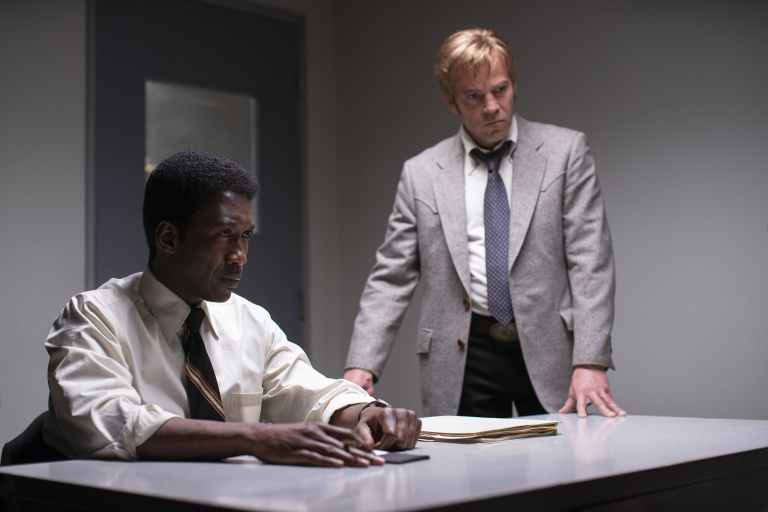
    In this image, the partners appear to be interrogating somebody and both look very concerned.

    HBO

    More questions will be asked by Wayne Hays, with Ejogo’s teacher watching. It appears as if he’s talking to one of her students.

    HBO

    Hays stands in the rain on a road — was he pursuing someone who might be involved in the kids’ disappearance?

    HBO

    Amelia and Hays walk through a field, seemingly noting things of interest to the investigation.

    HBO

    Ali looks very determined as he stands in what seems like a child’s bedroom.

    HBO
  • ‘True Detective’ Season 3 Gets Official Premiere Date on HBO

    ‘True Detective’ Season 3 Gets Official Premiere Date on HBO

    HBO

    After years of waiting, fans of HBO anthology series “True Detective” now know exactly when the show will be back for its highly-anticipated third season.

    The premium cable outlet announced on Thursday that the season three premiere is scheduled for January 13 at 9 p.m. ET/PT. The eight-episode season will center around what’s being described as “a macabre crime in the heart of the Ozarks,” and will span three different time periods.

    Oscar winner Mahershala Ali (“Moonlight“) will play the main character, Wayne Hays, a state police detective from Northwest Arkansas. The supporting cast includes Stephen Dorff (playing Roland West, an Arkansas State Investigator), and Carmen Ejogo (playing Amelia Reardon, an Arkansas schoolteacher with a connection to two missing children in 1980).

    Season one of the HBO series, created by Nic Pizzolatto, starred Matthew McConaughey and Woody Harrelson, and was a huge hit with both viewers and critics alike. But the second season — featuring stars Colin Farrell, Rachel McAdams, Taylor Kitsch, and Vince Vaughn — was decidedly less successful, leading HBO at one point to put plans for a third installment on indefinite hold.

    This new version, though, has fans hopeful that “True Detective” can once again return to its first season heights. They’ll only have to wait a few more months to find out for sure.

    [via: Variety]

  • ‘Green Book’ Enters Oscars Best Picture Race With TIFF People’s Choice Award

    ‘Green Book’ Enters Oscars Best Picture Race With TIFF People’s Choice Award

    Green Book
    Universal Pictures

    The Toronto Film Festival’s People’s Choice Award did not go to Lady Gaga ‘s “A Star Is Born,” Timothée Chalamet‘s “Beautiful Boy,” or Robert Pattinson‘s “High Life.” It also missed buzzy “First Man,” “The Front Runner,” or “Roma.”

    Instead, the win went to “Green Book” — starring Mahershala Ali and Viggo Mortensen, and directed by Peter Farrelly. Yes, “Dumb and Dumber” Peter Farrelly.

    The film follows an Italian-American bouncer (Mortensen) and an African-American pianist (Ali) who confront racism and danger while taking a road trip through the Deep South in 1962.

    As TheWrap noted, nine of the last 10 TIFF People’s Choice winners have gone on to receive Oscar Best Picture nominations, and three have won.

    This was the first year that TIFF moved voting online, as opposed to voting by ticket stubs at the theater. That led some to suspect a popularity contest was ahead, since fans of Gaga, Chalamet, and Pattinson — among others — lobbied for fans to vote multiple times for their favorites. But TIFF took pains to try and prevent “mass campaign voting.”

    Still, “Green Book” was apparently a surprise win, and it automatically launches the film into early Oscar contention.

    Here’s the list of TIFF winners:

    Grolsch People’s Choice Award: “Green Book,” Peter Farrelly
    Runners-up: “If Beale Street Could Talk,” Barry Jenkins; “Roma,” Alfonso Cuaron

    People’s Choice Documentary Award: “Free Solo,” E. Chai Vasarhelvi and Jimmy Chin
    Runners-up: “This Changes Everything,” Tom Donahue; “The Biggest Little Farm,” John Chester

    People’s Choice Midnight Madness Award: “The Man Who Feels No Pain,” Vasan Bala
    Runners-up: “Halloween,” David Gordon Green; “Assassination Nation,” Sam Levinson

    Platform Prize: “Cities of Last Things,” Ho Wi Ding
    Special Mention: “The River,” Emir Baigazin

    Eurimage Audentia Award for Best Female Director: “Fig Tree,” Aalam-Warge Davidian

    Best Canadian Feature Film: “The Fireflies Are Gone,” Sebastien Pilote
    Best Canadian First Feature: “Roads in February,” Katherine Jerkovic

    International Critic (FIPRESCI) Prize for Special Presentations: “Skin,” Guy Nattiv
    International Critic (FIPRESCI) Prize for Discovery program: “Float Like a Butterfly,” Carmel Winters

    NETPAC Award for Best Asian Film: “The Third Wife,” Ash Mayfair
    Special mention: “The Crossing,” Bai Xue

    Short Cuts Award for International Short Film: “The Field,” Sandhya Suri
    Honorable Mentions: “F— You,” Anette Sidor; “This Magnificent Cake!,” Emma de Swaef and Marc James Roels

    Short Cuts Award for Canadian Short Film: “Brotherhood,” Meryam Joobeur
    Honorable Mention: “Fauve,” Jeremy Comte

    Check out the “Green Book” trailer. The film is scheduled to open in theaters November 21st.

    Want more stuff like this? Like us on Facebook.

  • ‘True Detective’ Season 3 Trailer Has Fans Hopeful for Season 1 Greatness

    ‘True Detective’ Season 3 Trailer Has Fans Hopeful for Season 1 Greatness

    True Detective Season 3, Mahershala Ali
    HBO

    It’s too soon to know if “True Detective” Season 3 will be more like Season 1 or Season 2. There’s a wide chasm between the two in terms of quality — at least to many HBO viewers — but the network’s first teaser trailer for the new season is off to a good start.

    Moonlight” Oscar winner Mahershala Ali leads the new story as a state police detective from Northwest Arkansas. The season follows “a macabre crime in the heart of the Ozarks,” covering three different time periods as the mystery unfolds.

    (Side note: The Ozarks are truly having a moment — between this and Netflix’s “Ozark.”)

    Here’s HBO’s “teaser trailer,” which suggests a full official trailer is still ahead before the January premiere:

    “True Detective” Season 3 co-stars Ray Fisher, Carmen Ejogo, Stephen Dorff, Scott McNairy, and Mamie Gummer. Series creator Nic Pizzolatto returned to write the whole series.

    So far, we only know it’s arriving in January, which will surely be a welcome distraction from the cold, dark, and (for some of us) snow of winter. It’s possible HBO’s next trailer will be more specific on the start date.

    Want more stuff like this? Like us on Facebook.