Tag: steve-buscemi

  • ‘Vacation Friends 2’ Interview: Director Clay Tarver

    pwPEmMPT

    Premiering on Hulu beginning August 25th is ‘Vacation Friends 2,’ which is a sequel to 2021’s ‘Vacation Friends’ and was once again directed by Clay Tarver (‘Joy Ride’).

    LKjGP9Bd9UbHnqhjWkNvz3

    What is the plot of ‘Vacation Friends 2’?

    Picking up a few months after the conclusion of ‘Vacation Friends,’ the sequel finds newly married couple Marcus (Lil Rel Howery) and Emily (Yvonne Orji) inviting their uninhibited besties Ron (John Cena) and Kyla (Meredith Hagner), who are also newly married and have a baby, to join them for a vacation when Marcus lands an all-expenses-paid trip to a Caribbean resort. His reason for traveling there in the first place is to meet with the owners of the resort to bid on a construction contract for a hotel they own in Chicago. But when Kyla’s incarcerated father Reese (Steve Buscemi) is released from San Quentin and shows up at the resort unannounced at the worst possible moment, things get out of control, upending Marcus’ best laid plans and turning the vacation friends’ perfect trip into total chaos.

    Who is in the cast of ‘Vacation Friends 2’?

    Moviefone recently had the pleasure of speaking with director Clay Tarver about his work on ‘Vacation Friends 2,’ bringing the characters back together for a sequel, how their friendship has grown since the first film, why John Cena and Lil Rel Howery are so funny together, Meredith Hagner’s wild performance, introducing Steve Buscemi as Kyla’s shady father, and the rest of the supporting cast.

    Director Clay Tarver on the set of 'Vacation Friends 2.'
    (Center) Director Clay Tarver on the set of ‘Vacation Friends 2.’ Photo credit: Katrina Marcinowski.

    You can read the full interview below or click on the video player above to watch our interview.

    Moviefone: To begin with, can you talk about creating an organic reason for these characters to reunite together on another vacation in this sequel?

    Clay Tarver: It was really interesting to bring everyone back together physically because I think we all knew that we had a really special sense of chemistry, because ultimately this movie, like the first one, was about friendship. I think we all together wanted to do something that was about where the friendship went, and how it grew in unexpected ways with new developments in their lives. They know each other now, so what could go wrong? A lot does. The challenge is when you’re directing and trying to tackle something like this, for me, I didn’t want to make it feel like it was just a repeat of the first movie. But it needed to change a little bit, and it is different. The first movie, you didn’t really know who Ron and Kyla were, and so that was the thing that held the story together was that you kept waiting for the other shoe to drop with them. Who are they? Are they crazy? Are they drug dealers? Are they con artists? It was a refreshing end to the first one when they were none of that. They were just nice people who were a mess. So I found the storyline interesting about, “Oh, they have a baby now. How does that change them? Marcus and Emily are thinking about having a baby now. Well, what does that mean for them?” Everyone’s lives have taken another step. I think as a longtime fan of comedies and sequels, I want it to go to someplace new, but I don’t want the core characters to change so much that they’re not recognizable, they’re not the people I fell in love with. But I wanted to take it to someplace new. I think we all did, and it was important to us to not just retread the first movie, but take a risk a little bit and try to take it in a new direction.

    MF: Can you talk about the idea of introducing Steve Buscemi as Kyla’s shady father?

    CT: There’s one joke in the first movie, I think Kyla says, “Oh, I’m so sad my dad never got to meet Ron.” Then Emily says, “Oh my God, is he dead?” But she’s like, “No, it’s just that San Quentin is so far,” which I actually didn’t write. Someone else wrote that and I thought it was really funny. But there was always this looming, what are Kyla and Ron’s background? What do they have to deal with and what is in their lives beyond the people who we meet? For all of us, that seemed like a natural, interesting place to go. Then when I was lucky enough to get the honor to cast Sir Steve Buscemi, I feel like if we had knights in America, wouldn’t he be Sir Steve? He’s a national treasure. So I was thrilled when he came aboard because I’m going to tell you if you don’t know, he’s the nicest guy on earth. Having someone on set that was so well respected and beloved as Sir Steve was, it elevated the proceedings and everyone really just was thrilled to be around him. You cannot find a nicer guy and a more fantastic actor. After each scene, I would say, “Steve, it turns out you’re really good at acting. I think it’ll go okay for you.”

    John Cena as Ron, Steve Buscemi as Reese and Ronny Chieng as Yeon in 20th Century Studios’ 'Vacation Friends 2.' Photo courtesy of 20th Century Studios.
    (L to R) John Cena as Ron, Steve Buscemi as Reese and Ronny Chieng as Yeon in 20th Century Studios’ ‘Vacation Friends 2.’ Photo courtesy of 20th Century Studios. All Rights Reserved.

    Related Article: ‘Vacation Friends’ stars John Cena and Yvonne Orji talk about their new comedy

    MF: Can you talk about Marcus and Emily and Kyla and Ron’s friendship, and how that’s grown since the first film?

    CT: The first story was about new friendship and it was about people that you met on vacation and how weird that conversation is and how you cross boundaries too quickly over a week, some boundaries that you probably shouldn’t but you’re in the mood. What happens, and then how that can boomerang to echo back onto your real life, whether or not you’re really friends. Now I feel like what’s great about it is that they, and what was fun for all of us to explore was the idea of where does the friendship go and how do adult friendships mature? How much do you trust somebody? Because some friends you say you trust, but you don’t. You wouldn’t hand them the keys to your car. Ron and Kyla, all those things that make you love them so much are the same things that you are like, “Uh-oh, bad things could happen just because they’re around.” The first movie was really about these people who were ultimately harmless. I thought with the introduction of Steve, especially casting him, it was just interesting to see, “Oh, this is a guy where he’s not harmless. So what does that do to their friendship?” Ultimately they bicker, and I think that’s part of the fun is the conflict. I always love Marcus yelling at Ron because Lil Rel and John Cena are amazing together. Even though it stretches to the breaking point, it never does, and it’s really about friendships growing in unexpected ways.

    Lil Rel Howery as Marcus, Yvonne Orji as Emily, Meredith Hagner as Kyla, and John Cena as Ron in 2021's 'Vacation Friends.'
    (L to R) Lil Rel Howery as Marcus, Yvonne Orji as Emily, Meredith Hagner as Kyla, and John Cena as Ron in 2021’s ‘Vacation Friends.’ Photo: Jessica Miglio/20th Century Studios.

    MF: Did you have any idea how funny John Cena was when you cast him in the first film?

    CT: I was amazed. No, I didn’t know. When he first signed on to do the movie, I probably shouldn’t say this, but I will tell you this story. Ike Barinholtz who was in ‘Blockers,’ which was a movie I really loved, I’d never met him before, and somehow I got his number and I called him up to ask him how it was working with John Cena. He got quiet and then he almost got angry and he was like, “I think he might be the nicest person I’ve ever met.” He just sang his praises and he said, “He’s fantastic and you’re going to love working with him.” He was just so good. He does all of these things that are so hard to do so easily. He really listens and plays off other people, and there’s a lot of his improv in it. I was just amazed and felt blessed and lucky to have him around on set every day.

    Yvonne Orji as Emily and Lil Rel Howery as Marcus in 20th Century Studios' 'Vacation Friends 2.'
    (L to R) Yvonne Orji as Emily and Lil Rel Howery as Marcus in 20th Century Studios’ ‘Vacation Friends 2.’ Photo courtesy of 20th Century Studios. All Rights Reserved.

    MF: Lil Rel Howery is also a very funny comedic actor, but in this movie plays the straight man a lot. What was it like directing him in those scenes?

    CT: He’s a straight man who also, he’s really funny when he is back on his heels, when things get too chaotic and he loses it completely. So on the one hand, he is the straight guy, but he’s the guy that loses his mind quicker than anybody else. So just trying to embrace that and make sure there were moments where he would make some assumption and completely freak out and just play to all of those strengths with him. It was really fun to direct a movie with him a second time around, because I think the first movie we shot entirely, except for the first two weeks, through the pandemic. This time we just knew each other a lot better. He’s just an amazing person to do a movie with. Both of those guys are, and Yvonne and Meredith too, there’s just not a weak link in the cast. They’re all so good at what they do, and they all do completely different things.

    MF: Meredith Hagner, who plays Kyla, has really created a loveable cinematic character over the course of these two movies. What has your experience been like working with her and does she improvise a lot on set?

    CT: They all do improvisations. They all improv, I think I can say. She always makes it better. She will go left sometimes when the script says right. She just has this instinct for making everything lift up. She just adds life to it and makes scenes work. The same for Yvonne who just in a certain way has one of the hardest jobs as her character is the sensible center of this comedy. She is still so funny and so good at it, and just the way that she plays off of all of them together and off of each other, it’s a really difficult job and she’s just incredibly talented in that way.

    Meredith Hagner as Kyla and John Cena as Ron in 20th Century Studios' Vacation Friends 2.'
    (L to R) Meredith Hagner as Kyla and John Cena as Ron in 20th Century Studios’ Vacation Friends 2.’ Photo courtesy of 20th Century Studios. All Rights Reserved.

    MF: Can you talk about Ron and Kyla’s parenting skills?

    CT: Well, I found it funny that at first you might think that they would be people who would be these ultra-protective parents. We all know people who are wild, and then once they become parents, they become these helicopter parents. But instead, they’re people who think they are and have not changed at all. So they’re still the wild people, but they talk as if they’re these careful parents. But at the same time, everything always works out for them. It always gets to the precipice and they get way too close to the edge that would make someone like me comfortable, and yet it always works out. As a parent myself, sometimes I think a lighter hand might be a good thing every once in a while. Maybe not as light as they do it, but I really enjoyed as a director playing around with them about their attitudes of parenting because I think they’re both characters that you don’t want to see them change. You don’t want to see them suddenly stop being who they are.

    MF: Finally, can you talk about filling out the supporting cast with excellent actors like Ronny Chieng, Jamie Hector and Carlos Santos?

    CT: Well, I was really blessed because all of them, I mean it when I say there was not a weak link in the bunch. They’re all so good from top to bottom and they all do really different things. Carlos was in maybe three scenes in the first movie, and he just came on and killed it. Everybody loved him. He made everyone on set laugh the entire time. He was just a joy to work with. Jamie Hector, I’d been a fan of many years from ‘The Wire’ and ‘Bosch,’ and it was just an honor to get to work with him. He’s also the world’s nicest guy, despite how scary he looks sometimes when he’s acting. Ronny, I’ve known for many years and been a huge fan of. I had actually written the part with him in mind and it was just a joy to get to work with him on something. I hope to work with all of them again.

    Director Clay Tarver on the set of 'Vacation Friends 2.'
    Director Clay Tarver on the set of ‘Vacation Friends 2.’ Photo credit: Katrina Marcinowski.

    Other Movies Similar to ‘Vacation Friends 2:’

    Where to Stream and Watch: ‘Vacation Friends 2’ Online

    Buy John Cena Movies On Amazon
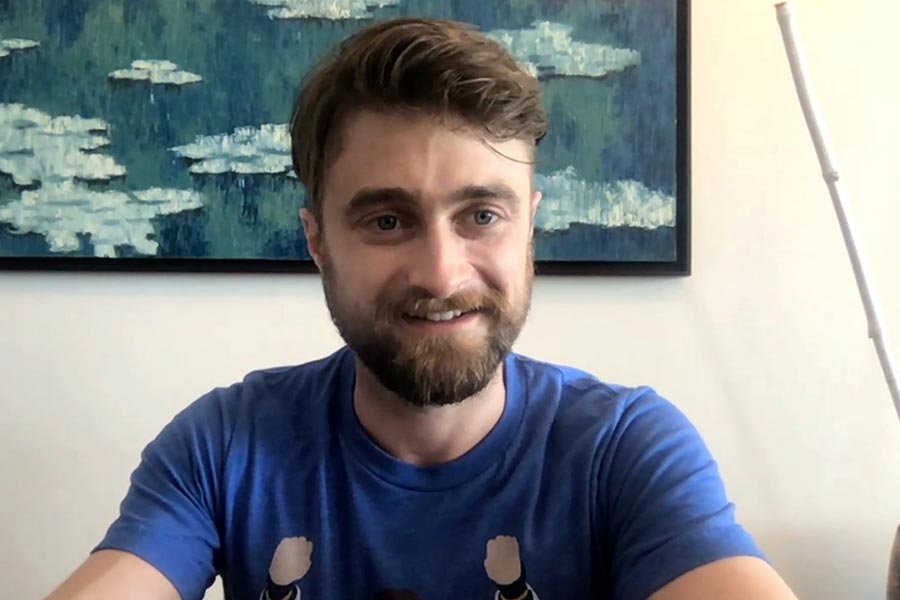
     

  • Steve Buscemi, Daniel Radcliffe on Miracle Workers Season 3

    Steve Buscemi, Daniel Radcliffe on Miracle Workers Season 3

    9PRqLlQb

    The upcoming season of ‘Miracle Workers’ takes the cast to the 1840s, which means we get Western-style comedy. Cast members Steve Buscemi, Daniel Radcliffe, Geraldine Viswanathan and Karan Soni talked with us about this new season.

    First up, Steve Buscemi and Daniel Radcliffe talk about the advantages of working on an anthology series.

    Moviefone: Steve, can you explain to people who may not know what is an anthology series?

    Steve Buscemi: Very good question. So it’s a series where each season is different from each other, but what’s the same about it is that we have the same cast. So on our show, the first setting was in heaven. That was the first season. I played God. Dan played an angel. Second season was the dark ages. I played a shit shoveler. Dan played a crown prince and this season we’re on the Oregon Trail. So it’s a Western. And in this season, Dan and I have the most to do together than previous seasons, which I think we were both very happy about. I play an outlaw who’s on the run, trying to evade the law. Dan plays a pastor who was just trying to save his town from starvation and to get them to better pastures and Oregon. We somehow meet up and become a team to try and get there.

    MF: Yeah. I was just talking to Geraldine and Karan and talking about how Benny the Teen is really their GPS.

    Buscemi: It may not have been the wisest thing to use Benny as their guide. I mean, he is a bit of a con man, but he has been around and he knows how to ford a river and he knows how to get over a mountain. So, yeah. But really he’s a very selfish guy and he’s just really trying to evade the law and maybe get revenge on his gang who left him for dead.

    MF: Daniel, and the Reverend when he discovers that their GPS is really an outlaw. He’s not really happy about it, but everybody else in his town, they’re thrilled. They’re overjoyed. I found that hilarious.

    Daniel Radcliffe: Yeah. Well, I think they all know that, yes, he is a more murderous GPS and less to be trusted than a normal one, but they also recognize that he is their only way, and he is the only man who has the skills to get them to Oregon. At that point, my character is still so morally rigid that he’s like, “No, we can’t be led to Oregon if it’s by this person who is very unholy.” And that’s one of the first compromises Zeke learns he has to make on the trail is that actually, it’s better to go with this guy than not get there at all. I think that’s sort of one of the first turning points for him.

    MF: What is the reverend’s backstory?

    Radcliffe: He was an orphan growing up in the UK in England, who became obsessed with the idea of America at some point growing up over there because it represented a lot of the idea that America sort of represented a social mobility that particularly at that time was absolutely not available in England, would have drawn him over. And he’s made it his new home, and now he’s become the most ardent patriot and believer in America, the idea of America, than sort of anyone else in the town.

    MF: This next question, I guess, is both of you because both of you, for instance, Daniel, you did many Harry Potter movies where you played the same character throughout. Steve, you played the same character through the run of Boardwalk Empire. You’re on your third season here. We just talked about how it’s an anthology series, completely different characters. What are the pros and cons to you about this series compared to something that’s not an anthology series? I can start with you, Daniel.

    Radcliffe: I would just say, to me, it’s mostly advantages. As an actor, I love getting to do something different all the time and getting to keep it fresh in that way. I think the only thing that you can say is a disadvantage sometimes is that you get to the end of the season just being like, “Oh, I’ve just figured this character out just in time to never play him again.” But the same thing happens with plays in theater. You figure it out just at the end, so it’s the nature of it. And I definitely am a real fan of just keeping it changing. It’s great for me.

    MF: And Steve?

    Buscemi:
    I think we’re blessed that we get to work together each season and yet play different characters. I see it as mostly an advantage, but I do agree with Dan. At the end, I mean, it’s always hard to shed a character that you really enjoy. But I look forward to hopefully getting another season and it being a totally different situation and a different character.

    MF: So Daniel, the first season Miracle Workers was from Simon Rich’s novel. And the second season, I believe, was from a short story of his. Where did the idea for this season come from?

    Radcliffe: I’ve heard that the second season was from a short story as well. That was news to me when I heard that, which is probably just a failing on my part. But the third series is completely the brainchild of Dan Mirk and Robert Padnick. Dan has been working on the show since the very beginning and Robert worked on the last season, but Simon sort of stepped aside this season and they took over the actual show running, and so it came from their glorious brains. And I think probably, Robert and Dan I think are both interested in historical stuff and Robert also leans quite dark in his sense of humor as well. So this just was the perfect setting for them.

    MF: Steve, what is it about the historical Oregon Trail story that we’ve all learned about that lends itself to this humor?

    Buscemi: Well, I mean, I was surprised that some of the humans that they found in this particularly horrible thing that happens later in the season when we have to cross a mountain, and it’s cold and everybody’s starving. It leads to some pretty horrific choices. And it’s funny. I just think the different cast of characters just lends itself to great stories and relationships. And what I love about all three seasons is that these characters are up against great odds, and they figure out that the only way that they’re going to beat the odds is if they work together. Sometimes they don’t want to work with the person that they’re next to, but they somehow figure it out, and that’s what I love about it. So it’s still, to me has, even though it touches on some dark themes, overall, it still has a positive message.

    MF: And Daniel, this series is just hilarious. It’s really funny. I’m just wondering how many takes our ruined because you don’t keep a straight face?

    Radcliffe: Generally, I have gotten much better at that, but I would say that there’s at least one scene in episode three that they have to cut away from me very, very quickly because I couldn’t. I think they got one take where John Bass said the line that he said, and I managed to keep it together for two seconds, and that was enough time for them to then cut out of it. But every other time I laughed and ruined it. So I’m very glad they found a way around it. Laughing on set is both the best and worst thing because it is incredibly funny. But at the same time, when you were aware that, oh no, you’re really ruining this. They need this shot to work. It is also very, very stressful.

    MF: Steve, this was shot under pandemic protocol. I think I would just be giddy from being around people again.

    Buscemi: It was very surreal. This is the first job that both Dan and I did during, back and we weren’t back yet. We shot this during the pandemic. And so it was very surreal to see the crew in masks and we were wearing masks if we weren’t on camera, but it was great to be outdoors. I mean, if I had to be working this, because of the subject matter and because of the way they did it, and also production was very super aware of the challenges, and we were tested all the time. So the protocols were in place and we did it. And at the end of it, we felt really proud and good that we were able to achieve so much during these challenging times. And you’re right, it felt good to be with people. It felt great to be with people.


    Next, Geraldine Viswanathan and Karan Soni talk about their characters for this season.

    Moviefone: Hi, you guys. Geraldine, explain to me and for people who may not understand, what is an anthology series?

    Geraldine Viswanathan: An anthology series is, we switch it up each season, so there’s no … An anthology. Yeah, it’s like … How do you define anthology?

    Karan Soni: It’s the same cast but different characters, and you can watch each season like its own season. Not to mansplain here, but I just got in there.

    MF: Yeah. I think that’s very interesting because, for instance, if you’re acting in a regular series, and you’re in your third season, you’ve developed your same character now for your third season. But for you guys, you are playing completely different characters every season. Geraldine, do you see any connection between your characters from season to season, although they’re completely different?

    Viswanathan: I do. I do think that each season is set in a world where things are bad, where things are run poorly or things just aren’t working. It’s kind of twisted and backwards, and I think that my character always kind of comes in as the eyes of the audience, and is kind of that modern perspective of why are things this way, and how can they be better? How can we work together to make things better? I think, yeah, I’m always sort of frustrated by the state of the world around me, especially as we go in history, and I’m the female lead of the show. I think it’s always … that gets frustrating. So she’s sort of always the eyes, the audience’s way in.

    MF: Karan, for you, what has this experience been like, three seasons of completely different character?

    Soni: Oh my gosh, it’s been one of the best jobs I think I’ve ever had, because one, it’s creatively very fulfilling. It’s always different, but we get to work with … I love all the actors I get to work with, we all really genuinely get along, we hang out outside of work. So that is amazing, and then the fact that we get to show different skill sets and try different things every year is amazing. And yeah, so it just feels like the ultimate dream because it’s a TV show, so it’s some sense of something that you can look forward to every year, which is rare in Hollywood, to be like, “Oh, do Miracle Workers this year.” And yet it’s different, and we get to try and do different things all the time, and I feel like we only have grown closer as a cast every year. So, I feel like by season 11, we’ll just be living in the same house with each other.

    MF: I hope there’s a season 11, I find the series so interesting. What is the buildup like for you, waiting to find out what the next season’s going to be about? How soon do you know?

    Soni: We don’t really know. We don’t really know, although if we ask, they do sometimes tell us. But yeah, we don’t really know a lot, and then it’s always right before the table read, you get the script and they’re like, “We’re going to do the first table read,” that I’m always very nervous. Because it’s so unusual, because normally you would either audition for a role or even if you’re offered a role, you would get to read the role before anything, and this time you’re sort of doing a table read to something you didn’t read or seek out or talk to the director about, or writer about, and they’ve just created it for you. And so, it can be initially quite like, there’s a lot of butterflies in the beginning to be like, “Can I do this? How am I going to make it different? What am I going to do?” And all of that stuff. And then it gets very fun and exciting, once you get into the groove of it.

    MF: Geraldine, talking about the creator, Simon Rich, Miracle Workers was based on his novel, and then Miracle Workers, Dark Ages was based on a short story. So Miracle Workers, Oregon Trail, where did that come from?

    Viswanathan: Good question, I’m not sure. But we did this season, Simon Rich didn’t work on this season, his right-hand man, Daniel Mirk and Robert Padnick, who’ve been on the show alongside of him for each season, they took over this time, and they pitched the idea of Oregon Trail. So I don’t know if it came from one of his …

    Soni: Yeah, I don’t know if this one did because he wasn’t writing on this one. Yeah, I think this was a original idea, but I could be wrong.

    MF: Geraldine, talk to me about Prudence Aberdeen’s background.

    Viswanathan: She’s a woman of the 1840s. She’s married to Todd Aberdeen, who’s the wealthy man in town. And I think that’s kind of all we know about her backstory. Yeah, she’s just trying on everything, she’s like, “Who do I want to be?” She’s in that point of her life.

    MF: Talking about Todd, he’s very needy, super needy, but I love the way Prudence, and she’s not hiding it, when she is not around him, she’s a modern woman. But then, when she’s with him, she caters to him as if she’s an 1800s wife.

    Viswanathan: Yes. Yes, exactly. She’s trying to hold face at the beginning and trying to be a good wife and pretend to like him at all, because this situation is beneficial to her. But she very quickly is not able to hold up the charade anymore, and she kind of openly scorns him to his face, because he’s the worst. Yeah.

    MF: Karan, how about you, backstory for the Gunslinger?

    Soni: Yeah. The Gunslinger, he just grew up with gunslingers, I figured, and he always wanted to be that sort of hero. And then he just set his target on Steve’s character, and he has been chasing him for years and years and years and years and has not caught him. So he’s not very good at his job, but he really wants to try to be better. And then this season, we see where all that leads him, when he finally comes face to face with the person he’s tried to hunt down all these years. It sounds like a gritty drama, I love it.

    MF: And it’s not, it’s a comedy. And my next question is, how does the Oregon Trail, something you really wouldn’t think of, lend itself so well to comedy?

    Soni: Well, there’s something very funny about just horses and oxen peeing and pooping. And then these little fools who are just, with no GPS, like the poster says, making their way across this crazy terrain. And you’re like, “You’re all going to die.” But it’s fun to watch them, ignorant and blissful, before they walk into their death.

    MF: They have a GPS, they have Benny the Teen.

    Soni: Exactly, oh my gosh. Exactly, that’s their GPS.

    MF: Geraldine, while you’re shooting, is it as funny as what we see finally? And how do you keep a straight face, how do you not break?

    Viswanathan: Well, I often do break, and it’s a problem, because we’ve got short days, we’ve got to get the shot. But sometimes Jon Bass is on top of me and farting on top of me, and it’s really hard not to laugh. That’s really an absurd situation that we’ve all found ourselves in, especially after COVID with not speaking to people for so long, and then suddenly being on set in this absurd set, I think it just felt absurd. So, I break all the time, and I’m actually open to advice on how to not break.

    MF: Maybe for the next season, maybe they will give you some advice.

    Viswanathan: Hopefully. I’ll have to cut a wire in my brain or something.

    ‘Miracle Workers: Oregon Trail’ is on Wednesdays on TBS.

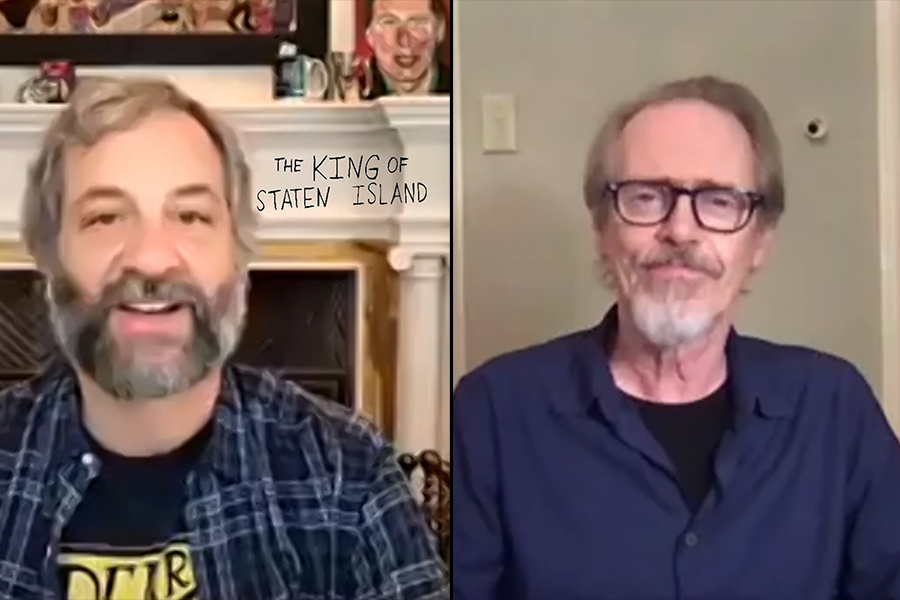
  • Unscripted: Judd Apatow & Steve Buscemi discuss ‘The King of Staten Island’

    Unscripted: Judd Apatow & Steve Buscemi discuss ‘The King of Staten Island’

    In the latest entry in our Unscripted series, director Judd Apatow and co-star Steve Buscemi answer fan questions about firemen, working with family, and they discuss some of their favorite movies.

    Their latest film, ‘The King of Staten Island’ is loosely based on the life of its star Pete Davidson, whose father was a firefighter that died at the World Trade Center on 9/11, when Davidson was 7.

    Here’s the official synopsis for the film:

    Scott (Davidson) has been a case of arrested development ever since his firefighter father died when he was seven. He’s now reached his mid-20s having achieved little, chasing a dream of becoming a tattoo artist that seems far out of reach. As his ambitious younger sister (Maude Apatow, HBO’s Euphoria) heads off to college, Scott is still living with his exhausted ER nurse mother (Oscar® winner Marisa Tomei) and spends his days smoking weed, hanging with the guys—Oscar (Ricky Velez, Master of None), Igor (Moises Arias, Five Feet Apart) and Richie (Lou Wilson, TV’s The Guest Book)—and secretly hooking up with his childhood friend Kelsey (Bel Powley, Apple TV+’s The Morning Show).

    But when his mother starts dating a loudmouth firefighter named Ray (Bill Burr, Netflix’s F Is for Family), it sets off a chain of events that will force Scott to grapple with his grief and take his first tentative steps toward moving forward in life.

    The film also stars Steve Buscemi as Papa, a veteran firefighter who takes Scott under his wing, and Pamela Adlon (FX’s Better Things) as Ray’s ex-wife, Gina.

    ‘The King of Staten Island’ will be available on demand and streaming on June 12, 2020.

  • 15 Things You Never Knew About ‘The Big Lebowski’

    It’s been 20 years since moviegoers were first introduced to The Dude, an affable hippie just trying to make his way through life and bowl a few rounds — in between buying coffee creamer using a check.

    The Big Lebowski” was not a smash hit when it first debuted, but it’s built up a considerable cult following in the years since — deservedly so. To celebrate its 20th anniversary, here are 15 things you might not know about this Coen Bros. classic.

    1. While fictional, the movie draws inspiration from several real-life figures. The Dude himself is loosely based on a man named Jeff Dowd, who helped distribute the Coens’ first film, “Blood Simple.”

    2. Meanwhile, Julianne Moore‘s character, Maude, is based on artist Carolee Schneemann and singer Yoko Ono. John Goodman‘s Walter is based on screenwriter John Milius.3. The Coens’ friend, Peter Exline, a screenwriter and film professor, also directly inspired the development of “The Big Lebowski.” It was Exline who actually coined the phrase: “It really ties the room together” and whose personal anecdotes inspired several key moments in the film.

    4. If you’ve ever wondered how The Dude manages to financially support himself while clearly in a perpetual state of “funemployment,” an early draft of the screenplay revealed he’s the heir to the Rubik’s Cube fortune.5. The majority of The Dude’s outfits were supplied by Jeff Bridges himself. He even reused a shirt he previously wore in 1991’s “The Fisher King.”

    6. In order to film the bowling shots from just the right angle, the Coens mounted a camera atop an RC car frame and used that to follow the bowling balls down the alley.
    7. The Dude drives a 1973 Ford Torino. Two versions of the car were used for filming. One of them was destroyed, but the other later resurfaced in an episode of “The X-Files.”

    8. Every single song played during the course of the film is actually heard by the characters themselves, either on the radio or on the supermarket loudspeakers.

    9. Bridges clearly has musical talent, as shown by his starring role in 2009’s “Crazy Heart.” However, Bridges also moonlights as a musician on the side and plays in a Lebowski-inspired band called The Abiders.10. Steve Buscemi‘s poor, put-upon hero Donnie (RIP) apparently has trouble remembering his own name, or at least has really ticked off his tailor. The character’s customized bowling bowling shirts always display the wrong name throughout the film.

    11. Donnie is also notable for bowling a strike every single time — until his very last turn, which comes moments before his tragic death.
    12. Walter’s gun shop, Sobchak Security, advertises that it sells “peace of mind.” This is a callback to John Goodman’s character in “Barton Fink,” who made a similar claim.13. Peter Stormare‘s character, Uli, was partly conceived on the set of “Fargo.” There, Stormare’s character showed a similar obsession with pancakes, and Stormare would often lapse into an exaggerated German accent in between takes.

    14. The Dude is so lazy, that he’s never actually seen bowling once in the entire film, even during that iconic dream sequence. However, he does drink exactly nine White Russians during that time.15. Characters say the F-word exactly 292 times throughout the movie, which puts it just above 1983’s “Scarface” and below 1990’s “Goodfellas.”

  • 20 Things You Never Knew About ‘Reservoir Dogs’

    When it was released 25 years ago this week, on October 23, 1992, “Reservoir Dogs” made little impact at the box office, yet throughout the filmmaking world, it went off like a nuclear bomb.

    It’s hard to remember now what it was like before “Reservoir Dogs,” when no one had heard of Quentin Tarantino, and when movies weren’t routinely filled with chatty gangsters, self-conscious dialogue full of pop-cultural digressions, curated soundtracks full of forgotten ’70s chestnuts, and casual sudden spurts of extreme violence.

    “Reservoir Dogs” became a cinema touchstone, influencing a generation of filmmakers the way Martin Scorsese‘s “Mean Streets” had influenced Tarantino and some of his peers. Still, as pervasive as the movie became, the celebrated crime drama still has some secrets.
    1. The source of the title is still shrouded in mystery. One account says that the phrase was coined by a video rental customer at Tarantino’s legendary pre-fame job clerking at Video Archives in Manhattan Beach, California. When Tarantino recommended “Au Revoir, Les Enfants,” French director Louis Malle‘s acclaimed 1987 drama, the patron mispronounced the title as “Reservoir Dogs.” Another account, however, says that the movie wasn’t yet available for rental during Tarantino’s tenure at Video Archives, and that it was Tarantino who misheard the title after his then-girlfriend recommended the film to him.

    2. A third account says the title is a mash-up of “Au Revoir, Les Enfants” and Sam Peckinpah‘s ultra-violent “Straw Dogs.” (Mangled title aside, it’s not clear what “Au Revoir,” a movie about a French school hiding Jewish children from the Holocaust, has to do with the heist film Tarantino made, though you can see echoes of it in the opening section of the director’s later World War II epic “Inglourious Basterds.”)
    3. “Reservoir Dogs” is often cited as Tarantino’s debut film, but the first film he directed and co-wrote was a short called “My Best Friend’s Birthday.” It’s a film that’s seldom been seen outside of festivals, especially since half of it was destroyed in a lab fire.

    4. Tarantino’s original idea was to make an anthology film of three related crime stories, one of which he later broke out by itself to expand into “Reservoir Dogs.” Of course, he kept the anthology-structure idea and used it for “Pulp Fiction.”
    5. Initially, Tarantino planned to make “Reservoir Dogs” on the cheap, expecting to use the $50,000 he’d earned from director Tony Scott for the “True Romance” screenplay to shoot his crime picture in 16mm black-and-white, with a cast consisting of himself and his friends and relatives.

    6. Lawrence Bender, who’d become Tarantino’s longtime producer, was initially supposed to play Nice Guy Eddie, the role that ultimately went to Chris Penn. But Bender’s wife, an acting coach, knew “Mean Streets” alumnus Harvey Keitel and passed along the “Reservoir Dogs” script to him. Keitel signed on to produce and to star as Mr. White, enabling Bender to raise $1.5 million to make the movie.
    7. Discussing the screenplay with the then-unknown writer/director, Keitel asked, “How’d you come to write this script? Did you live in a tough-guy neighborhood growing up? Was anybody in your family connected with tough guys?” When Tarantino said no, Keitel asked, “Well, how the hell did you come to write this?” Tarantino replied, “I watch movies.”

    8. Many actors have stories of how they failed to land parts in “Reservoir Dogs.” Tarantino supposedly sent James Woods repeated offers for a role, only to have the actor’s agent fail to forward them to him. A pre-fame George Clooney auditioned, but had little chemistry with the others, though he’d land the lead four years later opposite Keitel and Tarantino in the Tarantino-scripted “From Dusk Till Dawn.”
    9. Character actor Timothy Carey said he auditioned for the role of heist mastermind Joe Cabot but lost the role to his pal, veteran gangster-movie actor Lawrence Tierney, who Carey said later called him to apologize. Robert Forster also read for the part of Joe Cabot; five years later, Tarantino would give him the career-reviving male lead role in “Jackie Brown.”
    10. Before giving himself the smaller role of Mr. Brown, Tarantino initially wanted to play Mr. Pink. Steve Buscemi, who ultimately played the role, claims that Mr. Pink’s famous monologue — about his disdain for the practice of tipping in restaurants — echoes Tarantino’s actual feelings about the subject.11. Michael Madsen got to play Mr. Blonde because Keitel recommended him after having worked with Madsen in “Thelma & Louise.”

    12. Another famous stretch of dialogue, the opening scene’s debate about the meaning of Madonna’s “Like a Virgin,” made an impression on the singer herself. After seeing the film, which she reportedly enjoyed, she sent Tarantino an autographed copy of her “Erotica” CD and wrote him a note that read, “Quentin, it’s about love, not d**k.”
    13. Tierney kept up his colorful, tough-guy persona off-camera. Tarantino reportedly fired him after the two got into a heated argument, but the filmmaker relented and rehired him. His castmates recall a night of drinking with the actor that ended with Tierney outside a bar with his pants around his ankles. Eddie Bunker, the real-life bank-robber-turned-crime-novelist who played Mr. Blue, claimed he and Tierney got into a fistfight in the 1950s, an incident Tierney said he didn’t remember.

    14. The Los Angeles warehouse where much of the film was shot was an oven, with temperatures inside reaching 100 degrees. It was so hot that the prosthetic ear prop for the torture scene kept melting, and the pools of fake blood kept drying out and turning to glue, leaving poor Tim Roth (Mr. Orange) stuck to the floor. Still, the shoot went off largely without a hitch, wrapping after just 30 days.
    15. When Tarantino wrote the notorious torture scene involving Mr. Blonde and the captured cop, he knew he wanted to score the sequence to Stealer’s Wheel’s “Stuck in the Middle With You,” even mentioning the 1972 song in the script. Later, he called that mention a rookie move, arguing that, when music rights-holders see their song cited in a screenplay, they jack up the prices.

    16. Who shot Nice Guy Eddie at the end? Penn said in 1996 that, during the final shootout, the fake blood squib he was wearing went off by accident, perhaps set off by all the other exploding squibs. So no one shot him, but Tarantino decided to leave the mistake in the film as something for viewers to ponder.
    17. Early screenings of “Reservoir Dogs” were disastrous. At Sundance, the screening began with the wrong lens on the projector and ended with a power outage during the climactic stand-off. At other festivals, there were numerous walkouts over the movie’s extreme violence; at one screening, Tarantino counted 33 people leaving early. At another, Tarantino marveled that the walkouts included frequent slasher film director Wes Craven and horror movie make-up legend Rick Baker. Baker later told Tarantino to consider his walkout a compliment, so great was the movie’s emotional impact on him.

    18. “Reservoir Dogs” made just $2.8 million in North American theaters, though it would ultimately earn 10 times that much on home video.
    19. One frequent criticism of “Reservoir Dogs” particularly stung Tarantino. “If there’s one negative aspect about making ‘Reservoir Dogs’ as my first movie, it’s that people just assume that I can’t write women,” he said in 1994. “The scripts I wrote before that, ‘True Romance’ and the original script for ‘Natural Born Killers,’ people always complimented me on my female characters. There were no female characters in ‘Reservoir Dogs’ because the movie took place over the course of an hour in this warehouse after this robbery. These guys aren’t going to bring their girlfriends to the robbery. Joe didn’t happen to hire any women.”

    20. Much has been made of how many movies the former video store clerk cribbed from in creating “Reservoir Dogs.” If you want to play spot-the-influences, you could start with Stanley Kubrick‘s “The Killing” (source of the heist plot), the original ‘The Taking of Pelham One Two Three” (inspiration for the code-named crooks), the spaghetti western “Django” (which inspired both the “Reservoir Dogs” ear-slicing scene and Tarantino’s later western “Django Unchained“), and two Hong Kong action milestones: John Woo’s “A Better Tomorrow II” (source of those natty black suits) and Ringo Lam’s “City on Fire” (blueprint for the final shootout).

  • Why Disney Will Never Make a Movie as Crazy as ‘Con Air’ Again

    Twenty years ago, the world was bestowed a magical gift in the form of “Con Air,” an action thriller so over-the-top and nonsensical that a longer, more methodically paced “directors cut” made it even more confusing. The film starred Nicolas Cage (back when his post-Oscar-win action movie streak was a novelty) as Cameron Poe (!), a disgraced Army Ranger sentenced to serious jail time after defending his pregnant wife from attackers (this makes no sense whatsoever). When his ride home, the Justice Prisoner and Alien Transportation System aka “Con Air,” gets hijacked by a bunch of villainous freaks, among them Cyrus the Virus (John Malkovich), The Marietta Mangler (Steve Buscemi), Diamond Dog (Ving Rhames) and Pinball (Dave Chapelle), he’s forced to do his best to get the situation under control and aid US Marshall Vince Larkin (John Cusack) in the safe containment of the situation.

    Of course, everything goes to hell, in the most spectacularly violent and least plausible way possible. And the movie, which has the logline of one of those action movies that premieres on Cinemax on Friday night, is surprisingly handsome (British cinematographer David Tattersall, known for his longstanding relationship with George Lucas, shot it) and gleefully entertaining. It was produced by Jerry Bruckheimer, who, in 1997, had his hand so firmly on the pulse of the American people that he could have probably been elected to office.

    “Con Air” is crazy. That much we know. But what’s pretty certifiable is that Disney (who produced the movie — more on that in a minute) will never make another movie as crazy ever again.

    First, an explanation about the whole Disney thing, especially when it comes to a movie that has a character named “Johnny-23,” named for the amount of women he raped before being sent to prison. In the early 1980s, the Walt Disney Company’s cinematic output was faltering. Walt had died in 1966 and, honestly, the company had been starved for hits ever since (think about it). In 1984, then-CEO Ron Miller, who was Walt’s son-in-law (he was married to Walt’s daughter, Diane), started Touchstone Pictures as a label that could release PG-rated movies since Disney only put out exclusively G-rated affairs. Their first film was “Splash,” which was a huge hit, and in 1986 they released “Down and Out in Beverly Hills,” the first R-rated Disney film. In 1989, another imprint, Hollywood Pictures, would be developed by Disney and released everything from Bruce Willis erotic thriller “Color of Night” to prestige pictures, like “Quiz Show,” “Evita,” and “Nixon.” In 1993 Disney bought Miramax (which also gave way to Dimension Films), which means that “Trainspotting,” “Pulp Fiction,” and “Priest” are all Disney movies. I’m sorry if your childhood is ruined; try not to think of Snow White shooting up.What movies fell into which offshoot remains hazy, although Touchstone seems to have had a more populist bent, while Hollywood was more niche and genre-oriented, and Miramax was basically whatever Bob and Harvey Weinstein wanted.

    When Bob Iger took over the company following Michael Eisner’s tenure, he began cutting away at what he felt were unnecessary lines of business. Iger wanted to streamline everything and centralize it under a single brand; Walt Disney Pictures wasn’t even used anymore. Everything was simply Disney. It’s easy to see why he did it, he wanted to easily establish what Disney meant and reinforce that meaning through the product. There wouldn’t be confusion over Touchstone versus Hollywood versus Miramax versus Disney, there’d just be Disney. And you’d know what you got when you showed up for a Disney movie, just like you’d know what to expect from a Disney Park or a Disney Cruise.

    That meant Touchstone, Miramax and Hollywood all went away, only resurrected for certain individual movies (like when Disney was releasing DreamWorks’ live-action slate) but without a continuous development slate. These shingles were supposed to be where Disney could release riskier movies and develop filmmakers who didn’t fit within the core Disney brand but that all went away. There’d be no more R-rated releases, only films that appealed to all “four quadrants” of moviegoers. That meant a violent, profanity-filled action-thriller would never be developed, let alone green lit and produced.

    Another reason why Disney will never again make a movie as crazy as “Con Air” is that producer Bruckheimer, who has shepherded such hits as “Pirates of the Caribbean” and “National Treasure” through the studio, has handled just as many costly flops, things like “Prince of Persia: Sands of Time,” “The Sorcerer’s Apprentice” (again with Cage), and “The Lone Ranger.” Bruckheimer’s relationship with Disney has frayed; he no longer has a production shingle at the studio and now only produces the “Pirates of the Caribbean” films for the company. Ever wonder why there was never a third “National Treasure” movie? Well, it has a lot to do with the strained relationship between Disney and Bruckheimer.And maybe the most important reason “Con Air” would never get released today is that it is terribly offensive. The screenplay by Scott Rosenberg isn’t exactly filled with nuance and subtlety, but there are also things that would just be inadmissible to a major studio movie in this day and age (and this even goes beyond the “Johnny-23” character). Female characters are basically relegated to victims (I believe there’s a female guard), potential victims (like the small girl you think Buscemi is going to kill), or wallpaper (like Julia Roberts lookalike Monica Potter as Cage’s estranged wife).

    Even more problematic is the character of Ramon “Sally-Can’t Dance” Martinez, played by Renoly Santiago. If you can’t tell by the colorful nickname, this is a character who is flamboyantly gay and a cross-dresser, and if the other characters are cartoons, then he’s something that’s doodled on a cocktail napkin — barely recognizable as a character at all. It could be argued that the character works in the context of the super-sized world of the film, but it would also be something that would prevent the film from being made today.

    So yes, “Con Air,” that towering achievement of insanity, is the rare cultural relic that will never be able to be duplicated or improved upon. It is of its time, for sure, and was only able to exist because a few key factors came together to make it so. These days, Disney is about appealing to everyone and “Con Air,” while conventionally mainstream, would never achieve liftoff.

  • ‘Fargo’: 10 Things You (Probably) Didn’t Know About the Coen Brothers’ Classic

    Has it really been 20 years since the release of “Fargo?” Yah, you betcha.

    The snowbound crime comedy-drama, released March 8, 1996, marked the first mainstream smash for Joel and Ethan Coen. It also gave Frances McDormand and William H. Macy their signature roles, spawned the acclaimed FX drama series, and sparked a brief fad that had everyone talking with exaggerated Minne-soh-ta accents.

    Still, two decades after the film’s debut, there’s still a lot of confusion about what in “Fargo” was truth, what was fiction, and what was an elaborate in-joke. Here, then, are the far-fetched facts behind the film.1. The opening title card claims the movie is based on a true story, but in fact, it’s almost completely fictional. There was, however, a real-life crime with some superficial similarities. The victim was Helle Crafts, a Connecticut woman who disappeared in 1986. Her husband was ultimately convicted of her murder; investigators determined that he’d used a wood chipper to destroy her remains.

    2. Macy was initially considered for a minor role in “Fargo,” but he so desperately wanted the lead role of kidnap-plot instigator Jerry Lundegaard that he flew to New York to crash the auditions and told the Coens, “I’m afraid you’re going to screw up your movie and cast someone else in this role.” Then the former veterinary student threatened to shoot Ethan’s dog if they didn’t cast him.
    3. McDormand became a mom shortly before filming began — after a decade of marriage, she and Joel adopted a baby they named Pedro — but her massive pregnancy bump in “Fargo” was a prosthetic, filled with birdseed. McDormand did research by meeting with an actual pregnant cop from the Twin Cities. “In St. Paul, I met Officer Nancy, who was seven months pregnant and still working,” McDormand recalled at the time. “She was on the vice squad doing search and seizure. She was going to go into the office and do a desk job in the middle of her eighth month, but until then, she was still out there doing it.”

    4. If you watch the closing credits, you’ll see that “Victim in Field” was played by someone whose name looks suspiciously like Prince’s logo, back when he was using the glyph and calling himself “the Artist Formerly Known as Prince.” But that corpse wasn’t the Minneapolis music legend; rather it was “Fargo” storyboard artist J. Todd Anderson. Explained Ethan, “The storyboard artist formerly known as J. Todd Anderson decided he no longer wanted to go by that name.”
    5. Distributor Gramercy drummed up interest among critics with a promotional gift: a snow globe encasing a diorama of the wood chipper scene, complete with bloody red flakes that would scatter when you shook the globe. By the way, the Fargo, N.D. visitor’s center claims to have the wood chipper from the film on display, and tourists can pose for pictures with the prop and a mannequin leg sticking out of it.

    6. The movie cost a reported $7 million to make. It earned back $61 million worldwide, making it the Coens’ biggest hit at the time.7. At the 1997 Oscars (above), McDormand won Best Actress, while the Coen brothers won Best Original Screenplay. Also nominated were Macy (for Best Supporting Actor), cinematographer Roger Deakins, Ethan (for Best Picture, as producer), Joel (for directing), and editor Roderick Jaynes. Since Jaynes was a pseudonym for the writer/director/producer brothers themselves, the Coens wanted to have their “Miller’s Crossing” star, Albert Finney, accept the award for Jaynes. The point became moot when Jaynes didn’t win.

    8. In 2001, a woman from Tokyo named Takako Konishi was found dead in a field near Detroit Lakes, Minnesota. She had apparently gone there to commit suicide after traveling to Minneapolis, where her ex-lover lived, but a colorful rumor was spread that she had come to the region, believing that “Fargo” was a true story, to search for the ransom-money briefcase buried in the snow by Steve Buscemi‘s character. This urban legend inspired the 2003 documentary “This Is a True Story” and the 2014 movie drama “Kumiko, the Treasure Hunter.” 9. In 1997, 17 years before the FX series debuted, there was an early, failed attempt to launch a “Fargo” TV spinoff. Edie Falco was cast as Marge, while Bruce Bohne reprised his movie role as Officer Lou. Kathy Bates, who had lived with Joel and Frances in the 1980s before “Misery” made her famous, directed the pilot episode for the proposed series.

    10. Despite the title “Fargo,” almost all of the movie takes place in Minnesota and was shot on location there. So why call it “Fargo?” Said Ethan, “We just felt [the town of] ‘Brainerd’ was not cool enough.”

    %Slideshow-366262%

  • Adam Sandler Lines Up All-Star Cast for His Netflix Movie ‘Ridiculous 6’


    When Adam Sandler secured his lucrative deal with Netflix, it was unclear what the first project from this groundbreaking union would be. Well, The Wrap is reporting that the first film will be Sandler’s long-gestating western comedy “Ridiculous 6.” What’s more, the site is reporting that Sandler has lined up an all-star cast. Apparently, with his first Netflix outing, Sandler wants to go big.

    “Ridiculous 6,” co-written by Sandler and regular collaborator Tim Herlihy, will star Blake Shelton, Whitney Cummings, Luke Wilson, Steve Zahn, Nick Nolte, Danny Trejo, Chris Parnell, Lavell Crawford and returning Sandler favorites Steve Buscemi, Rob Schneider (so I guess he patched up whatever beef he had with Sandler that kept him out of “Grown Ups 2”), Dan Aykroyd, Nick Swardson, Terry Crews, John Lovitz and Vanilla Ice. Whew, that’s a lot of people.

    What’s somewhat more iffy about the project is the fact that it’s a comedic western, with the title an obvious riff on “The Magnificent Seven” (itself a western take on Akira Kurosawa’s immortal “Seven Samurai”). This must have been the reason it had such a long and problematic production history, having first been developed at Sony before moving on to Paramount, who too reached an impasse with the expensive and unproven genre.

    This project seems even riskier coming so closely after “A Million Ways to Die in the West,” Seth MacFarlane’s costly bomb that was also a western comedy. Still, “A Million Ways to Die in the West” didn’t have Vanilla Ice playing Mark Twain or Blake Shelton playing Wyatt Earp… So we’re willing to give this one the benefit of the doubt, especially since we presumably won’t have to pay for it, it will just appear on our Playstation 3 in 8 months (or whenever it comes out).

    %Slideshow-2924%