Tag: michael-keaton

  • Michael Keaton May Be the Villain in ‘Spider-Man: Homecoming’

    US-OSCARS-ARRIVALSBatman. Birdman. Vulture? According to Variety, Michael Keaton is in early talks to play the villain in the Sony/Marvel movie “Spider-Man: Homecoming.”

    Tom Holland is starring as Peter Parker/Spider-Man, after making his debut in “Captain America: Civil War.” Marisa Tomei plays Aunt May, and Zendaya has a mystery role.

    It’s not confirmed that Keaton will play a villain, and it’s possible there will be more than one villain no matter who is cast. Just the day before this report, Collider posted the rumor that the comics character Vulture would make an appearance, whether as the main villain or not. As they put it after the Keaton report came out:

    “But boy is it hard to look at Keaton and NOT think of Vulture, an older comics character by the name of Adrian Toomes, whose career as an electronics engineer gives way to a flight harness that gives him superhuman strength.”

    It’s not a bad idea to consider Keaton for the role, and not just because it’s interesting to think of him transitioning from DC hero to Marvel villain. He’s also on a streak, appearing in the last two films to win the Oscar for Best Picture: “Birdman” and “Spotlight.” Spidey probably won’t take home Best Picture, but it wouldn’t hurt to cast a good luck charm.

    “Spider-Man: Homecoming” opens in theaters on July 7, 2017.

    Want more stuff like this? Like us on Facebook.

    %Slideshow-379225%

  • Michael Keaton and Rachel McAdams Dig Into Church Scandal in ‘Spotlight’ Trailer

    Spotlight“How do you say no to God?”

    That chilling question is asked in the new trailer for “Spotlight,” Tom McCarthy’s drama about the real-life investigation into Catholic Church abuse allegations undertaken by Boston Globe reporters in 2002.

    “Spotlight” features a cast of eyebrow-raising caliber including Michael Keaton, Rachel McAdams, Mark Ruffalo, Liev Scheiber, Billy Crudup, John Slattery, and Stanley Tucci. The trailer alone is an acting showcase filled with intense stare-downs and fiery declarations. With that cast, and the weighty subject, “Spotlight” looks like an early awards contender.

    Watch the trailer.

    The actors worked closely with their Boston Globe counterparts, who won a Pulitzer Prize for their reporting. Their work helped put a national and then global, well, spotlight on sexual abuse of minors by Catholic clergy.

    “Spotlight” opens in theaters November 5.

    Want more stuff like this? Like us on Facebook.

  • Mumble Along with 6 Best ‘Minions’ Cover Songs of All Time

    Minions
    “Minions.”

    Their penchant for spontaneously breaking into song first garnered them attention in the 2010 short “Banana,” but the Minions’ musical repertoire extends far beyond simple pop ditties about their favorite fruit. The gibberish-speaking yellow guys have spanned generations paying tribute to everyone from the Village People to Maroon 5.

    YouTube is filled with dozens of catchy Minions cover songs, but here are six standouts that will have you singing and dancing along in no time.

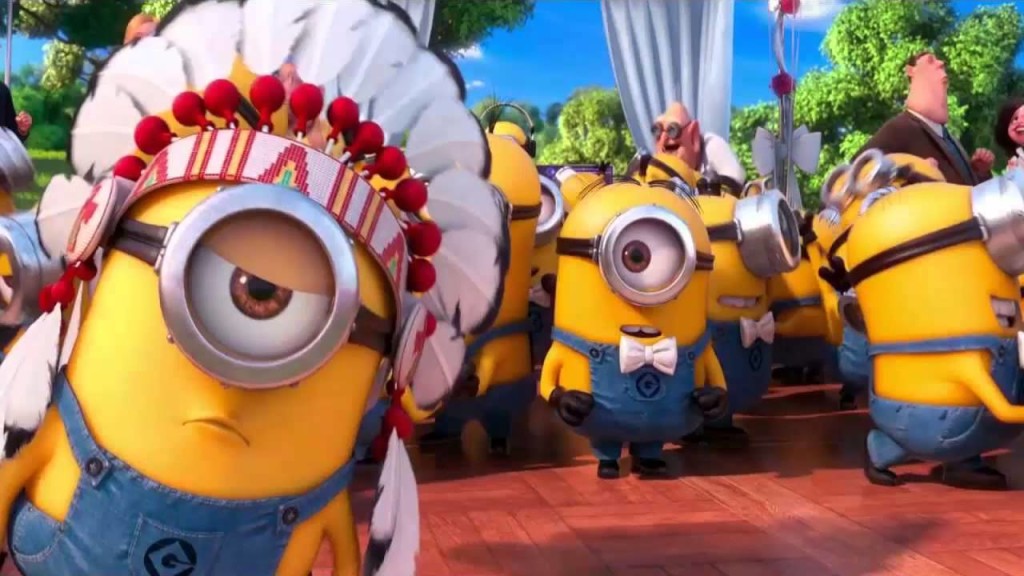
    1. Village People, “YMCA”: The yellow evil army nails every detail – from Indian headdresses to handlebar mustaches – in this spoof of the ’70s disco anthem.

    2. Idina Menzel (“Frozen” soundtrack), “Let It Go”: Millions of little girls may argue otherwise, but this remake of the instant Disney classic will make you shiver with delight.

    3. All-4-One, “I Swear”: Flash back to the ’90s with this soulful rendition of the multiplatinum R&B group’s swoon-worthy ballad.

    4. Pharrell Williams, “Happy”: The title says it all. Clap along and let the music speak for itself with this animated video from the “Despicable Me 2” soundtrack.

    5. Various, “Jingle Bells”: The holidays just got a whole lot merrier thanks to this silly parody of the 1857 Christmas classic.

    6. Maroon 5, “Sugar”: Watch your back, Adam Levine. The Minions may just be the voice of a new generation.

    With voices provided by Sandra Bullock, Jon Hamm, Michael Keaton, Allison Janney, and director Pierre Coffin as the Minions, the animated comedy hit theaters on July 10. Watch the trailer below:

    – Written by Dana Zepeda

    57938
  • Batman Facts: 25 Things You (Probably) Don’t Know About the Dark Knight

    batman factsHappy Batman Day, everyone! Around the world, May 1st may mark a spring holiday, but here, it marks the first appearance of the Dark Knight, in Detective Comics No. 27, in 1939.

    For the past 76 years, the Caped Crusader has been fighting Gotham City evildoers in comic books, movies, TV shows, and pretty much anywhere else you can shine a Bat-signal. Throughout the years, Bruce Wayne’s alter ego has gone through many incarnations, not just in actors (from Adam West to Michael Keaton to Christian Bale to Ben Affleck, among the many), but also in character, from haunted avenger to squeaky-clean do-gooder to campy clown to kinky prowler to world-weary fighter. He’s due for yet another change this week, with the releases of DC’s Batman No. 40 — in which Bruce Wayne and the Joker finally kill each other (or do they?) and a special issue of DC’s Divergence, where an undisclosed character takes up Bruce Wayne’s mantle and becomes a new Batman in a heavily armored, RoboCop-like getup.

    As familiar as we’ve all become with Batman over the years, there’s still plenty you may not know about the character. (Indeed, DC and Warner Bros. are banking on it, hoping the mystery will draw you to see Affleck in next year’s “Batman v. Superman: Dawn of Justice.”) Here, then, are 25 things you didn’t know about your favorite masked vigilante.

    1. Bruce Wayne is named after Scottish hero Robert the Bruce and American Revolutionary hero Mad Anthony Wayne (who turns out to be an ancestor of Batman’s, according to the comics).

    2. The initial Batman stories were especially violent. Batman had no compunction about carrying a gun or killing his foes. Only later did Batman develop a code in which he refused to do either of those things, lest he sink to the level of the man who killed his parents.

    3. Robin didn’t show up until issue No 38. The young sidekick was the alter ego of Dick Grayson, part of a family of circus acrobats whose parents died in a high-wire accident. (It turned out that they’d been killed by mobsters who were shaking down the circus owner for protection money.) Naturally, Bruce Wayne identified with Dick’s plight and adopted him as his ward.

    4. There have been several Robins since, including Jason Todd, Tim Drake, Stephanie Brown, and Damian Wayne (Bruce Wayne’s son by Talia al Ghul).

    5. Batman’s first screen appearance was in a 1943 serial called “The Batman.” It starred Lewis Wilson as Batman and Douglas Croft as Robin. Made at the height of World War II, the shorts featured as their villain a Japanese spy named Dr. Daka, played in yellowface by J. Carroll Naish. The series wasn’t very good, though it did introduce the concept of the Batcave. It also introduced a thin version of Alfred the Butler, who was then drawn skinnier in the comics.

    6. Another serial a few years later, 1949’s “Batman and Robin,” starring Robert Lowery and Johnny Duncan, was better. It had the Dynamic Duo facing off against a black-hooded mastermind called The Wizard.

    7. Were Batman and Robin gay? That was the insinuation of Dr. Fredric Wertham, whose 1954 book “Seduction of the innocent” became a best-seller with its claim that comic books were contributing to a nationwide epidemic of juvenile delinquency. He denounced comics for their grim tone and sensationalist violence, and he singled out Batman comics in particular for centering on a rich playboy who wore tights and went out swinging at night with his teenage ward. The book led to Congressional hearings, which in turn led to the creation of the Comics Code Authority, the industry’s self-censorship operation. To earn the CCA seal and be sold in stores, comic books had to tone down the violence and sexuality, and heroes became more overtly positive role models. DC characters like Superman and Batman became virtual boy scouts. With more sordid underworld and occult tales off-limits, Batman and Robin soon found themselves entangling with space aliens and other bizarre, sci-fi monsters.

    8. The 1966-68 “Batman” TV series starring Adam West as Bruce Wayne and Burt Ward as Dick Grayson brought some of the kink back, but strictly as camp, so arch that it went over the heads of the children who were the show’s target audience.(Watch the reruns now, as a grown-up — IFC has been running them every weekend — and you’ll guffaw at how much they got away with.) Hardcore Bat-fans hated the campy silliness, but the show did revive the DC comic’s flagging sales.

    9. In one series of Batman comics, Bruce Wayne married Catwoman. Their daughter Helena Wayne grew up to be the Huntress.

    10. Frank Miller is generally credited with restoring Batman to his old gritty self with “The Dark Knight Returns,” a four-issue series published in1986, where an aged Batman comes out of retirement, joined by a new Robin, to clean up the streets of a Gotham run amok.

    11. Tim Burton‘s 1989 “Batman” became the first modern comic book blockbuster, cited for its dark tone borrowed from Miller. Before the film’s release, fans were skeptical that Michael Keaton, the comic actor from Burton’s “Beetlejuice,” would make a credible Batman, but he proved more than capable of playing a Bruce Wayne still tormented by childhood trauma.

    12. Among those actors Warner Bros. considered for the lead role were Kevin Costner, Mel Gibson, Bill Murray, Tom Selleck, Charlie Sheen, and Pierce Brosnan, who turned down the role because he couldn’t take seriously the idea of playing a hero in tights.

    13. Jack Nicholson played the Joker in that film, but he received top billing over Keaton’s Caped Crusader. He also was smart enough to demand a percentage of the merchandising, resulting in a payday for the film that was worth between $60 and $90 million.

    14. Bob Kane, the artist who (with writer Bill Finger) created Batman in 1939, was supposed to have a cameo 50 years later in Burton’s film, but while he served as a consultant on that film (and the next three), he was too ill to appear in the film. But the fanciful sketch of the winged vigilante that reporter Knox (Robert Wuhl) is shown comes from Kane’s pen and bears his signature.

    15. Burton and Keaton reteamed for a successful sequel, 1992’s “Batman Returns,” but after that, Burton begged off the series, claiming he’d had a nervous breakdown making the second film, Keaton was game to return, but Warner Bros. deemed his demands unreasonable and replaced him with Val Kilmer for 1995’s “Batman Forever.”

    16. Robin didn’t appear in either of the Burton-Keaton movies, but the character appeared in early scripts for both movies. Kiefer Sutherland was considered for the first film, and Marlon Wayans was up for the part in the second.

    17. After Joel Schumacher directed “Batman Forever,” he broke Hollywood protocol and openly blasted Kilmer for being difficult on the set. “What’s the worst that could happen to me?” Schumacher said of his undiplomatic candor. “That I’ll never work with Val Kilmer again?”

    18. Indeed, Schumacher’s next Bat-film was “Batman and Robin,” starring George Clooney as Bruce Wayne. The film was widely derided by Bat-fans for its campiness (that rubber-nippled Bat-suit!), killed off the film franchise for nearly a decade, and was named the worst film of all time by readers of Britain’s Empire magazine. Schumacher said the studio pressured him to make the movie frothier than the previous installments. “Adults think kids are too scared of Batman, so we had to make it more kid-friendly, make it funnier, make it lighter,” he said in a 2003 interview with The A.V. Club. Still, he accepted the blame for the final product. “I take full responsibility. It’s all me. I know I disappointed some people, but it’s a Batman movie. We’re at war. Let’s get over it.”

    19. Before Warners finally hired Christopher Nolan to direct what became the “Dark Knight” trilogy with Christian Bale, several other Batman movie projects died in development. Darren Aronofsky was to direct a “Batman: Year One” adaptation, based on the late-’80s DC title that covered Bruce Wayne’s earliest days as a crimefighter. But he dropped out to make “The Fountain.” And Wolfgang Petersen was going to do “Batman vs. Superman,” but he dropped out to make “Troy.” And then Warners decided to shelve the superhero duel in favor of a lighter Superman story — which also went through several iterations before becoming the 2006 movie “Superman Returns,” with Brandon Routh.

    20. The Tim Drake character, one of the later Robins in the comics, was the apparent inspiration for John Blake, the character played by Joseph Gordon-Levitt in “The Dark Knight Rises.”

    21. In the comics, Batman has an online alias. It’s JonDoe297.

    22. He also has a favorite food: Mulligatawny soup.

    23. The actor who has logged more time as Batman than anyone else is Batman: The Animated Series” in 1992. Over the past 23 years, he’s been Batman in eight TV series, one animated feature film, two TV movies, 10 home video movies, and 10 video games.

    24. Batman plays a central role in no fewer than seven current DC titles.

    25. In recent years, the owners of the original Bat-copter from the Adam West series have been taking the half-century-old chopper around to state fairs and such, selling rides.
    %Slideshow-203109%

  • Michael Keaton Plays ‘Batman’ & ‘Beetlejuice’ With the ‘SNL’ Cast (VIDEO)

    Michael Keaton, SNLSaturday Night Live” this weekend, and while he was there ostensibly to promote his Oscar-nominated role in the Best Picture winner “Birdman,” the actor was instead bombarded by requests from the cast the reprise two of his most iconic roles: Batman and Beetlejuice.

    During his monologue, Keaton was interrupted by Taran Killam and Bobby Moynihan, who begged the actor to “play ‘Batman’ with us” and “play ‘Beetlejuice’ with us,” citing their childhood love of those two ’80s classics. The castmates broke into song to explain how much they idolized Keaton, and those movies in particular, as Keaton stammered and became more and more uncomfortable.

    Things escalate until Killam and Moynihan decide to just act out scenes from “Batman” and “Beetlejuice” themselves, hilariously dressing up as characters from each film (Killam as Catherine O’Hara in “Beetlejuice” was especially inspired) and editing Keaton into the clips. Jay Pharoah also periodically pops in as The Joker and Harry Belafonte, adding another clever visual gag to the proceedings.

    Check out the hilarious bit below, and enjoy having the “Will you play ‘Batman’ with us, Michael Keaton?” tune stuck in your head all day.

    Photo credit: YouTube

    %Slideshow-223518%

  • The 15 Most Memorable Moments From the 2015 Oscars

    87th Annual Academy Awards - Show
    “Stay weird. Stay different.” That was the advice of Best Adapted Screenplay winner Graham Moore (“The Imitation Game“) to kids out there who might one day follow in his footsteps, but it also could have been the motto for the 87th annual Academy Awards ceremony on Sunday night. The weirdness of the Neil Patrick Harris-hosted Oscars wasn’t in the results — for the record, I went 18 for 24 in my predictions, which is more a testimony to how closely the voting followed conventional wisdom than it is to my crystal-ball skills — but in the presentation. The show was full of WTF? moments, some wonderful, some cringeworthy, some merely bizarre, and all of them memorable. Here are some of the weird and different Oscar moments that viewers won’t soon forget.

    1. “Moving Pictures”
    Neil Patrick Harris‘s opening number was penned by Robert Lopez and Kristin Anderson-Lopez, the composers who won the Oscar last year for “Let It Go”; suffice it to say that your kids won’t be memorizing this one and singing it over and over again like they did that “Frozen” anthem. A few funny lines aside (particularly the one suggesting a homoerotic reading of Ben Affleck and Matt Damon’s on- and off-screen friendship), it was a mostly earnest tribute to the ability of movies to capture our imagination. Which is fine, and so was having Anna Kendrick step in to give sort of a reprise of her Cinderella from “Into the Woods.” The song got weirder when Jack Black showed up, singing lyrics that dripped with cynicism about the movie business — it was actually sort of a welcome antidote to the gee-whiz enthusiasm of Harris and Kendrick — but it was also kind of a buzzkill for a party meant to celebrate movies, and it ended mercifully when Kendrick, still in Cinderella mode, threw her shoe at Black.

    2. J.K. Simmons’s public service announcement
    Many of the winners used their speeches to forward a cause, but the message of Simmons’ victory speech for his supporting role in “Whiplash” was to value your parents, to call them (not just e-mail or text them), and to listen to everything they had to say. It didn’t seem at all relevant to his role as a scary music teacher, but it was certainly sweet.

    3. Neil Patrick Harris Crushes on Channing Tatum
    Introducing presenter Tatum, Harris gushed about how great Tatum looks, whether in “Magic Mike” stripper garb or in his “Foxcatcher” wrestling unitard. He pretended to make a Freudian slip and used the phrase “pants down” instead of “hands down.” Maybe this was Harris’ way of joking about his own sexual orientation; at any rate, having a male host eye a male presenter was probably a historic first for an Oscar ceremony.

    4. Pawel Pawikowkski wins for “Ida”
    The first-ever Polish winner for Best Foreign Language film marveled at his good fortune, winning for a contemplative, black-and-white movie from a previously unheralded country. “How did I get here?” the filmmaker wondered aloud. He made the most of his moment in the spotlight; the orchestra had to play him off twice before he managed to thank everyone.

    5. Harris Editorializes
    Or maybe it was just his joke writers doing the editorializing. Either way, the host seemed to have a lot of pointed opinions about the ceremony, the winners, and the snubs. He introduced presenters David Oyelowo and Jennifer Aniston as “two people who absolutely deserve to be here tonight,” referring to their surprising omissions from the acting nominees’ list (Oyelowo for “Selma” and Aniston for “Cake“). He also did a comedy bit with Oyelowo, and when the audience applauded for the British actor, Harris said, “Oh, now you like him?” Most jarringly, moments after Laura Poitras won Best Documentary Feature for “Citizenfour,” which depicts her suspenseful interview with fugitive National Security Agency leaker Edward Snowden, Harris punned that Snowden himself was unavailable to attend the Oscars, “for some treason.” Whether you think Snowden is a heroic whistleblower who’s standing up for Fourth Amendment privacy rights or an attention-seeker whose leaks jeopardized national security, wouldn’t the classy thing to do be to let Poitras enjoy the recognition of her achievement for at least 20 seconds before pissing all over it for a cheap laugh?

    6. “Everything Is Awesome”
    No surprise that the performance of this nominated tune from “The Lego Movie,” with Tegan and Sara singing the chorus and Andy Samberg’s Lonely Island comedy trio rapping the verses, would feature a troupe of dancers dressed like characters from the movie. But there were also some surprise guests, including Questlove on drums and Devo’s Mark Mothersbaugh (complete with trademark flowerpot hat) on keyboards. Bonus points for the Oscar statuettes made of Lego bricks (a pointed reference to the film’s inexplicable snub from the Best Animated Feature category), which were circulating on stage and among the audience for the rest of the evening. Compared to a real Oscar, the Lego ones were, well, awesome.

    7. “I’m Not Gonna Miss You”
    Presenter Gwyneth Paltrow reminded everyone of the moving story of how Glen Campbell made a point of writing and recording this song after he was diagnosed with Alzheimer’s and knowing that the disease would soon ravage his memory. The rendition of the tune by Paltrow’s “Country Strong” co-star Tim McGraw was one of the evening’s most poignant moments. Just wondering, though: does McGraw ever take off that black cowboy hat?

    8. The “Birdman” parody
    Harris proved he’s not just a nimble emcee but also a good sport by spoofing Michael Keaton’s dash through Times Square in nothing but his briefs. Here, a backstage camera showed Harris locked out of his dressing room, with his robe caught in the door. He abandoned the robe and dashed to the stage, with pulse-pounding drumming supplied by Miles Teller (in character from “Whiplash”). Standing before a billion people in his underwear, Harris delivered the punchline, with a speech that began, “Acting is a noble profession…”

    9. Patricia Arquette speaks out
    Arquette’s victory as Best Supporting Actress was a foregone conclusion (though, surprisingly, it was the only win for “Boyhood” out of six nominations), so viewers shouldn’t have been surprised that she had prepared a written list of people to thank. What was odd was that she ended her speech with a plea for wage equality and equal rights for women. She was far from the only winner to use her speech as an opportunity to raise a political or philanthropic issue, but it probably wasn’t evident to most viewers what those issues had to do with her “Boyhood” performance. Later, Harris scoffed at Arquette’s political statement, referring to it as her “Norma Rae moment.”

    10. In Memoriam
    Meryl Streep gave an eloquent speech suggesting that the departed movie artists live on in the unforgettable work they created. The usual montage followed, but instead of clips of the actors and directors at work, it just showed still portraits, painted from photographs. OK, still classy. (Not classy: omitting Joan Rivers.) Director Mike Nichols seemed to win the applause-meter, but maybe he just got the loudest applause because he closed out the montage. Jennifer Hudson followed with an emotional ballad, which was also classy. But you know what would have been even classier? A moment of silence.

    11. “Glory”
    Staging matters. Here’s proof: “Glory,” John Legend and Common’s nominated song from “Selma,” is an emotional number, but when you stage it with a backing choir that reenacts the march across the Edmund Pettus Bridge, that puts it over the top. It brought the audience in the Dolby Theater to tears (or at least David Oyelowo and Chris Pine, both of whom the camera caught crying), and maybe some viewers at home as well. That the singer and rapper won the Oscar for the song a few minutes later seemed entirely apt, and their eloquent speeches continued the theme expressed in their song: that “Selma” isn’t just about events in Alabama 50 years ago but about the struggle for justice that continues today, all over the world.

    12. “The Sound of Music” tribute
    OK, I understand the impulse to want to pay homage to one of the most beloved movies ever, a Best Picture winner whose 50th anniversary arrives next week. But to put it two hours and 45 minutes into the show, with seven major awards left to be handed out? Not sure why Scarlett Johansson, of all people, was picked to introduce the tribute, or why Lady Gaga, of all people, got to sing the medley. (She did fine, by the way, though it was a little disconcerting to see arm tattoos on a woman belting out tunes made famous by a nun-turned-nanny. Couldn’t she have covered them up with gloves like Rita Ora did?) This would have been the most superfluous musical number of the evening had it not ended with Gaga’s introduction of surprise presenter Julie Andrews. That the “Sound of Music” star showed up at all was an emotional high point of the show; that she graciously thanked Gaga and then presented the award for Best Original Score was icing on the cake. Couldn’t they have skipped the manufactured nostalgia, brought to you by two performers born 20 years after the film’s release, and just had Andrews show up?

    13. Graham Moore’s speech
    Moore’s victory for writing the “Imitation Game” screenplay wasn’t the least bit surprising, but his acceptance speech was a stunner. What, after all, had drawn him to write about Alan Turing, the brilliant World War II codebreaker who, instead of being celebrated as a hero, was hounded to his death because of his homosexuality? Moore made the political personal, revealing to billions that, “When I was 16 years old, I tried to kill myself because I felt weird, and I felt different, and I felt like I did not belong. And now I’m standing here.” That instead he lived to become an Oscar-winning screenwriter was Moore’s proof that, as the public service ad campaign a few years ago suggested, It Gets Better. He urged gay kids, or any kids who feel alienated, to stick it out and do something great, so that one day they can stand at the podium and pay it forward.

    14. The briefcase gag
    At the beginning of the show, Harris boasted of his prowess at predicting the Oscars and pointed to a briefcase in a glass box, which he said held predictions he’d made earlier in the week, predictions he’d read from at the end of the show to prove his prophetic skills. To make sure no one tampered with the case, he enlisted Octavia Spencer, sitting in the front row, to keep an eye on it for the next three and a half hours. (Great, the woman wins an Oscar, and now Harris is once again making her into The Help.) Throughout the show, Harris turned to Spencer to ask if she was still guarding the case. Finally he read his predictions, which were not about the winners but about the funny things that happened during the show. Smuggling that list, printed out on gold cards and shown on camera, into the locked case was a neat magic trick, but the lengthy setup wasn’t really worth the slight, jokey payoff.

    15. The “Birdman” sweep
    The arty, surreal drama about a former superhero-movie star seeking redemption on Broadway won four prizes — Best Cinematography, Best Original Screenplay, Best Directing, and Best Picture. Three of those trophies ended up in the hands of writer/director/producer Alejandro Gonzalez Iñarritu, the Mexican filmmaker whose imaginative mind and fractured English led to some of the most offbeat acceptance speeches of the night. He claimed that, as a good-luck talisman, he was wearing Michael Keaton’s famed tighty-whities from the film. He also tried to express humility and share the credit, derisively referring to “that little prick called ego” (a phrase that surprisingly went unbleeped by the ABC censors). He also called for a more sensible immigration policy — this after Best Picture presenter Sean Penn made a green-card joke about him. (Penn starred in Iñarritu’s “21 Grams” a decade ago, so maybe he was just razzing an old friend, not making a slur.) Michael Keaton didn’t win Best Actor (that went to the bouncy and excited Eddie Redmayne for “The Theory of Everything“), but Iñarritu let him speak anyway. Keaton started to thank his colleagues but then the 63-year-old first-time Oscar nominee interrupted himself, saying, “Look, who am I kidding? It’s great to be here.” Indeed it is.
    %Slideshow-268152%

  • ​Oscars 2015: 7 Burning Questions Remain

    %Slideshow-260994%
    The Oscars aren’t until next Sunday, but the race will be all over by Tuesday. The 17th is the day ballots are due; after that, it’s all in the hands of the number-crunchers at Pricewaterhouse Cooper. Still, there were a lot of last-minute awards given out over the weekend by several of the professional groups — writers, cinematographers, sound editors, sound mixers, and makeup artists and hairstylists — whose members will also be turning in their Oscar ballots this week. Their decisions should help you, not only to determine who’ll win the prizes in the more obscure corners of your Oscar pool ballot, but also which movies have broad enough support to win the more coveted prizes.

    What did we learn from this weekend’s guild awards?

    Well, the Writers Guild of America gave its original screenplay prize to “The Grand Budapest Hotel” and its adapted screenplay prize to “The Imitation Game.” Those are safe bets for the Oscars as well. The American Society of Cinematographers gave its top prize to “Birdman,” and even though Emmanuel “Chivo” Lubezki also won this Oscar last year for “Gravity,” he’s likely to win again this year for his stunning long-take tracking shots that comprise “Birdman.”

    The Cinema Audio Society, which recognizes the work of sound mixers, gave its live-action prize to “Birdman,” which not only makes that film the favorite for the Sound Mixing Oscar but adds yet another burst to its momentum for Best Picture. Don’t confuse this group with the Sound Editors (who handle sound effects, rather than the overall soundtrack), whose Golden Reel award this weekend went to “American Sniper.” That film is a safe bet for the Sound Editing Oscar, which, after all, usually goes to the loudest movie. (Yes, there are three war movies competing; besides “Sniper,” there’s “The Hobbit: The Battle of the Five Armies” and “Unbroken,” but the Academy will want to give at least one Oscar to “Sniper,” and this is about the only one it’s likely to get. As for the other two nominees, “Interstellar” had sound problems, according to many listener complaints, and “Birdman” hardly seems to belong in this category.)

    As for the Makeup and Hairstylist Guild Awards, they gave two prizes each to “Budapest” (Best Period Makeup, Best Period Hairstyling) and “Guardians of the Galaxy” (Best Contemporary Makeup, Best Special Makeup Effects). Since these two films are competing for the Makeup and Hairstyling Oscar (along with “Foxcatcher,” which went unrewarded by the guild), they seem to be evenly matched going into the final stretch. It’s a tough call; “Budapest” has an impressive array of whimsical mustaches and beards, not to mention Tilda Swinton’s elaborate old-age makeup, but “Guardians” had impressive makeup as well, was one of the year’s biggest hits, and is unlikely to win any other Oscars except maybe Visual Effects. So this category looks neck and neck.

    So, is it gonna be “Boyhood” or “Birdman”?

    Tough to say. There’s a precedent either way. “Boyhood” won the BAFTA for Best Picture last weekend, along with many precursor awards earlier in the season, and the last six BAFTA winners have gone on to win the Best Picture Oscar as well. Then again, it’s not clear that people in Hollywood actually care what the British Academy thinks; rather, the BAFTAs seem to reflect conventional wisdom, not generate it.

    “Birdman” has won the three major guild awards (Producers, Screen Actors, and Directors), and it’s been 19 years since a movie (“Apollo 13”) won all three of those and failed to win Best Picture. Also, the Academy seems to have gotten over its long-standing bias against movies about show business (see recent winners “The Artist” and “Argo”). Plus, there’s the simple fact that it has nine nominations to six for “Boyhood.” On the other hand, it’s very hard to win Best Picture without even scoring an Editing nomination (as “Birdman” failed to do), and there’s also just the general weirdness factor, contrasted with the more traditionally heartfelt “Boyhood.” So I’d say the odds favor “Birdman,” but it’s going to be very close.

    Does any other movie have a chance?

    Not really. The way the weighted voting system works for Best Picture ballots favors movies that are widely admired (if not loved) over movies that inspire passionate feelings for or against. So movies that are divisive or don’t inspire much enthusiasm will fall by the wayside. Not everyone loves “Boyhood” or “Birdman,” but they’re both widely admired.

    As for the others, “American Sniper” may be far and away the most populist movie among the Best Picture nominees, having earned more than $300 million to date, but to the Academy, it’s still too controversial. “Grand Budapest Hotel” has as many nominations as “Birdman,” but it’s a more overt comedy, and comedies almost never win. “The Imitation Game” and “The Theory of Everything” are pretty standard-issue biopics, with only their strong lead acting performances to distinguish them. “Selma” is as divisive in its own way as “American Sniper,” though it’ll probably win Best Original Song and have to be satisfied with that. “Whiplash” doesn’t feel like the kind of grand, ambitious movie that says “Best Picture,” though tyrannical music teacher J.K. Simmons is a lock for Best Supporting Actor.

    Who’ll win the acting prizes?

    Along with Simmons, “Still Alice” star Julianne Moore and “Boyhood” co-star Patricia Arquette have been locks for Actress and Supporting Actress since day one. That leaves Best Actor as the only truly suspenseful race.

    Let’s see, Benedict Cumberbatch did a solid job playing Alan Turing in “The Imitation Game,” but the role isn’t as flashy as the others in the category. Bradley Cooper is nominated for the third time in three years, but the Academy’s ambivalence toward the real-life story of Chris Kyle, which will keep “American Sniper” from winning Best Picture, will extend to Cooper’s performance as well. (Indeed many pundits were surprised he was even nominated.) Steve Carell’s physical and dramatic transformation for his creepy “Foxcatcher” role is impressive, but it’s not clear that the movie is all that well regarded or even widely seen. Besides, if the narrative behind the performance is what a great job a comedian did with a dark and dramatic role, it’s easier to go with Michael Keaton for “Birdman,” which also has the virtue of being the actor’s comeback role and his first recognition by the Academy during a long and celebrated career. The only one who can trump him is Eddie Redmayne, for his striking physical transformation as Stephen Hawking in “The Theory of Everything.” Playing someone who overcomes tremendous physical or mental disability is often a sure path to Oscar success. Both actors have won a number of precursor awards this season, so this category remains a toss-up, to be decided according to which personal narrative the Academy prefers.

    Is Oscar campaigning getting out of hand?

    Seems so. After all, it’s kind of silly that personal narrative should matter so much (as opposed to, you know, merit), but it does. The “For Your Consideration” ads for “The Imitation Game” popping up on the trade websites are just the latest symptom. They hint that Academy members should pick the film (and Cumberbatch) because it’s a way of honoring Turing as a gay martyr. That’s pretty rich for a film that’s been accused of downplaying the World War II codebreaker’s homosexuality. Plus, it’s a tactic likely to backfire, as it did nine years ago for “Brokeback Mountain.”

    Meanwhile, songwriting nominee Diane Warren, who’s been nominated six previous times without a win, is griping that neither singer Rita Ora nor the Relativity record label are doing enough to campaign for her tune “Grateful,” from the film “Beyond the Lights.” She may have a point — the song is certainly an underdog in a category that contains “Glory” (from “Selma”), “Everything Is Awesome” (from “The LEGO Movie”) and “I’m Not Gonna Miss You” (from “Glen Campbell: I’ll Be Me.”). “Glory” is the favorite (because “Selma” has to win something), and everyone loves “Everything Is Awesome” (though not enough to overcome the Academy’s aversion to satirical songs). Campbell’s tune, inspired by his valiant struggle against Alzheimer’s, has sentiment and personal narrative on its side. The other nominee, “Lost Stars,” from the little-seen musical “Begin Again,” has even less of a shot than “Grateful.” Which makes Warren’s carping seem, well, less than “Grateful.” To the extent that personal narrative matters, she’s not helping her cause.

    Is it really an honor just to be nominated?

    Yes. In fact, it’s lucrative. Not only to the nominees enjoy the likelihood of salary raises the next time they’re up for a role, but even if they don’t win, they’ll take home a swag bag this year worth a reported $125,000. This collection of luxury goods and travel gift certificates isn’t an official Academy gift (it’s put together by an outside firm, without the Academy’s endorsement), but it’s still a pretty nice consolation prize for the 80 percent of nominees who won’t go home with trophies.

    In the grand scheme of things, how much does all this matter?

    Not much, perhaps. As film critic Richard Roeper pointed out in a tweet, “Fifty Shades of Grey” earned more during its Valentine’s Day weekend debut than “Boyhood,” “The Theory of Everything” and “Whiplash” have earned all together during their entire runs. Of course, “Grey” isn’t going to win any Oscars next year, but swag bags aside, it looks like this year’s Best Picture contenders are fighting over who gets to be king of an awfully small anthill. The winner, whether it’s “Birdman” or “Boyhood,” will be celebrated for a moment and forgotten by the time next year’s Oscars roll around. After all, last year was the year of “12 Years a Slave,” and yet this year, the Academy seems to have forgotten that black people exist, either as story subjects or as performers and filmmakers.

    Then again, who’s to say this year’s Oscar race will have no larger impact? Five years ago, “The Hurt Locker” became the lowest-grossing Best Picture winner in ages, and yet it seems Clint Eastwood must have seen it. What else is “American Sniper” but his “Hurt Locker,” an Iraq War movie that is careful not to take a political position on the war itself, that celebrates the heroism of the troops while reckoning the moral and soul-destroying cost of combat on the lives of individual servicemen and their families? Five years ago, that seemed a radical artistic approach; today, it’s a mainstream blockbuster. Whose to say that, a few years from now, we won’t be seeing mainstream hits that incorporate the structural innovations of “Boyhood” and “Birdman”? For all the seasonal squabbling over politics, ego, wounded pride, and money, the art of storytelling through moving pictures continues to advance, and it’s good to have an annual excuse to stop and recognize that.
    US-ENTERTAINMENT-FILM-OSCAR-NOMINATIONS

  • Best of Late Night TV: Mean Tweets Music Edition, Michael Keaton’s ‘Birdman’ Kid Theater (VIDEO)

    If you’re like us and value your sleep, you probably nodded off into your Ambien dreamland before the party started on post-prime time TV. Don’t worry; we’ve got you covered. Here’s the best of what happened last night on late night.

    “Birdman” star Michael Keaton was on “The Tonight Show” Monday night, and Jimmy Fallon said he wanted to see how good the Oscar nominee could be. So Michael and Jimmy re-enacted scenes from “Birdman” but not the real movie – a version written by school-children. The kids were just asked to write scenes for a movie called “Birdman.” So watch them do some Kid Theater. Telling you, some of these “Birdman” scripts are gold. Keaton crushes it. Amazing. Jimmy Kimmel had another unmissable round of Mean Tweets, this time in a Music Edition read off by Josh Groban, Drake, Lady Gaga, Sam Smith, Jessie J, Blake Shelton, Haim, Wiz Khalifa, Ed Sheeran, Iggy Azalea, Pitbull, Sia, Childish Gambino, Britney Spears, Ariana Grande, Jason Aldean, 5 Seconds Of Summer, Katy Perry and Psy. Some of the tweets are genuinely mean (and gross!), but others are just laugh-out-loud funny. Rob Gronkowski was also on “Jimmy Kimmel Live” and he read aloud from a fan’s work of erotic fiction called “A Gronking to Remember.” Apparently this is just Book 1 from this fan’s series. His mom was in the audience hearing all of this. Hilarious! Eva Longoria was also on JKL and she explained her Super Bowl injury from her party. She was so worked up by the final play she fell on her friend and cut herself. Bob Costas was on “Conan,” so of course he talked about both DeflateGate and the Super Bowl’s final play. Bob joins the ranks of those who believe if the Seahawks had handed the ball to Marshawn Lynch, they’d be the Super Bowl champs right now. But Bob gave props to Malcolm Butler. And we’re all sick of the deflated football talk, but Bob said DeflateGate was no big deal and mostly about the modern 24/7 news cycle.

    Eddie Redmayne was also on “Conan” and talked about his killer abs in “Jupiter Ascending.” He plays a vain space tycoon so he worked out and got fit and it’s only blink-and-miss in the film. So Conan got Eddie a gift — a huge portrait of his character with the abs. They also discussed Eddie’s freckles, which have helped him get roles, and it was noted that Eddie is actually a dead ringer for Jennifer Garner Affleck. There’s video evidence from one of his early roles!

    John Oliver was on “Late Night with Seth Meyers” – and he’s such a good watch. Always. He and Seth discussed the Super Bowl, Katy Perry’s halftime show, and how much it hurts when your sports team loses. He really lost it when England lost to Germany during the World Cup. He’s a Liverpool fan and he met the team, but it didn’t go well. He saw them in the locker room and the entire team came out naked – “waving a handless hello” – and it changed his relationship with them. Ha! John obviously talked about “Last Week Tonight” and its new season. “Jungle” Jack Hanna was on “Late Show” with David Letterman and Dave got to hang out with an adorable “bush baby.” The cutie sat on Dave’s new hat and started jumping all over him. Apparently bush babies pee on themselves to wash themselves? They also brought a venomous cobra out. Poor guy didn’t want to be there, and Dave wasn’t very welcoming. Dave also addressed the big Super Bowl shocker and shared the “Top 10 Pete Carroll Excuses”: Sean Hayes guest-hosted the “Late Late Show” and guest Marion Cotillard talked about the first guy she kissed on screen. Apparently it was bad. Really bad.

    %Slideshow-265036%

  • ‘Beetlejuice 2’ Could Start Shooting Later This Year (Fingers Crossed)


    Buzz about a potential “Beetlejuice 2” has been ongoing pretty much ever since the classic Tim Burton film first hit theaters in 1988. But now, with Burton confirming that a sequel is indeed in the works, it seems that the movie is actually, really, 100 percent happening — and may begin production as early as this year.

    Writer Seth Grahame-Smith (“Pride and Prejudice and Zombies,” “Abraham Lincoln: Vampire Hunter”), who’s co-writing the script and co-producing the flick with his “Dark Shadows” collaborator Burton, gave a status report on the project in a recent interview with Entertainment Weekly, and dished out a bunch of scoop about the follow-up.

    First, Grahame-Smith confirmed what Burton had alluded to during a recent press tour for “Big Eyes”: Winona Ryder will be back. And after publicly hinting that he’d be interested in the sequel, Michael Keaton is also on board, according to Grahame-Smith.

    As for what the writer’s script entails, Grahame-Smith didn’t provide any actual details about a plot, though he did say he’d already written several drafts, and has gotten approval from Burton and Keaton.

    “I think we landed on the right idea, landed on the right approach,” the writer told EW. “It’s just now making sure that-for me-I don’t want to s–t my pants in front of the entire world making a sequel to one of my favorite movies.”

    As for when the world might finally see the heavily-anticipated flick, Grahame-Smith indicated that production could begin sometime later in 2015.

    “Where it stands now is Tim’s got to get ready to make [‘Miss Peregrine’s Home For Peculiar Children’], and then hopefully we are set, deals are done, and we’re waiting in the wings ready to go right after ‘Peregrine’s’ wraps up,” Grahame-Smith told EW. “The ideal timeline is we’re really getting into it toward the end of this year.”

    We can’t wait.

    [via: Entertainment Weekly]

    Photo credit: Getty Images

    %Slideshow-121333%