Tag: marilyn-monroe

  • Ana de Armas is Marilyn Monroe in New ‘Blonde’ Trailer

    ZLWH3VEZ

    On the heels of the first teaser for Andrew Dominik’s new movie, ‘Blonde’ comes the first full trailer. Though it really is just an extension of that initial look, probing a little deeper into the world of Marilyn Monroe.

    Adapting Joyce Carol Oates’ novel, this is described as a “reimagining” of Norma Jean’s/Marilyn’s life. So don’t expect gospel truth, but then truth was never always at the forefront of Marilyn’s story. At least for the public. “Watched by all, seen by none” runs the telling tagline on the trailer.

    From her volatile childhood as Norma Jeane, through her rise to stardom and romantic entanglements, ‘Blonde’ blurs the lines of fact and fiction to explore the widening split between her public and private selves. Norma Jean is here brought to life by ‘Knives Out’ and ‘No Time to Die’ rising star Ana de Armas.

    Ana de Armas as Norma Jeane Mortensen / Marilyn Monroe in Netflix's 'Blonde.'
    Ana de Armas as Norma Jeane Mortensen / Marilyn Monroe in Netflix’s ‘Blonde.’

    “Andrew’s ambitions were very clear from the start — to present a version of Marilyn Monroe’s life through her lens,” says de Armas. “He wanted the world to experience what it actually felt like to not only be Marilyn, but also Norma Jeane. I found that to be the most daring, unapologetic, and feminist take on her story that I had ever seen.”

    “The film moves along with her feelings and her experiences,” de Armas adds. “There are moments when we are inside of her body and mind, and this will give the audience an opportunity to experience what it was like to be Norma and Marilyn at the same time.”

    The ‘Blonde’ supporting cast surrounding de Armas plays a variety of characters, some with codenames such as “The Playwright” – who is surely Arthur Miller – and “The Ex-Athlete” – Joe DiMaggio, one of Marilyn’s other famous husbands. The ensemble includes Adrien Brody, Bobby Cannavale, Toby Huss, Julianne Nicholson, Spencer Garrett, Scoot McNairy and Garret Dillahunt.

    Adrien Brody as Arthur Miller and Ana de Armas as Norma Jeane Mortensen / Marilyn Monroe in Netflix's 'Blonde.'
    (L to R) Adrien Brody as Arthur Miller and Ana de Armas as Norma Jeane Mortensen / Marilyn Monroe in Netflix’s ‘Blonde.’

    This take on her experiences gave Dominik real scope to explore the private life of an icon. “She’s deeply traumatized, and that trauma necessitates a split between a public self and a private self, which is the story of everyone, but with a famous person, that often plays out publicly, in ways that may cause additional trauma,” he says. “The film’s very much concerned with the relationship with herself and with this other persona, Marilyn, which is both her armor and the thing that is threatening to consume her.”

    Dominik has had to wrangle with plenty of opinions on the film and its subject as he’s pushed the passion project through production. Controversy arose over the film’s NC-17 rating and its gritty depiction of sex and addiction, which were part of Norma Jean’s life.

    “I seem to get myself in these situations where people regard me as provocative, but it’s never what I’m trying to do,” the director argues. “I’m just trying to say it as clearly as I can. My ambition is to make you fall in love with Marilyn.”

    ‘Blonde’ will arrive on Netflix on September 23rd.

    Writer and director Andrew Dominik, Bobby Cannavale as Joe DiMaggio, and Ana de Armas as Norma Jeane Mortensen / Marilyn Monroe on the set of Netflix's 'Blonde.'
    (L to R) Writer and director Andrew Dominik, Bobby Cannavale as Joe DiMaggio, and Ana de Armas as Norma Jeane Mortensen / Marilyn Monroe on the set of Netflix’s ‘Blonde.’
    Bobby Cannavale as Joe DiMaggio and Ana de Armas as Norma Jeane Mortensen / Marilyn Monroe in Netflix's 'Blonde.'
    (L to R) Bobby Cannavale as Joe DiMaggio and Ana de Armas as Norma Jeane Mortensen / Marilyn Monroe in Netflix’s ‘Blonde.’
    Ana de Armas as Norma Jeane Mortensen / Marilyn Monroe in Netflix's 'Blonde.'
    Ana de Armas as Norma Jeane Mortensen / Marilyn Monroe in Netflix’s ‘Blonde.’
    pvmayTxvyC4TLuYUOg4T75
  • Netflix’s Marilyn Monroe Movie ‘Blonde’ Adds Adrien Brody, Bobby Cannavale

    Netflix’s Marilyn Monroe Movie ‘Blonde’ Adds Adrien Brody, Bobby Cannavale

    BBC

    Adrien Brody likes a “Blonde.”

    The Oscar winner is joining the cast of Netflix’s Marilyn Monroe biopic “Blonde,” along with Bobby Cannavale and Julianne Nicholson.

    They will appear opposite Ana de Armas in the lead role as the iconic actress.

    The cast also includes Caspar Phillipson, Toby Huss, Sara Paxton and David Warshofsky.

    The project comes from writer/director Andrew Dominik  (“The Assassination of Jesse James”).

    “Blonde” is based on the novel of the same name by Joyce Carol Oates. It is a fictional reimagining of the private story of the world’s most famous sex symbol during the ’50s and ’60s, told the modern lens of celebrity culture.


  • 11 Things You Never Knew About ‘Some Like It Hot’

    11 Things You Never Knew About ‘Some Like It Hot’

    United Artists

    It’s been 60 years since “Some Like It Hot” premiered in theaters, but there are few comedies in Hollywood history that seem to have retained their impact, both culturally and viscerally, like this 1959 film about two musicians in drag hiding from the mob in an all-female band. Billy Wilder had long since proven his mettle as a screenwriter and director by the time of its release, thanks to “Double Indemnity,” “The Lost Weekend,” “Ace In the Hole,” “The Seven Year Itch” and more. But the film’s defiance of convention — made without the notoriously restrictive Motion Picture Production Code seal of approval — made it a delightfully naughty escapade for audiences that has only grown in stature over the years and even became a trailblazer, if not necessarily a nuanced one, for exploring taboo subjects like homosexuality on screen. (It was recently inducted into the Criterion Collection.)

    As the film commemorates its 60th anniversary, Moviefone celebrates Wilder’s achievement with a list of trivia, production details and other factoids from the making and legacy of this comedy classic. Hold on to your blouse!

    United Artists

    1. When Wilder originally conceived the idea with co-screenwriter I.A.L. Diamond, he originally hoped to cast Frank Sinatra as Jerry/Daphne, the role that went to Jack Lemmon, and Mitzi Gaynor as Sugar, eventually played by Marilyn Monroe.Sinatra apparently lost out on the role after missing a lunch date with Wilder.

    2. Al Capone was an inspiration and obvious point of reference for the character of Spats Colombo, the gangster on Joe and Jerry’s heels. Capone gunned down rival gang members in the 1929 Saint Valentine’s Day massacre, an incident that is strikingly similar to the events in the film.

    3. Monroe’s contract stipulated that all of her films were shot in color, but Wilder convinced her that black and white would be better for “Some Like It Hot” after seeing color screen tests that made Lemmon and Tony Curtis look green and ghastly when in their drag make-up.

    United Artists

    4. In order to get comfortable in their costumes, Curtis and Lemmon walked around Goldwyn Studios dressed as women to see how long it would take for them to get noticed. A scene on the train where the duo applies make-up echoes an experience where they used a public mirror and none of the surrounding women complained, convincing them they could fool, or even just pass for women.

    5. Curtis and Lemmon hired a male cabaret dancer named Barbette to teach them how to walk in heels. But after a week, Lemmon declined his help after realizing that he wanted to look like a man trying to walk like a woman rather than simply walking like a woman.

    6. Curtis proposed that he talk like Cary Grant when playing the “millionaire” role, and Wilder agreed. The results are self-evident in the film, but Grant objected. When he saw the film and Curtis’ impression, he joked, “I don’t talk like that.”

    7. Despite his best efforts, Curtis was unable to maintain the falsetto needed to play Josephine for an extended period of time. As a result, Wilder ended up combining some elements of Curtis’ performance with dubbing by actor Paul Frees to give it the consistency that the film needed.

    8. Marilyn Monroe’s problems remembering her lines have grown to epic proportions because she was suffering from alcohol and drug addiction. She apparently required 47 takes to correctly say, “It’s me, Sugar.” In another scene where she asks, “@here’s the whiskey?” Wilder allegedly pasted the dialogue in the bottom of each drawer so she couldn’t miss it. (It still supposedly took 59 tries.)

    United Artists

    9. The now-famous closing line, “Nobody’s perfect,” was originally conceived as a stand-in for whatever Wilder and Diamond could come up with later – which eventually turned out to be nothing. Wilder later wrote his own epitaph inspired by a similar line: “I’m a writer, but then nobody’s perfect.”

    10. Produced outside the Motion Picture Production Code, the film’s story plays not only with the idea of cross-dressing but homosexuality. As a result, the film was banned from being shown in Kansas, and the Roman Catholic Church legion of Decency rated it “Morally Objectionable in Part for All.”

    11. 49 years after the release of the movie, a California man found a little black dress in his closet and was shocked to discover that Monroe was once sewn into it for the film. Appraisers for “Antiques Roadshow” determined that the eventual value of the hand-me-down was an estimated $250,000.

  • ‘Time After Time’ Stars Stroma and Bowman Embrace History On-Screen and Off

    Freddie Stroma and Josh Bowman in TIME AFTER TIME“Time After Time” stars Freddie Stroma and Josh Bowman have to deal with some serious history — as much off-screen as on.

    Not only do the two actors have to bring to life two of the most intriguing and legendary real-life figures from the Victorian era as they journey through time — the pioneering science fiction novelist and futurist H.G. Wells and the still-enigmatic serial killer Jack the Ripper, respectively — they also have to do so in the shadow of the two renowned actors, Malcolm McDowell and David Warner, who originated the roles in the 1979 cult classic film the TV series is based on.

    But the two British gents are more than game for the task, as they revealed in a candid chat with Moviefone — as well as disclosing the very specific time and place in American history where they’d both like to take a time-traveling vacation.

    Moviefone: I discovered the original “Time After Time” movie when I was maybe 11, so I’m very fond of it. How did it hit you guys, and what were your takeaways, seeing it now?

    Freddie Stroma: We read the script first. We watched it after. I read the first and then watched it. So for me, it was in ’79. So the first thing you notice, I think anyone would notice now, it was in a different time period of filmmaking. Certain aspects are a little slower. It was from the ’70s. It makes sense. And obviously the special effects [then] — that’s as it was.

    Josh Bowman: We’ve taken it and modernized it. Better or worse, I don’t know about any of that. We’ve modernized it and made our own version for television. Hopefully it’s a fun journey for the audience. We go on this crazy adventure. We’ve changed the setting Manhattan instead of San Francisco and it takes place over 12 episodes, so we really stretch it out.

    As you started building your versions of these characters, tell me where you started. What were the things that initially as you were analyzing it, knowing that there is an H. G. Wells to look at, knowing that there’s at least Ripper lore to look at, how did you start creating these characters?

    Stroma: It started with what we had on the page. I think they were both pretty specific on the page. The main thing that I saw from H. G. Wells that was definitely in Kevin [Williamson‘s] writing was his obsession with utopia. I think we really ran with that. I think that’s kind of his through thing, is his absolutely innocence.

    So he really believes in that utopia, and that plays every scene. He just constantly believes the best in people, and he still believes the best that he will own up, and he will come back, and he will do what is righteous, and that to me has been the biggest point of H. G. Wells.

    Bowman: Kevin definitely created these two characters, and I think they’re quite different from the movie. He’s very much the protagonist, and I’m the antagonist, and you see that. But you also see this relationship that’s important throughout, the relationship between these two characters.

    I’m playing a fictional character, effectively, so we read the novels of H. G. Wells. I read into some of these guys, types of people who did these heinous things, psychopaths. Kevin knows how to write for some of these things — he’s done it for a long time. There’s bits of “Scream” in this.

    Hell, there’s probably bits of “Dawson’s Creek.” There’s a great love story with these two. It’s really romantic and beautiful, and I’m in there to try and mess it all up. We had a lot of fun in New York. It was a great place to go and shoot. Like Freddie said, what was on the page. We try to influence whatever we could.

    By coincidence, I recently interviewed Nicholas Meyer, the writer and director of the original. One of the things that he said, in the way that Wells is struggling with this lack of utopia, the dystopian qualities of our society now, the Ripper had just come home, in a sense. Did you find that?

    Bowman: Yeah, definitely. He’s in awe when he comes across bar with women wearing revealing dresses, and cleavage is out, and they have all sorts of amazing makeup. Even the figures are different, and all sort of different shapes, and sizes, and colors. It’s honestly like a kaleidoscope of people for him. So yeah, he’s definitely taken away with that, drug use, alcohol. Everything is completely different. Yeah, he definitely goes into that world wide-eyed and taking it all in, drinking it all in.

    Because the love story is part and parcel of what “Time After Time” has been, Freddie, tell me about finding what you needed to find there — working with Genesis Rodriguez to get that spark and that rapport that you guys needed, and carry it forward past where we know the setup of the story’s going to be.

    Stroma: To me, it comes down to the fact that H. G. Wells is in such a place where he’s so upset about utopia not being in the future, and he keeps meeting people that don’t really help him. And then suddenly, he finds this woman who is kind to him, and it’s this weird glimpse I think into, “Wait, there can be a utopia,” and she’s this strong woman who shows strength and kindness, and feminism is something that he’s never really experienced before. I think that was key, really, to why he is so drawn to Jane, and then she’s intelligent as well. All those aspects which make her very attractive to him.

    Did you guys see any character bits in Malcolm McDowell’s or David Warner’s performances that you were like, “I’m going to remember that and keep it in my back pocket, and maybe use it to inform something here or there.”

    Bowman: I can’t compare myself to him! He’s unbelievable, so I did the best with what I could. I think they were great in the film. We try to do the best we could under all the circumstances, and also try and create something that’s different. It’s definitely younger, a lot younger than what they were.

    Stroma: I couldn’t steal anything. There’s nothing I saw that I was like, “Ooh, I’m going to save that.” But I would have done so if I’d suddenly seen something that would work for us!

    Bowman: The deep underbelly of it was very similar. He believed in this utopian society. I was a bit more of a realist and excited to see this new world, and ran amok. And like him, I shaved and changed my look. We went from quite a different look. We started in a very period look and went to a very, very modern look. But also the modern look now is different from the ’70s, right? It’s probably a bigger jump. It’s a timeless piece now, Malcolm McDowell and David Warner and Mary Steenburgen.

    Stroma: There was one moment: there’s a scene in the hotel where he comes up. I was definitely struggling with how much this man is in love with utopia, and he really believes the best in people. He would just walk up to Jack the Ripper and say, “All right, we’re going now.”

    I was worried about that level of wide-eyed, sort of positive belief, as opposed to just idiocy — it’s like, “You know he’s a killer. You must have that intelligence, social intelligence to understand that.” So it helped seeing it in the movie going, “OK, yeah, I can do that. That sort of makes sense. I have to play him as if he’s that sure.”

    Ever since the real H. G. Wells pretty much invented the time-travel story, it’s been a fascinating concept and it’s been great for books, and movies, and TV shows. Either in visiting an era that you never had access to, or the possibility of correcting a mistake in your own past, what is it that appeals to you guys most about the time-travel concept?

    Stroma: I think it’s a similar thing to magic movies and the rest of it. I think it’s power. People like the idea of going back with knowledge, and you can tell people things. And then the other aspect is someone will go to the future, which is just seeing what they would think of such things. Would they frown upon the things we do, or would they marvel at it? I guess we kind of do a bit of that.

    To me, I think it’s always the idea of knowledge. It’s exciting to know what the future has in store. Or it’s fun to have the power of knowledge to go back and know what’s going to happen. You’re almost a deity of sorts. You can tell the future. I think it’s the same as magic movies. People love, “What if? If you could cast any spell, what would you do?” Same with superheroes. If you had this power, what would you do? It’s that what if thing.

    For yourselves, for your own curiosity, is there an era that fascinates you? Is there a place that you would love to go and visit if time travel existed?

    Stroma: I think ’50s America —

    Bowman: Rat Pack!

    Stroma: Oh yeah!

    Bowman: Walk around with Sammy Davis, Jr., Dean Martin, and Frank Sinatra, go to Palm Springs when Marilyn Monroe was there, Brando was coming up —

    Stroma: America in the ’50s!

    Bowman: Imagine rolling the dice in Vegas with them. Imagine smoking cigars, drinking Scotch. I always say I’d be there in a heartbeat.

    Stroma: Yeah. I said that at Comic-Con for my answer and [director] Marcos [Siega] and Genesis just kept laughing at me. I was like, “Why is that weird?” It’s an incredible time!

    Bowman: It’s a guy’s thing. It’s a classy time. I suppose that’s when America was at its greatest. For sure. We’ve all lost our [swagger] now, everyone. Not just America: the whole f*cking world. But back then, movie stars were movie stars. There was class. There was integrity.

    Stroma: It was an economic boom. Things were happening. There was innovation It’s an incredible moment in history in America.

    Bowman: Music is great now, but music was amazing. And acting, that’s what it’s like to shift as well from “the stage” to people who were just like embodying characters, inhabiting characters, and you’re like, how do they do that? Brando, James Dean, Monty Clift. All those amazing actors. Yeah. “[A] Streetcar [Named Desire],” to me, that was the time acting in movies changed — it was Brando in “Streetcar,” coming in and going, “Wait, he’s being real.” And you look and you go, people do that now. People weren’t doing that back then. He was so present.

    Really, the key relationship in this show is the two of you. Tell me about finding your give and take as actors as you started playing the role and circling around each other.

    Bowman: Straight off the bat, it was fairly easy, for me anyway. I think the majority of the time it was get what we need from the scene and why we’re saying what we’re saying, but we already had a rapport to do that. We had fun. It’s not uber, uber drama, but it is in a world that’s dramatic. At the heart of it, there’s a lot of banter, a lot of give and take, push and pull, and we both provide that I think — I hope — for the audience.

    Stroma: Also, we’re not just playing friends. We’re playing two people who every scene we have with any other character, they’re from a different time period. So whenever we have a scene together, we are finally speaking to someone who’s from our time period. So we can actually connect in the way that we are used to. That’s why I love those scenes with us.

    “You’re a psychopath, but you get me.”

    Stroma: “You’re crazy, but you know who I am.”

  • Could Your Favorite TV Show Become a Broadway Musical?

    Given all the musicals we’ve seen on TV recently — NBC’s live-performance versions of “Peter Pan” and “The Sound of Music,” not to mention ABC’s “Galavant” and all six seasons of Fox’s “Glee” — it’s a wonder that the pipeline hasn’t flowed in the opposite direction, from the small screen to Broadway.
    That may change with the announcements that a couple of TV-based musicals are in the works. One is “Bombshell,” the Marilyn Monroe biographical musical that was created and staged over the course of two seasons on NBC’s “Smash.” Bringing it to Broadway would seem easy enough — the songs and choreography already exist; all that’s needed is a book.

    The other is a stage version of “Downton Abbey,” which may launch after the British drama’s sixth and final season wraps this winter. John Lunn, who composes the music for the series, says he envisions an international tour, starring the TV cast and writer/creator Julian Fellowes as a narrator, along with some period music you might hear on the Crawleys’ gramophones (Elgar, 1920s jazz).

    Are these even aa good idea? “Smash” wasn’t exactly a hit series (it ran from 2012-13), so it’s not clear that there’s much of a market for a “Smash”-derived musical. On the other hand, the songs were more popular than the show, and anything with Monroe’s name in it ought to be a big seller.

    The “Downton” show doesn’t sound much more promising, though anyone who watched their hilarious guest spots on “Galavant” knows that Hugh Bonneville (Lord Grantham) and Sophie McShera (kitchen maid Daisy) can sing. Elizabeth McGovern (Lady Cora) has fronted her own rock band, Sadie and the Hotheads. Who knows if Maggie Smith can sing or dance, but who wouldn’t pay money to see her try?

    Still, the fact that these TV series are even being pondered as possible stage musicals probably says more about the current desperation of Broadway than it does about TV. After all, Broadway commonly adapts books, movies, straight plays, pop stars’ back catalogs, and even comic books into musicals, yet TV adaptations are as rare on Broadway as belters whose voices can reach the back row without body mics.

    Among the handful of TV series that have made it to the stage is “The Addams Family” (the 2010 Broadway musical purports to be based on the Charles Addams cartoons that were also the inspiration for the 1960s sitcom, but it’s clear that the characterizations owe pretty much everything to the TV show and the movies it spawned). Some British shows have been adapted as straight plays, including “Yes, Prime Minister” and “Doctor Who” (which has spawned at least three plays over the past 50 years).

    Back in 1992, Jill Soloway mounted a touring production called “The Real Live Brady Bunch,” which staged tongue-in-cheek performances of individual “Brady Bunch” episodes. Soloway would go on to become a top TV writer/producer herself (“Six Feet Under,” “Transparent”). The show featured Melanie Hutsell as Jan Brady (a character she would reprise on TV after she joined the cast of “Saturday Night Live”) and, as Mike and Carol Brady, a pre-fame Andy Richter (“Conan”) and Jane Lynch (“Glee”). Speaking of “Glee,” back when the “Glee” cast first went on a concert tour five years ago, there was a rumor that the show’s creators were developing a stage musical version as well, but it never happened. But the two tours at least featured the TV cast performing in character.

    It’s clear why TV hasn’t been a wellspring for stage adaptations: it’s hard to cram a lengthy TV series into a 2 1/2- hour show. And there may be a psychological barrier, for both producers and audiences, in coming to terms with an expensive stage adaptation of something you can watch every night for free (or almost free), in syndicated reruns or binge-watched as part of your streaming subscription.

    Nonetheless, it seems like more TV-to-Broadway adaptations are inevitable. Not only is Broadway always hungry for new material with brand recognition, but it’s also spent the last decade or so getting a number of its most popular performers from TV. “American Idol,” in particular, has been a strong source of Broadway talent, with the likes of Fantasia Barrino, Clay Aiken, Jordin Sparks, Justin Guarini, Frenchie Davis, Constantine Maroulis, Taylor Hicks, Ace Young, Diana DeGarmo, Syesha Mercado, and Crystal Bowersox all using their Fox-bred fame to sell musical theater tickets. “The Voice” Season 6 winner Josh Kaufman went straight to the Broadway musical stage last year, starring in a revival of “Pippin.”

    With TV creating the next generation of Broadway musical stars, it seems it’s only a matter of time before the medium generates the shows themselves. The secret seems to be using shows that can be spun off into self-contained stories. Shorn of “Smash”‘s backstage drama about its creation, “Bombshell” works in that respect, “Downton Abbey,” which has always been more about character interaction than plot, could also come up with a brief storyline that doesn’t require a lot of character evolution or elaborate plot developments. And there’s no reason a musical couldn’t use the “Doctor Who” or “Brady Bunch” model and offer just a single episodic story from the show’s familiar lore.

    A stage adaptation of “Glee” or “Galavant” could certainly work, though it’s likely that more nostalgia-minded titles would sell more tickets. Imagine a musical version of “Frasier,” a show that often borrowed from the structure and timing of door-slamming stage farce. And if “Doctor Who” works, why not “Star Trek: The Musical”? Now that “Seinfeld” is all over Hulu, why not Broadway? They could serve Junior Mints and slices of marble rye at intermission. (But not Pez.) It’s Tony gold, Jerry, Tony gold!
    %Slideshow-215690%

  • Which of These Marilyn Monroe Quotes Are Real?

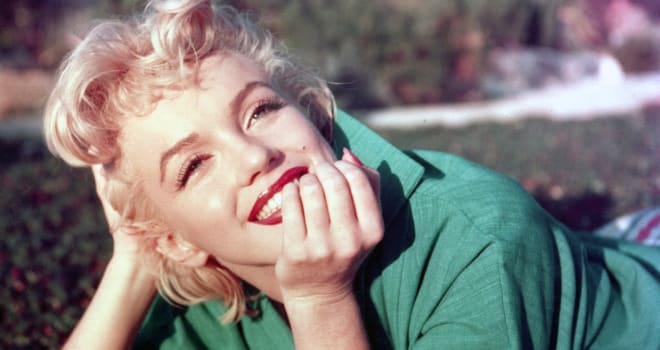
    Marilyn PortraitIf there’s anything more beloved than Marilyn Monroe, it’s Marilyn Monroe quotes. But the sad truth is most of the famous quotes attributed to the gone-too-soon actress were never actually said by her. Sorry, Pinterest. Can you separate fact from fiction? Give it a try in this quiz on the quotes most often associated with Monroe.

  • Marilyn Monroe Facts: 25 Things You Don’t Know About the Hollywood Icon

    Lifetime’s mini-series “The Secret Life of Marilyn Monroe” debuts on May 30, prompting the question: What possible secrets can there still be about Marilyn Monroe?

    Quite a few, apparently, from the identity of her birth father, to the nature of her fatal overdose at age 36 — was it suicide, accident, or murder? In 2012, on the 50th anniversary of her death, Moviefone previously published “25 Things You Didn’t Know About Marilyn Monroe.” Turns out that list barely scratched the surface. Here, then, are 25 more.

    1. Monroe’s birth certificate from 1926 lists her birth name as Norma Jeane Mortenson. The last name was a misspelling of the surname of her mother’s second husband, Martin Mortensen, who separated from Gladys before she became pregnant. Soon after, she reverted to her first married name, Baker, and gave that name to her daughter.

    2. Gladys later told Norma Jeane that her father was Gladys’ boss, Charles Gifford, who looked like Clark Gable in the snapshot that Gladys showed her. Monroe never met him and never knew for certain who her father was.

    3. Gladys Baker was a film cutter at Consolidated Film Industries, a Hollywood film lab. Believing herself to be incapable of raising the child, she left Norma Jeane with various foster families. More than once, the girl lived with Gladys’s friend, Grace McKee. For a time, she even lived in the Los Angeles Orphans’ Home, as a ward of the state.

    4. When Norma Jeane was seven, Gladys bought a house and brought the girl to live with her. But within a few months, the mother suffered a nervous breakdown and was institutionalized.

    5. Gladys had a history of suicidal depression in her family. Both her brother and grandmother had killed themselves.

    6. In her memoir, Monroe claimed she had been sexually abused by several different people during her years in foster care. One of the abusers, she said, was the son of a great-aunt she lived with for a while. Another, she said, was Ervin “Doc” Goddard, the man Grace McKee married during one of Monroe’s stays at her home.

    7. In 1942, when Monroe was 16, Doc Goddard got a job in West Virginia. He and McKee were either unwilling or unable to take the girl with her when they moved. Rather than let her become a ward of the state again, they arranged for her to marry a neighbor, James Doughterty, who was 21.

    8. During World War II, while James Dougherty was serving in the Merchant Marine, his wife was working in the Radioplane factory in Van Nuys, where her duties included inspecting parachutes and coating airplane parts with fire-retardant spray.

    9. The official story of Norma Jeane Dougherty’s discovery, put forth by Monroe’s estate, had her walking down Sunset Boulevard in the summer of 1944, when the 18-year-old was spotted by photographer Bruno Bernard, a.k.a. pin-up pioneer Bernard of Hollywood, who gave her his business card and offered to take some test shots, insisting that he’d be “strictly professional.” But it’s not clear that he took any pictures of her before the fateful 1947 session at the Palm Springs Racquet Club, where she was to meet talent agent Johnny Hyde. By that time, she’d already been a pin-up for a couple of years and had already signed her first movie contract.

    10. We may have Ronald Reagan to thank for Monroe’s entry into modeling and show business. In June 1945, the actor and future U.S. president was a captain in the Army’s 1st Motion Picture Unit, doing publicity and propaganda work. He ordered photographer David Conover to visit the Radioplane factory to shoot pictures of pretty girls contributing to the war effort. He was particularly struck by the beauty of the 19-year-old Norma Jeane Dougherty. She told him of her desire to become an actress, and he offered to take portfolio shots of her. He spent two weeks showing her how to pose and how to woo the camera. He also encouraged her to sign with the Blue Book Modeling Agency, where she was advised to dye her brown hair blonde.

    11. By 1946, she was calling herself Marilyn Monroe. “Marilyn” supposedly came from 1920s performer Marilyn Miller, while Monroe was Gladys Baker’s maiden name. 20th Century Fox talent scout Ben Lyon, who had seen Norma Jeane Dougherty’s pin-ups and signed her to the studio, is generally credited with coming up with the stage name, whose “MM” alliteration he thought would be good luck.

    12. Paradoxically, the actress’ legal name became Marilyn Miller once she wed playwright Arthur Miller. She used that legal name as an alias when she visited doctors.

    13. Monroe filed for divorce from her first husband in 1946, while he was still overseas. He claimed her reason for the divorce was that Fox wouldn’t sign her unless she was single. (“They didn’t want a pregnant starlet,” she explained.)

    14. A decade later, at the height of her stardom, Dougherty would anger his ex-wife by claiming in a magazine interview that she once threatened to kill herself by jumping off the Santa Monica Pier if he left her. Her version of the story was that she’d threatened suicide out of boredom.

    15. People were surprised when Monroe, who had been married for nine months to Yankees legend Joe DiMaggio, married the intellectual Miller in 1956, but she was well-read. She had studied literature at UCLA and had a library of 400 books in her home, many of them first editions.

    16. “Bus Stop” director Joshua Logan was impressed enough with Monroe to recall later that working with her was “the first time I learned that intelligence and, yes, brilliance, have nothing to do with education.”17.Gentlemen Prefer Blondes” co-star and fellow bombshell Jane Russell tried to proselytize Monroe. The actress later joked, “Jane tried to convert me, and I tried to introduce her to Freud.”

    18. Monroe’s billowing white dress from “The Seven Year Itch” was not her only famous movie costume. Tommy Hilfiger bought her jeans from “River of No Return” at an auction for $37,000. He gave them as a gift to Britney Spears.

    19. The glittering Jean Louis gown she wore during her rendition of “Happy Birthday, Mr. President” at John F. Kennedy’s birthday in 1962 was so skin-tight that she had to be sewn into it. In 1999, it was sold at auction for $1.3 million.

    20. Monroe was infamous in Hollywood for being chronically late to movie sets and struggling with her lines. These problems apparently stemmed from her crippling insecurity that no one would take her seriously as an actress. Billy Wilder, who directed her twice (in “The Seven Year Itch” and “Some Like It Hot“), insisted that all the trouble she caused was worth it, given the results. “I have an Aunt Minnie who’s very punctual,” Wilder said, “but who would pay to see Aunt Minnie?”

    21.Some Like It Hot” co-star Jack Lemmon recalled decades later that nothing seemed to help Monroe remember her lines. Cue cards would be placed all over the set, outside camera range, even inside a drawer Monroe had to open in one scene. Yet it still look Wilder dozens of takes to get Monroe to deliver the lines as written. But when the daily rushes were screened, Lemmon recalled, something magical would happen. No matter what she was saying, the camera would capture a sparkling performance that the human eye had missed. She knew better than anyone how to act for the camera.

    22. When Monroe’s “The Misfits” co-star Clark Gable suffered a fatal heart attack at age 59 shortly after the shoot ended, Monroe blamed herself. She cited the stress she caused through her delay-generating behavior throughout the shoot. (Then again, Gable’s insistence on doing his own stunts and his crash diet during the shoot may have been contributing factors.) Between the loss of Gable and the dissolution of her marriage to Miller, Monroe became so despondent that she nearly jumped out the 13th-story window of her Manhattan apartment in early 1961.

    23. Alarmed by her depression, her psychiatrist committed her to the Payne Whitney clinic at Cornell University-New York Hospital. To her horror, Monroe had found herself institutionalized — just like her mother. She managed to track down ex-husband DiMaggio, called him from the psychiatric ward and begged him to come spring her — which he did. The two reportedly rekindled their relationship, and she was even supposedly planning to remarry him until her fatal overdose, which happened a few days before the August 1962 wedding date.

    24. Marilyn Monroe’s Facebook page has 13 million “likes.” But her Twitter feed has just 228,000 followers.

    25. Monroe’s estate continues to use her image to work marketing magic. There’s a line of Marilyn Monroe fashions at Macy’s, a string of Marilyn Monroe beauty spas in various cities, Burton snowboards bearing her likeness, and a Marilyn Moments app for iPhones that lets users create their own Monroe-themed memes using portraits and quotations from the actress.
    %Slideshow-206962%