Keanu Reeves in ‘Point Break.’ Photo: 20th Century Fox.
Preview:
A TV series based on 1991’s ‘Point Break’ is in development.
AMC Network is backing the project.
David Kalstein will run the show.
1991 action thriller ‘Point Break’ has been through the remake wringer once before (see more on that lower down the page), but according to Deadline, cable channel AMC has decided to try again, this time developing the concept as a TV series.
David Kalstein, who recently worked on Prime Video series ‘Butterfly’ (which starred Daniel Dae Kim as an intelligence agent working in Korea), will be overseeing the eventual show.
4911
It’s hardly the first time AMC has looked to convert a 1990s movie into a series –– it has seen success with Anne Rice adaptation ‘Interview with the Vampire,’ which has spawned a small-screen franchise based on the author’s work.
(L to R): Keanu Reeves and Patrick Swayze in ‘Point Break.’ Photo: 20th Century Fox.
The original movie, which was directed by Kathryn Bigelow and written by W. Peter Iliff, starred Keanu Reeves as rookie FBI agent Johnny Utah, who infiltrates the Ex-Presidents, a gang of Southern California surfers who rob banks.
The Ex-Presidents, who wear masks of Ronald Reagan, Jimmy Carter and Lyndon B. Johnson, are led by Patrick Swayze’s Bodhi, and Utah gets swept up in their daredevil lifestyle before a massive action chase and a reunion amid lethal waves.
A bigger question is how the concept can be stretched in order to fit the TV format; though Deadline’s story does at least offer some details: the series is set 35 years after the events of the original film and is focused on a dangerous heist crew with ties to the Ex-Presidents gang.
And converting movies to TV series has been a hit and miss prospect of late, with the likes of ‘Lethal Weapon’ failing to spark.
When will the new ‘Point Break’ TV series be on screens?
It’s clearly early days for this one, so AMC Networks has yet to announce when the show might be hitting our screens. We’re not sure we expect it much before 2027, though.
(L to R): Patrick Swayze, James Le Gros, Bojesse Christopher and John Philbin in ‘Point Break.’ Photo: 20th Century Fox.
Kathryn Bigelow is the perfect person to handle an inordinately tense, gripping and powerful near-real time military thriller. Less a war film more a story of the buildup to potential conflict, it marks her successful return to moviemaking following the less-than-enthusiastic reaction to 2017’s ‘Detroit’.
And this is a talent who deserved better than to sit on the sidelines for years.
Script and Direction
Kathryn Bigelow attends the Netflix film ‘A House of Dynamite’ NYFF Main Slate Premiere and Q&A on September 28, 2025 in New York City. Photo: Jason Mendez/Getty Images for Netflix.
Noah Oppenheim, an NBC news veteran, has been behind scripts including ‘Jackie’ and the recent Netflix series ‘Zero Day’, and pumps up the tension with a structure that resets the clock on the story across three acts, telling the same story of a missile headed to the US from an unknown aggressor from different viewpoints up and down the command chain from isolated military bases to the hubs of the White House and the Pentagon.
While the switch in focus means some characters are better served than others, and some of the more movie-ish peeks into personal lives dip precariously close to cheese, it still works.
Bigelow keeps the camera moving and the tension levels high for this one, aided by Volker Bertelmann‘s doomy, evolving score. It’s the director’s best in years and deserves to be seen.
With such a big cast to service, it’s impressive how many big names Bigelow has recruited here. Standouts include Rebecca Ferguson’s steely, but human operations officer at the White House, Jason Clarke as her boss, Gabriel Basso as a nervy National Security Advisor thrust into a new level of responsibility and Jared Leto as Secretary of Defense Baker, at once outraged by the lack of efficiency in his country’s response to the weapon headed its way a terrified for his estranged daughter (an underused Kaitlyn Dever).
If there’s a weak link here, it’s Idris Elba, who never really convinces as the President.
Maritte Lee Go (center) talks to Asjha Cooper (right) on the set of ‘Black As Night’
Filipino-American filmmaker Maritte Lee Go received her MFA in Film and Television from USC. She has either directed or produced dozens of film projects. She has been a Project Involve Directing Fellow, won the HBO Visionary Award in 2018 for her short film ‘Remittance’ and participated in Women In Media’s CAMERAderie Initiative. Earlier this year, she directed part of the anthology film ‘Phobias’.
Her latest film ‘Black As Night’ is part of the Prime Video anthology series ‘Welcome To The Blumhouse’. Each year, Blumhouse partners with Prime Video on a four film horror-thriller anthology with a shared thematic vision. This year’s theme is “institutional horrors and personal phobias.” Directing a script written by Sherman Payne, Go’s film ‘Black As Night’ follows Shawna (Asjha Cooper) as she navigates both the horror of being a teenage girl while also defending her neighborhood from a horde of bloodthirsty vampiresv.
‘Black As Night’ is streaming now as part of this year’s ‘Welcome To The Blumhouse’ anthology on Prime Video.
TImdYucF5u9Okd408tJst4
Maritte Lee Go spoke to Moviefone about her new horror movie.
Movifone: How did you get involved with ‘Welcome To The Blumhouse’ anthology?
Maritte Lee Go: Well, it’s always been my dream to make a Blumhouse movie. I watch every single one of the films that come out and just always dreamt of making my own movie. I was actually pitching a movie with Amazon, I was pitching another horror film that I had been developing. And although that one’s not yet been picked up, they were looking for directors for this slate of films and sent me the script I absolutely loved. It felt like it was something groundbreaking that I’ve never seen before. And I knew I had to be a part of it. So I pitched it and luckily I got it.
Go: No, actually, Sherman Kane, the writer, he wrote this over 10 years ago, it was one of his first scripts he had ever written out of film school. It took place in New York. The script had been bounced around to like every studio in town. Although they loved the writing, it just wasn’t the perfect time for it to come out. So much has been happening in our country that this subject matter was on the top of everybody’s brain. So they picked it up. This slate of films was being shot in New Orleans, so he reformatted it that location. Honestly I think it made the movie even better because there’s so much history embedded in New Orleans. To be able to pivot and add that extra layer of New Orleans really strengthened it.
MF: Can you talk a little bit about the location scouting in New Orleans?
Go: When I put together the pitch and was thinking about the locations I wanted, I Googled what I thought was a New Orleans mansion, and that image I used in the pitch packet became the real location in the film. That was a cool manifestation. But there’s so much amazing history in New Orleans. Everywhere you look, the trees are weeping. They’re so beautiful. The architecture of every building. Many of them are centuries old. When you’re able to use the real locations that are written within the script, and not build it on a stage or a set, it adds so much authenticity.
MF: Were there any challenges in making this with COVID restrictions?
Go: We shot half the movie before COVID and then shot the other half after four months into the pandemic. There were already so many challenges to begin with. It’s not a huge budget film, and we’ve got stunts and effects and VFX. We really, really pushed it to its limit, and then you add a pandemic in there, and it becomes nearly impossible. The second half of the movie we were on such time crunches, we only shot this movie in 17 or 18 days. It was a really short turnaround, but by the time COVID was here, we could only do I think a maximum of 10-hour days, and then only with a quarter of our crew. We also shot through lightning storms. With the COVID protocols, you’re wearing face masks, and you can’t even be close to each other. There were scenes where they had to kiss or bite, and we had to do countdowns, like 3… 2… 1… now don’t breathe! Angle your head! And then pretend. There were so many challenges, but all in all, I think we got everything we needed.
MF: How did you find Asjha Cooper for the lead character of Shawna?
Go: When I saw her perform, I couldn’t tell the difference between her as Asjha and as Shawna. She just is her. I couldn’t see the difference. When an actor embodies a character, and I can’t tell the difference, I know that’s them. She’s such a talented actress. She doesn’t have formal acting training in it, but she has so much talent and skill inside of her. She can go from comedy to crying to screaming within moments. She’s an amazing actress and I just know that she’s gonna explode and do so many bigger and bigger projects.
Go: For his role, we needed somebody who has a name. So I created a list, and he was number one on it. One of the first movies I remember seeing him in was ‘Requiem for a Dream’. His voice terrified me. He just has this presence. He’s so powerful. What I see on screen and what he has been able to accomplish is so iconic, that only an actor like him would be able to play this character and give it so much life. I’ve just been a huge fan of his forever, so to be able to work with him was incredible.
MF: What do you think this film adds to the tradition of films about vampires?
Go: Vampires are a staple of horror. Sherman Payne, the writer, did such a great job in creating something new out of something that we all have seen done a million times. To be able to tell a story with a deeper conversation around all the issues that are happening within this country, through the vampire lenses I feel is so exciting and new. I hope audiences will watch and feel like there’s something familiar, but something was so fresh about it.
MF: Were there any visual references for the look of the film?
Go: Specifically, I had been looking at ‘30 Days of Night’ and ‘Interview with the Vampire’. Those are my favorite vampire movies, so I looked at the way they structured tension and their use of shadows and light. This helped me figure out how to make sure the audience is also experiencing these vampires when their victims are experiencing it. I also looked at ‘Kill Bill’ for the animation sequences. Our villain has a very complicated past that got him to where he is now, so I wanted the audience to experience the pain and the anguish that got him to this place of rage and anger. I wanted them to really feel for him so that you could almost understand why a person could go this dark.
MF: Could you talk a bit about collaborating with cinematographer Cybel Martin?
Go: Cybel is amazing. She is also obsessed with gore. We were always talking about what we were watching, and what’s the next new scary thing. She was very much in line with what I wanted. It was really fun to create the shotlist and storyboards with her. She’s really great at communicating with her crew how to accomplish her vision while also translating my vision. Now she’s shooting ‘American Horror Story’, which is so exciting. Her career continues to grow, which makes me super happy because she’s very deserving of it.
MF: How do you hope people feel after the film is over?
Go: I want people to have a great time. It’s a roller coaster of emotions. You will hopefully understand and empathize with the character of Shawna, and feel what it feels like to be a young woman of color, who is experiencing all of these things. The beauty of filmmaking is that you can empathize through these characters that you would never otherwise experience their life. I want people to walk away with the experience of what it would be like for somebody who comes from an oppressed community, but also feel the excitement of slaying vampires. I want people to have a really good time, but also think deeper about the issues that are happening in this country.
MF: You went through Women In Media’s CAMERAderie Initiative. What was that process like?
Go: Oh, it was amazing. I had written the script I submitted to the contest – ‘Illipino’ – about two weeks before. I loved the script that I had written, but I wasn’t sure if anyone ever wanted to see this movie. It was very close to me, based on my own experiences growing up. When they chose me as one of the finalists, it validated my voice and my life experience in this world. They really supported my vision. They’re trying to change the industry in a very positive way and get women’s voices out there. They’ve really uplifted me as a director. Being able to make that short film has actually helped me get my next movie, which is a musical. So I owe them so much gratitude. I love seeing organizations that truly understand that there is this glaring issue of inequality in the industry, and are really pushing for more women directors. I’m thankful for them.
MF: Is there a film directed by a woman that you think people should seek out?
Go: I love Kathryn Bigelow’s ‘Strange Days’. It feels so advanced for its time. It’s such an epic film. She did it so beautifully. It’s scary, and it deals with the same kind of social issues that we deal with today. It’s about escaping your own personality to live another person’s life. I think she’s incredibly talented and so smart. She’s really been this kind of shining beacon of what women can do and how they can push the limits of this industry. I strive to be a director as talented as she is.
Strange Days – directed by Kathryn Bigelow
Ralph Fiennes and Angela Bassett in ‘Strange Days,’ directed by Kathryn Bigelow.
From a screenplay by James Cameron and Jay Cocks, Kathryn Bigelow’s now iconic sci-fi-thriller ‘Strange Days’ was a box office bomb. Hot off the financial and critical success of the surfer-set actioner ‘Point Break’, this genre-defying science fiction noir received praise from critics like Roger Ebert, who gave it a coveted 4-star review, but only made $8m off of its $42m budget. Set on the last two days of 1999, the movie features Ralph Fiennes as a black marketeer who sells recordings that allows people to experience the memories and physical sensations of others. One of those recordings shows a sex worker he knows being murdered, leading him try and discover the indentity of the killer. Despite its lackluster reception at the box office, the film garnered the Best Actress award for Angela Bassett at the 22nd Saturn Awards, and Bigelow became the first woman to win the ceremony’s Best Director award. Of course, Bigelow would break that glass ceiling again when she became the first woman to win the Best Director award at the Oscars for her 2009 war film ‘The Hurt Locker,’ which also became the first film directed by a woman to win Best Picture.
The Last Letter From Your Lover – directed by Augustine Frizzell
Shailene Woodley and director Augustine Frizzell on the set of ‘The Last Letter From Your Lover’
Augustine Frizzell grew up in Garland, Texas and made her directorial debut with the the hot and sticky ‘Never Goin’ Back,’ which follows teenage high school dropouts turned waitresses Angela (Maia Mitchell) and Jessie (Camila Morrone) who just want to take a vacation to beach in Galveston. It had its world premiere at the 2018 Sundance Film Festival before being released that summer by A24. Frizzell directed the pilot for HBO’s controversial teen drama ‘Euphoria’ starring Zendaya.
Based on the 2012 novel of the same name by Jojo Moyes, Augustine Frizzell’s sophomore feature ‘The Last Letter From Your Lover’ is a cozy romance that spans from the 1960s to present day, and trots the globe from London to the French Riviera. Shailene Woodley stars as Jennifer Stirling, an amnesiac 1960s socialite who after returning home to her stern husband Laurence (Joe Alwyn) begins to piece her life back together. In present-day London journalist Ellie Haworth (Felicity Jones) finds a love letter in an archive she discovers was written by Jennifer’s secret lover Anthony O’Hare (Callum Turner). What tore these star-crossed lovers apart? You’ll just have to watch to find out!
‘The Last Letter From Your Lover’ is now streaming on Netflix in the United States.
9GkZHiuuzetQQC8f3PSdR3
Augustine Frizzell talked to Moviefone about her new movie.
Moviefone: How did you first get involved with this project? Were you familiar with Jojo Moyes book?
Augustine Frizzell: I had never even heard of Jojo, sadly. I was talking with my producer, Peter Czernin at Blueprint Pictures, and he was asking me what kind of project I wanted to do next. I told them I wanted to do something that was like comfort food. You know, cozy. I call this my hot cup of tea movie; it’s warm and British. I wanted something that felt like a Sunday afternoon cozy watch. He said he had just the thing and sent me the script. I just cried my eyes out and called him back and said I have to do this. After that I found out who Jojo is and read the book, which I loved, and now I’ve dug deep into her catalogue of books and have become a huge fan.
MF: Once you’ve gotten into the story and know the emotional beat, how did you find your cast?
Frizzell: I had been such a huge fan of Felicity Jones since ‘Like Crazy.’ I just thought she was so incredible in that movie and really broke my heart. She’s so in touch with her emotions. So she was the first person we sent it to. When she read it she clicked with Ellie right away. We just sent it to her and said take a look and she said she just loved the Ellie character and was dying to play her. It was an interesting prospect because she hadn’t done anything so comedic in awhile. It was exciting to see her do something that was out of her norm. Then Shailene Woodley and I, we had actually met months earlier, way before I had even started work on this project, and just really hit it off. My producer says she was the first one that I brought up and then she was booked on something. We talked to a couple of other people and then found out her schedule had opened up. So we immediately asked if she wanted to do it. Shailene was all in. The thing about Shailene that was interesting is that she and I share such a fondness for romance, and just love in general. Love stories. We both love ‘Dirty Dancing.’ It’s one of our top favorite films. With the guys, I had seen Callum Turner in a movie ages ago as well. It was a tiny indie film and I thought he was so interesting and unique. He didn’t audition. We just met and he was so Anthony. He felt perfect for the role. Joe Alwyn and I met and he wasn’t really the age of the character in the book, but he is the nicest person in the world with this mischievous side and I thought it would be interesting to veer off what was expected with the age and go younger. He was down and he was perfect. Nabhaan Rizwan auditioned for my casting director Fiona Weir and he had the comedic timing and was charming and funny and I knew the minute I saw his tape he was perfect for Rory.
MF: In the scene where Ellie first goes into the archive, did Felicity Jones really eat that whole croissant in one go?
Frizzell: She ate more than one! She ate several. We set out to do it all in one take from the start. I didn’t want to cut. She was just eating them and she tells me now that she was thrilled at the opportunity to just eat a bunch of croissants because they’re so good. After the first two she was like, “Maybe a spit bucket is a good idea.”
MF: So you have four people playing two characters at different ages. What was your philosophy on having them meet while filming?
Frizzell: We had them meet. We all got together. They started their own conversations and started talking about diction and the cadence of their voices and hoping we could match that to some extent. They also talked about character, and the choices they would make when they were younger versus older. We definitely got together and read through it as a group. I thought it would help to bring out the energetics of the young, since those are the people we are with most of the movie, and help imprint that on to the older actors.
MF: I loved the structure of the film. Can you talk about the editing and how you kept the emotional throughline along with the mystery?
Frizzell: Hats off to my editor Melanie Oliver and everyone who gave feedback on the cuts, because it was not easy. I went into this movie thinking it’s all here in the script. I formulated transitions as we were filming, and I knew in my head this is probably going to shift a little when we get to the edit. But the amount that is shifted, I don’t think I could have planned for that. It really was a matter of just trial and error. Between my editor and I we watched this film over a hundred times, because you couldn’t just watch a section, you had to watch the whole thing start to finish to make sure it was evenly weighted throughout. You had to make sure that the beats were hitting at the right moments, that the music was carrying us from one minute to the next. It was really just trial and error, and watching and feeling, and trying to clear your mind with every viewing to make sure it was all working. It wasn’t easy at all.
MF: Why do you think people find epistolary romances so intriguing? What is it about love letters?
Frizzell: My husband [‘The Green Knight’ director David Lowery] and I fell in love over writing each other. It was partly online and it was partly via handwritten letters. By the mail we’d send these packages and letters to each other in our courtship phase. But there was something about the anticipation of getting the letter from him. There’s a level of vulnerability that you can express when you’re writing that is so much deeper than you can have when you’re talking. I know that’s true for him. He’s not someone who easily shares his feelings in a conversation. But give him a pen and paper and he’ll pour his heart out and it’s so poetic. You have time to formulate what you’re saying, so when you’re reading you can feel that time and it feels very energetically connected to the person who did it. I don’t know why they go over so well on screen, but they are some of my favorite movies as well.
MF: When the movie is over, how do you hope audiences feel?
Frizzell: I hope they leave feeling good. I hope they leave feeling a renewed belief in love at any point of time in your life. I think it’s so easy to say I’m too old for this or my time has passed. I don’t think it’s ever too late, and I hope that they get a sense of that when they watch the film.
MF: Can you recommend another film directed by women for our readers to seek out?
Frizzell: I have to start with the first film that I ever
realized was directed by a woman that I didn’t know, and that is ‘Point Break’ by Kathryn Bigelow. I watched it obsessively when I was younger. I don’t know why I was just completely obsessed with that movie. I still like it, don’t get me wrong, but that’s the first movie that I ever looked up and was like “Oh wow. A woman made this.” which was pretty cool. Then one of my favorite filmmakers, she is kind of risque and older, her name is Lina Wertmüller. She did the original version of ‘Swept Away’. All of her films are so weird and offbeat and interesting. That movie is such an interesting dissection of class and male/female dynamics. It’s such an interesting film and I love her style. Chantal Akerman was a big moment in my life. When I saw ‘Jeanne Dielman, 23 quai du Commerce, 1080 Bruxelles’ it was just such a crazy exercise in anticipation and diverting expectations and dropping clues along the way.
MF: That would be a great triple feature: ‘Point Break,’ ‘Swept Away,’ and ‘Jeanne Dielman.’
MF: Yes! Okay, we have to program this now. This is important. My favorite Lina Wertmüller film is ‘The Seduction of Mimi.’
Frizzell: Oh I love it!
MF: It’s such a weird movie. Weird is such a perfect way to describe her films. She’s such a unique, bizarre filmmaker.
Frizzell: Totally, and every time I watch her movies I’m struck by how she has such a way of creating great plots. They all have really good plots. You could just write them out and be like “man, that is such a good idea for a movie” and if you were to look at it in a traditional way, the movie based on that plot would be nothing like the movies that she makes out of them. So different and unexpected. I love that at the heart of all of them, they have a classic Hollywood plot. I just love her.
4911
Kathryn Bigelow’s surfing crime flick ‘Point Break’ starring Patrick Swayze and Keanu Reeves, though firmly an action movie, broke boundaries in its tender depiction of male friendship, and since its release in 1991 has gained a cult following. Nearly two decades later she became the first female director to win Best Picture and Best Director at the Academy Award for her 2009 film ‘The Hurt Locker.’
20014352
Chantal Akerman directed ‘Jeanne Dielman, 23 quai du Commerce, 1080 Bruxelles,’ which is considered to be one of the greatest films of all time, when she was just 24 years old. The New York Times called it “the first masterpiece of the feminine in the history of the cinema.”
1034513
One of the most influential Italian directors, Lina Wertmüller was the first woman nominated for Best Director at the Academy Awards for her 1975 film ‘Seven Beauties.’ Her most infamous film, ‘Swept Away’ tackles gender, class and politics with highly charged sexual satire.
10779
One of the most acclaimed contemporary French directors, Claire Denis’ film ‘Trouble Every Day’ is an erotic thriller with a cannibalistic twist starring the iconoclastic filmmaker/actor/model/artist Vincent Gallo.
(L to R) Actors Ted Sutherland, Sadie Sink, and Leigh Janiak on the set of ‘Fear Street Part 3: 1666’
A graduate of NYU and the University of Chicago, Leigh Janiak made her feature film debut in 2014 with the horror film ‘Honeymoon’ starring Rose Leslie and Harry Treadaway as a newlywed couple whose lakeside getaway quickly takes a sinister turn. Janiak has also directed episodes of the ‘Scream’ television series, and developed the original pilot for the Amazon YA show ‘Panic.’
Inspired by the YA horror book series of the same name by R.L. Stine, the ‘Fear Street Trilogy’ consists of three films: Fear Street 1994, Fear Street 1978, and Fear Street 1666 all set in the towns of Shadyside and Sunnyvale. As lore has it, a witch named Sarah Fier put a curse on the town of Shadyside and every decade or so, a normal citizen goes on a killing spree.
1994 is set on the eve of the most recent massacre, 1978 looks back at a summer camp tragedy, and 1666 takes viewers back to where it all began. With odes to slasher cinema, as well as America’s penchant for witch hunts and systematic economic inequality, Janiak’s take on the material adds a subversive, queer spin to familiar horror beats. The films also serve up plenty of gore sure to satisfy fans of slasher cinema and the book series alike.
Leigh Janiak spoke to us about her new movie trilogy. Warning: this interview contains mild spoilers for the entire trilogy.
Moviefone: Were you a fan of the ‘Fear Street’ books growing up?
Leigh Janiak: I was a teenager in the 90s, so reading Fear Street was very much part of my teenagedom. I was a big fan. I remember going to the public library, and they were on a carousel. I loved the fun of the covers, and there was always this insane shit happening in them.
MF: My brother had a million of these books. I’m wondering how you distilled them into a cohesive story for the trilogy?
Janiak: We ultimately looked at this giant breadth of work that R. L. Stine had created and said, how do we do this? Because we were making the three movies and doing it at once, we felt like we needed a connected mythology narrative more so than the books live in. So what we decided to do was try to be true to the spirit of the books, the sort of fun, subversive, edgy nature of them. That we tried to infuse into every scene and the whole vibe of the narrative.
MF: Did you always know you were going to make them hard R?
Janiak: Yeah, definitely. That was something from the very beginning. I felt like if you are doing slasher movies, you need to live in an R-rated world. I think there is a lot of good horror that lives in that PG-13 space, but slashers, to me, you’ve got to see blood, you’ve got to see guts, you have to see lots of dead people. So that was important to me generally for the tone of a slasher movie. I was also thinking about my experience reading the Fear Street books as a teenager. They felt crazy to me. They felt R-rated. I actually don’t think they are. It’s funny. I was just re-reading one of them a couple of weeks ago and realized these are not as insanely violent as I remember. They are, but my point is, I was living in this world of the memory and experience of how intense they felt to me, and then trying to be true to the sub-genre of slashers.
MF: I loved the gruesome sequence at the end of 1994. How did you come up with the head in the bread slicer? That was disgusting in the best sense.
Janiak: One of the fun parts of making 1994 across the board was thinking about, for me, taking this image of suburbia and destroying it. Making it rotten. When we were choosing where our locations and different set pieces would be, we let the kills grow from there. So the grocery store was a really important set piece. When I was a teenager, one of my first jobs was I worked third shift at a Super K-Mart. So, I was working from like 10pm until 7am. This was over the summer, not when I was in school – and it’s crazy that my parents let me do this. So I had this image of these late nights at the grocery store, and I was so excited when it felt like it could work into our final showdown set piece of 1994. We looked around and were like it makes sense that you would go to a grocery store, and they need drugs, which was what they were doing there. But when that plan goes wrong, what other things can we use? And what is the most insane thing? Like you, I love a good gross kill, and we started thinking about the bakery and that area and were like, can a human head do this? What would that be like? That’s where that came from.
MF: I was expecting Kate to be saved and when she wasn’t, I was like, “oh my god!”
Janiak: It was hard to kill her and to kill Simon because I think we ended up really loving them. I felt like we loved them on the page, but Julia (Rehwald) and Fred (Hechinger) did such a good job making us care for these characters. Ultimately it was like, okay we’re killing characters who will hopefully be beloved, but we also need to have real stakes, and real reminders to the audience that brutal shit is happening in Shadyside and there is emotion behind this, and we’re only in the first act of our bigger movie. We’re at the end of movie one, but we’re in the first act of the trilogy. It made sense to do it, but it was shocking to a lot of people.
MF: I love the credit at the end for the CGI flies. I was wondering where the names came from?
Janiak: So Paul was my VFX supervisor and Christina is my VFX producer. Guillermo is for Guillermo del Toro. Guillermo was so kind and watched early cuts of the first and second movie. I hadn’t yet done a director’s cut of the third movie. It was funny because he was like, “I feel like you need this unifying thing you see every time you see the killers.” We had played around with versions of what that could be in prep and in development. We had flies that were built into movie three, just kind of reflecting the rot of the world and what was happening. He was like, “maybe like a fly or something like that.” and I thought, yes, perfect. So he gave us this brilliant idea and is fully responsible for introducing that idea. So I thought it would be cool to name the fly after him.
MF: I love that the trilogy is centered on two queer women. I read that you had wanted to center this on the kind of character who would normally die in these movies. Where did that idea come from?
Janiak: Part of that I had asked myself when I was approached by the producers to do the project was why should we be revisiting the slasher subgenre? For me, it was about wanting to make something that wasn’t just home and wasn’t just nostalgia. I wanted that to be part of it, for sure. Part of the fun of making the three movies in three different time periods is to be able to send a love letter to those films that I grew up watching and that I love. But also I wanted to be able to justify the experiment. To do something new. To me, there was this world of Shadyside and Sunnyvale we ended up creating of the haves and have-nots. Shadyside is full of characters that have been marginalized and told by society that they are other and felt like they were never going to get out of this world. So that to me was what became special about ‘Fear Street’. That we could have characters that usually would die much sooner in movies and give them a place in the sun as protagonists and as heroes of the story.
MF: How did you find your cast? Did you do any chemistry reads?
Janiak: Obviously there are like a million characters across the three movies, and I worked with my amazing casting director, Carmen Cuba. She introduced me to a ton of new people and new faces that I hadn’t seen before. Olivia (Welch) who plays Sam and Kiana (Madeira) who plays Deena I had come across when I was working on a pilot a year before.
MF: For ‘Panic’?
Janiak: Yeah. I had cast Olivia in ‘Panic’ and I had come across Kiana also in that audition process. Kiana ultimately wasn’t right for one of the roles in the pilot, but when I saw her read I was like, “if ‘Fear Street’ gets off the ground…” because we were still in the prep/development phase. But I thought if we got the green light she is Deena. I felt that. So when we started casting again, they were the ones for me. We had a lot of talented actresses and we had chemistry reads with other women as well, but it was this funny thing because you see them separately, but it’s not until they get into a room together and you’re like “oh, they are so cute.” They actually have this very sweet, organic, sexy vibe between them. It was really exciting when they came together.
MF: How did you decide on 1994 and 1978 for the two slasher entries in the trilogy?
Janiak: When we first were coming up with what era each film would be in, we knew we wanted something in the 90s. Originally there was a discussion of should it be earlier in the 90s? I think my first pitch actually called it ‘Fear Street 1990’ and then as me and my fellow writers started building the world, we realized 1990 is a weird year for that. It’s straddling the classic heyday slasher films of the 80s and then the 90s, but we’re not really living in a here nor there world. So by putting it in 94 we felt like we could be revisiting the 90s slashers like ‘Scream,’ ‘I Know What You Did Last Summer,’ ‘The Faculty,’ with kind of more self-aware, sarcastic characters. Then we thought by shifting into the 70s, the filmmaking could also be different. That way we could be in very distinct eras of slasher.
MF: I really loved the way that you used covers of songs from the 70s in 1994, and then you had the original versions in 1978. I thought that was a really smart way to show the way that all those characters are connected through history, and so are the songs.
Janiak: I love that you are talking about that. No one has asked me about that. The Nirvana version of ‘The Man Who Sold The World’ and the Bowie version were both built into the script for movie two from the first draft. One of the things I like personally is the idea of generational trauma and people reliving mistakes and this idea of fate and soulmates and how do we fix our past and these cycles of time. So being able to look for music that could round out those themes and show this is what it was like here and this is what it was here was just so cool. The Bowie version and Nirvana one, obviously, that song ends up holding thematically a bigger place of importance in the trilogy. Once we started getting into it, we thought that ‘Sweet Jane’ would be amazing to use for the 1994 because the Cowboy Junkies version is awesome, and then when we got to 1978 I was like, “Oh fuck we’ve got to do Velvet Underground.” I think those are the only ones that we did, but I kept thinking there’s got to be more. I’m happy you brought that up.
MF: What is your favorite Easter egg for fans of the book you put in the films?
Janiak: There’s endless little things here and there throughout. My favorite nod at the books was more meta. It’s not even something direct. I love that we start the whole movie with a comment on horror novels. Then that the book ‘First Evil’ – which uses the actual covers from one of the cheerleader ‘Fear Street’ ones – saves Heather (Maya Hawke) in that first moment when she gets stabbed, and then those books are what Deena ultimately creates for her bulletproof vest in movie three and that ultimately saves her. That’s my favorite way of saying yes these books are amazing and I love them and horror will save us all.
MF: I love that the bookstore was B. Dalton. That was the bookstore in the mall where my grampa lived when I visited in the 90s. Why did you choose that bookstore instead of any of the other chains?
Janiak: I grew up in a suburb outside of Cleveland, and B. Dalton was the bookstore in the local mall. It was that and a Spencer’s Gifts, which was ultimately what Wheeler’s was taking inspiration from. It was very fun. I got to relive my childhood and create this world, which was more fucked up than my actual teenagedom was. It was so surreal walking into that set.
MF: Can you recommend another film directed by women for our readers to seek out?
Janiak: It’s interesting. I think back to being a kid and even frankly much later into being a teenager than I care to admit, that I wasn’t really aware of female directors. I think that that’s one of the things that it is so important and cool about the strides that Hollywood is making now, to be more inclusive and to have more women directing, specifically in the genre space. I think that opens up the world to young women. For me, my favorite female filmmaker is Kathryn Bigelow. I watched all of her movies as they came out. ‘Near Dark.’ ‘Point Break,’ which I think is one of the most brilliant movies ever made. ‘Strange Days.’ I love all of them. ‘Zero Dark Thirty.’ ‘The Hurt Locker.’ Those early ones that she was doing, because they live so much in what was a more traditionally masciucline space of action and genre, she was and continues to be super inspirational to me.
The Hurt Locker directed by Kathryn Bigelow
Anthony Mackie (L) and Jeremy Renner (R) in ‘The Hurt Locker,’ directed by Kathryn Bigelow
Kathryn Bigelow has directed ten feature films and countless episodes of television. She made history when her 2009 film ‘The Hurt Locker’ won Best Director and Best Picture at the Academy Awards – the first time a film directed by a woman had won either top prize. This feat was not repeated until Chloé Zhao’s film ‘Nomadland’ took both prizes earlier this year.
Ten years ago, “The Hurt Locker” arrived in theaters and established itself as one of the definitive movies about the Iraq War. Amid the rave reviews, it propelled director Kathryn Bigelow to become the first woman to win the Academy Award for Best Director. Celebrate this major movie milestone by learning more about the origins and the making of “The Hurt Locker.”
1. Screenwriter Mark Boal based the script on his own experiences as a freelance journalist embedded with an EOD Army unit in Iraq.
2. Bigelow was convinced by ex-husband James Cameron to take on the project. Cameron may have come to regret that decision, as “Avatar” wound up losing the Academy Award for Best Picture to “The Hurt Locker” in 2010.
20th Century Fox
3. Even without accounting for inflation, “The Hurt Locker” became the lowest-grossing Best Picture winner in history. Its theatrical run had already completed by the time the Oscar nominations were revealed.
4. Bigelow wanted to shoot the film as close to Iraq as possible for the sake of authenticity, so much of filming took place in Jordan mere miles from the border with Iraq. Experts had to consulted to make sure the sites chosen were safe from Iraqi snipers.
Summit Entertainment
5. Many of the extras in the film were Iraqi refugees seeking asylum in Jordan.
8. 100 hours of film was shot for every hour of footage in the final cut, a ratio higher than even that of the notoriously troubled “Apocalypse Now.”
9. The film was the subject of a lawsuit from Master Sergeant Jeffrey Sarver, who claimed to be the creator of phrases like “the hurt locker” and “War is a drug,” and argued that Renner’s character was based on him. The lawsuit was eventually thrown out.
Summit Entertainment
10. Production company Voltage Pictures filed its own lawsuit, targeting thousands of BitTorrent users who downloaded pirated copies of the film.
11. The 2014 Broadway version of “Hedwig and the Angry Inch” features several references to “The Hurt Locker.” The show features a running joke about inheriting sets and props from a short-lived stage musical version of “The Hurt Locker.”
There’s a reason why Hollywood coined the term “development hell” — namely, because even when there’s lots of interest in a project and motivation and big stars and distributors, the process of making a movie can be a protracted, painful experience. Since first garnering attention in 2010, “Triple Frontier” went through director and casting changes, studio shake-ups and more before finally getting released this week via Netflix, a distributor fast gaining a reputation for swooping in and supporting films that are obscure passion projects, underfunded or otherwise troubled. To commemorate its opening, we decided to look back at just a few of those stumbling blocks the filmmakers faced while attempting to get it to the screen.
When the project was first announced in October 2010, Johnny Depp and Tom Hanks were in talks to star in the film for director Kathryn Bigelow, still hot off of “The Hurt Locker.” Hanks was officially cast a month later and production was set to start early the next year. But some five years later, there was no movement on the project — Bigelow moved on to “Zero Dark Thirty,” and a project focusing on US soldier Bowe Bergdahl and his time as a prisoner in Afghanistan. After “All Is Lost” and “A Most Violent Year” made waves with critics groups, writer-director J.C. Chandor entered into talks in 2015 to direct the project from Mark Boal’s script for Paramount Pictures. He later signed on to direct the film in September of that year.
By then, Hanks’ commitment to the film was on shakier ground, though he and Will Smith were still negotiating the possibility of joining the film. Additionally, Depp’s name re-entered the picture as a potential star as Smith left the film due to scheduling conflicts for “Collateral Beauty.” But by January 2017, Depp and Hanks were out, and Channing Tatum and Tom Hardy were being considered for roles in the film, followed by Mahershala Ali, who was collecting accolades for his work in “Moonlight.” All three joined the production officially, but by April of that year, Paramount dropped the project altogether, and only Ali remained among the confirmed cast members, now joined by Adria Arjona (HBO’s “True Detective”).
One month later, Netflix began negotiating for the rights to the film, eyeing Ben Affleck and his brother Casey for the roles that were previously to be filled by Tatum and Hardy. Ben Affleck left the film a month later citing “personal reasons,” and Mark Wahlberg entered into talks to replace him. By July 2017, Charlie Hunnam, Garrett Hedlund and Pedro Pascal had joined the film, even as Ali was forced to drop out due to production delays. And less than a year later, in March 2018, began production in Oahu, Hawaii, with Ben Affleck once again in the lead role.
In addition to Affleck, Hunnam, Hedlund and Pascal, Oscar Isaac also eventually joined the film — a big get for Chandor, who wanted to reunite with his “A Most Violent Year” star (timing originally prevented them from working together). Chandor, who is a writer or co-writer on all of his films, eventually received a co-writing credit alongside Mark Boal, who first conceived the story. At various stages, the film was also rumored to receive a name change to “Sleeping Dogs,” but clearly that idea didn’t take.
Nevertheless, Deadline’s Mike Fleming had it right back in March of 2018 when he considered the movie’s endurance a “study in how a worthy script can stay alive , despite setbacks that are often fatal.” “Triple Frontier” is not just a prestige project or star-studded, military-themed thriller, but a testament to the longevity of good ideas and the fortitude of producers and filmmakers committed to bringing them to the screen.
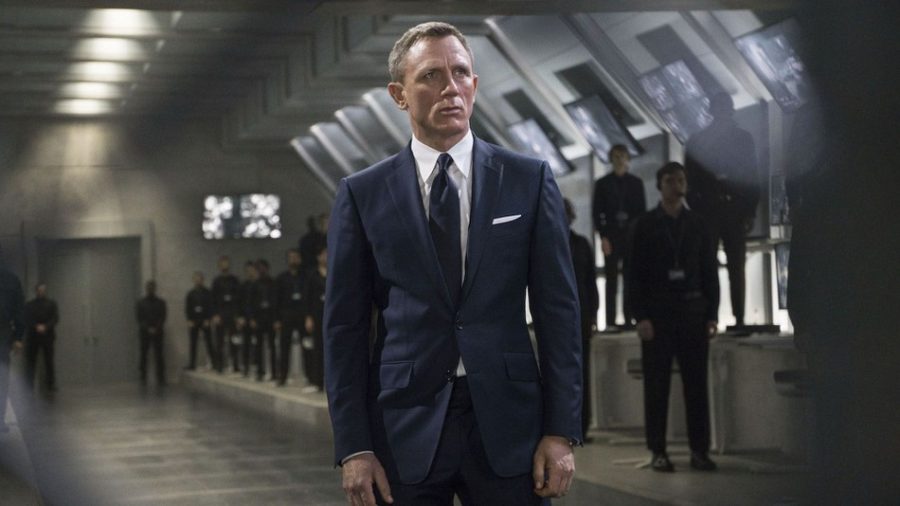
The movie world was both shaken and stirred by the news that director Danny Boyle had abruptly left “Bond 25” over the age-old issue of “creative differences.” Now, producers must start their director search all over again, though there are already a few candidates at the front of the pack.
As for names that are being floated apropos of nothing (hey, that’s what the internet is for, right? Let the wild speculation commence!), Christopher Nolan seems to be a popular choice to take over Boyle’s chair. And critic Mark Harris suggested that a woman be given the keys to the franchise, with commenters chiming in to declare Kathryn Bigelow and Michelle MacLaren natural candidates.
Whoever takes over will likely be working with an existing script from longtime Bond screenwriters Neal Purvis and Robert Wade (“Casino Royale,” “Quantum Of Solace,” “Skyfall,” “Spectre“). Though if any of the above candidates boards the project, expect them to add their own stamp to the screenplay.
“Bond 25” is currently slated to hit theaters on November 8, 2019. Stay tuned to see if/when that changes.
Is “The Dark Tower” a hit or a flop? Well, no one waited ten years to adapt it just to take home less than $20 million opening weekend, so it’s definitely a disappointment.
The Stephen King adaptation debuted at No. 1 this weekend, ending “Dunkirk‘s” two-week reign. And it earned about as much as pundits predicted it would. On the other hand, that figure was just an estimated $19.5 million, not a promising number for a franchise launcher.
Results for this weekend’s two other new wide releases were just as ambivalent. Halle Berry’s “Kidnap” debuted in fifth place with a slightly better-than-expected $10.2 million. Kathryn Bigelow‘s historical drama “Detroit” expanded wide from 30 theaters to 3,007 and earned an estimated $7.3 million, good for eighth place. That sounds strong for a period piece with no big-name stars, until you realize that it amounts to just $2,411 per screen. (And hopes were originally forecasted in the $13 million range.)
How, then, to interpret this weekend’s box office results? Maybe with these five lessons in mind.
1. Stop Blaming Rotten Tomatoes Hollywood’s spent all summer complaining that the review-aggregator site is hurting the box office because potential customers are paying attention to low review scores, especially when those scores are posted at advance-sale site Fandango. The industry’s solution, however, has not been to resolve to make better movies, but to try to game the system. That’s not hard to do; just withhold screenings from critics or embargo their reviews until right before the film opens.
That’s what happened this weekend with “Dark Tower” and “Kidnap.” Both scored poorly at RT (18 and 40 percent, respectively), but viewers may not have been aware of the dismal reviews until they’d already bought tickets. So those films’ distributors can pat themselves on the back for releasing movies that opened in line with expectations despite grim RT scores.
Still, word-of-mouth is weak for “Dark Tower” (audiences gave it just a B grade at CinemaScore), which suggests that the movie will see a steep drop next weekend. Meanwhile, “Detroit” had excellent word-of-mouth and reviews (88 percent “Fresh”), and it still struggled to find an audience. At best, then, the jury remains out on the influence of Rotten Tomatoes.
2. Hollywood’s Diversity Issues Are More Complex Than They Seem Do black stars sell tickets? Do female stars? What about female directors? This weekend’s box office posed all those questions, and the answers are not entirely clear.
It’s remarkable that all three of this weekend’s new wide releases star black actors. When’s the last time that happened? (And how long before it happens again?) And for what its worth, African-American viewers came out in large numbers for all three movies. According to PostTrak, they made up 40 percent of “Detroit’s” audience, 25 percent of “Kidnap” viewers, and 23 percent of “Dark Tower” ticket buyers. Given the so-so returns of all three movies, the question is, will those stars get any credit for whatever success these films may claim, or will they be blamed for the movies’ not doing any better?
And how does gender fit in? Consider Idris Elba, age 44. Critics like him, and the Internet swoons for him, but despite some high profile roles in ensemble casts of hit movies, he’s never opened a picture by himself. Even for the semi-success of “Dark Tower,” he has to share credit with the more established Matthew McConaughey.
Now, look at Halle Berry, age 50. She’s been a star for 25 years, she won a historic Oscar, and she had a lead role in a successful superhero franchise. Yet, despite audience fascination with her personal life, she also doesn’t sell many tickets. Her last minor hit was “The Call” four years ago; her current movie, which has a similar premise, has been on the shelf for three years. Its modest success, however, can be credited entirely to her.
Then there’s Kathryn Bigelow, an Oscar-winning director who routinely creates exciting, action-packed, visually appealing, substantive movies, and does so on a budget. How many doors will open for her after “Detroit”?
According to PostTrak, women over 25 made up the largest fraction (more than 40 percent) of both “Kidnap” and “Detroit” viewers. That’s a feat worth noting; indeed, maybe the real lesson here is not to release two movies going after the same demographic group on the same weekend.
3. Keep the Budgets Low If there’s any reason at all for Sony not to be disappointed by a potential franchise launcher’s failure to crack $20 million, it’s that “Dark Tower” cost just $60 million to make. (What’s more, Sony’s on the hook for only half of that; the rest came from another company, MRC.) That’s an absurdly low figure for an effects-heavy fantasy film with two reasonably big stars, and a decade’s worth of development costs.
So far, the movie’s made only about $28 million worldwide, which means a long climb toward the $120 million (at least) it would need to become profitable. Still, the movie is cheap enough that Sony’s losses, if any, won’t be much, and the studio could eventually profit from the “Dark Tower” TV series that may follow, which would make the movie essentially just an expensive trailer.
“Detroit” cost a reported $34 million, so its $7.8 million take so far means it also has a long way to go before profitability. Still, $34 million is chump change to Hollywood. If the “Detroit” can remain solid in theaters for the next month — pretty likely, since it has strong word-of-mouth (an A- at CinemaScore) and since its only competition in the thoughtful, awards-worthy historical action/drama space is “Dunkirk” — it could still break even.
It’s not clear how much “Kidnap” cost to make, but Berry is a producer of the film, which means she probably took just a modest salary up front in return for a percentage of the profits. And new distributor Aviron picked up the film from Relativity’s bankruptcy sale for a song — just $3 million. So Aviron has to be ecstatic over the film’s $10.2 million weekend, and Berry will likely pocket some change, too.
4. Fan Service Is Important The reason it took a decade to make “Dark Tower” is that there was no way to condense Stephen King’s multiple volumes into a single film. Back in 2011, producer Ron Howard had floated the idea of making a combination of several movies and a TV series, but even with a “Dark Tower” show in the works, it’s clear from the current 95-minute film that Howard’s had to scale down his ambitions. If anything, rather than tackle the totality of KIng’s complex mythology, the new movie punts it down the road for the series to address. So it’s no wonder fans were disappointed by what they saw as a thumbnail sketch of what they loved from the books.
Give “Kidnap” credit, at least, for delivering what Berry fans have come to expect from her recent films: action sequences and Berry unleashing righteous-mom fury on bad guys. “Kidnap” was never going to earn Berry another Oscar, but it did earn her a B+ from audiences at CinemaScore.
5. Leave August for Comic Book Movies This was the lowest-grossing weekend so far of an already lackluster summer. Not only are sales about 10 percent behind what they were by this time last summer, but this weekend’s total ticket take was just an estimated $111.5 million. A year ago this weekend, “Suicide Squad” opened and earned $22.2 million more by itself than all of this weekend’s movies combined.
There’s been a lot of grumbling about franchise fatigue this summer, but this weekend saw the debut of a new franchise and two original screenplays, and the novelty didn’t really help. Meanwhile, superhero movies seem to be immune to franchise fatigue, judging by the successes so far of “Guardians of the Galaxy Vol. 2,” “Spider-Man: Homecoming,” and “Wonder Woman” (which this weekend came within $500,000 of crossing the $400 million mark in domestic sales).
Elba’s Gunslinger may be the closest thing to a superhero in all of King’s writings, but unless he’s rubbing spandex-clad shoulders with Batman or Iron Man, he might as well be just another cowboy.
LOS ANGELES, Aug 6 (Variety.com) – As the dog days of summer drag on, a trio of wide releases are kicking off the August box office with a whimper.
The weekend’s leader is “The Dark Tower.” Sony and MRC’s long-time-coming Stephen King adaptation starring Idris Elba and Matthew McConaughey is landing on a modest $19.5 million from 3,451 locations. Made for about $66 million counting reshoots, the story centers on a boy (played by Tom Taylor) who discovers another dimension where he aligns himself with a Gunslinger (Elba) on a mission to save the world from various enemies, including the Man in Black (McConaughey). Critics mostly panned the movie, leading to its current 18 percent on Rotten Tomatoes.
Meanwhile, Annapurna’s “Detroit” is not faring as well as expected. Kathryn Bigelow and Mark Boal‘s latest collaboration should end up with $7.3 million from 3,007 locations this weekend. Combined with a week of limited release grosses, its total should stand at $7.8 million. An awards-season push could end up helping its bottom line. So far, critics are on board, earning the tale of the Motor City’s 1967 riots a 96 percent on Rotten Tomatoes. The movie is toplined by “Star Wars” breakout John Boyega, as well as Will Poulter, and Algee Smith.
That leaves “Kidnap” — from David Dinerstein’s recently-launched Aviron, and Lotus — which is racing to $10.2 million from 2,378 locations. The movie stars Halle Berry as a mother attempting to rescue her son after he is taken. Aviron acquired the film from a bankrupt Relativity, but the distributor declined to release the thriller’s acquisition cost, making it difficult to judge its performance.
“Dunkirk,” the box office winner the past two weekends, is sliding comfortably into second with $17.6 million from 4,014 locations. Christopher Nolan’s World War II movie crossed the $300 million mark on Saturday, and by the end of the weekend should tally a $133.6 million domestic total. This weekend it looks to make about $4 million from Imax screens alone, which will count for $29.8 million of the movie’s domestic grosses. Warner Bros. also continues to see profits from “Wonder Woman,” which will land right up against the $400 million domestic milestone by the end of this weekend.
In limited release, TWC’s “Wind River” should make $164,167 from four locations. The film stars Jeremy Renner and Elizabeth Olsen, and marks Taylor Sheridan’s directorial debut. Sheridan conceived the movie as part of a loose trilogy that also includes two recent releases that he wrote, but did not direct, “Sicario” and “Hell or High Water.”
All this on the calendar spot that last year’s “Suicide Squad” bucked conventional release date wisdom with a record-breaking $133.7 million domestic opening. This summer has lagged overall due to a number of big-budget movies flopping or underperforming, and this latest showing will only put the business farther behind.

 Preview:


 Is “
Is “ Hollywood’s spent all summer complaining that the review-aggregator site is hurting the box office because potential customers are paying attention to low review scores, especially when those scores are posted at advance-sale site Fandango. The industry’s solution, however, has not been to resolve to make better movies, but
  Do black stars sell tickets? Do female stars? What about female directors? This weekend’s box office posed all those questions, and the answers are not entirely clear.
 If there’s any reason at all for Sony not to be disappointed by a potential franchise launcher’s failure to crack $20 million, it’s that “Dark Tower” cost just $60 million to make. (What’s more, Sony’s on the hook for only half of that; the rest came from another company, MRC.) That’s an absurdly low figure for an effects-heavy fantasy film with two reasonably big stars, and a decade’s worth of development costs.
 The reason it took a decade to make “Dark Tower” is that there was no way to condense Stephen King’s multiple volumes into a single film. Back in 2011, producer
  This was the lowest-grossing weekend so far of an already lackluster summer. Not only are sales about 10 percent behind what they were by this time last summer, but this weekend’s total ticket take was just an estimated $111.5 million. A year ago this weekend, “
 By Seth Kelley