Tag: george-lucas

  • ‘Star Wars’ Producer Gary Kurtz Dies at 78

    ‘Star Wars’ Producer Gary Kurtz Dies at 78

    Lucasfilm

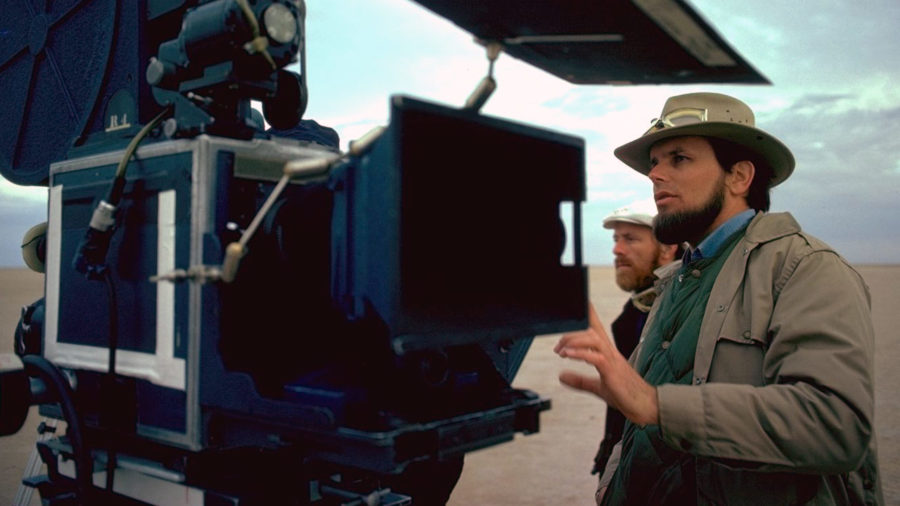
    Gary Kurtz, a longtime Hollywood producer who helped shepherd the first two films in the “Star Wars” universe, has died. He was 78.

    Kurtz’s family confirmed the producer’s death in a statement to The Hollywood Reporter, telling the trade that he passed away in North London, England on Sunday, after a battle with cancer. The entire statement said:

    “Gary was a beloved husband, father, grandfather, friend, colleague, and mentor, whose work and talent spanned filmmaking, photography, music, and cinema history. He was a Marine, a world traveller, an outdoorsman, and a kind, compassionate human being. His life’s work was to share the wonder of audio visual storytelling through the art of film. Well-known for his work as the producer of American GraffitiStar WarsThe Empire Strikes Back, and The Dark Crystal, Gary was passionate about telling stories that shared the humanity of characters in entertaining ways for audiences around the world. Gary was a magnificent man, who will be hugely missed. His whole family thanks you for your loving thoughts.”

    Kurtz was an indelible part of moviemaking in the 1970s and 1980s, producing iconic films including “Star Wars,” “The Empire Strikes Back,” and “American Graffiti” in collaboration with George Lucas. He was nominated for two Oscars for Best Picture (for “Star Wars” and “American Graffiti,” the latter of which he co-produced with Francis Ford Coppola), and also worked as a second unit director on several films, including “Empire.”

    In a statement, Lucasfilm hailed Kurtz as “a man of immense talent and intelligence, [who] will be missed greatly by Lucasfilm, and we’ll remember his many contributions to ‘Star Wars’ and film.”

    [via: The Hollywood Reporter, StarWars.com]

  • 17 Things You Never Knew About ‘Return of the Jedi’

    It’s been a mind-boggling 35 years since “Return of the Jedi” hit theaters and capped off the original Star Wars trilogy.

    At the time, fans feared it might be the last they ever saw of Luke, Leia, Han, and the rest of the gang. That didn’t turn out to be the case, but this movie still holds a special place in the hearts of Star Wars fanatics the world over. And to celebrate this milestone, here are 16 interesting facts you might not know about this epic threequel.
    1. George Lucas created several fake shooting scripts to guard against leaked spoilers. One of these scripts revealed Lando to be the person Yoda alluded to in “The Empire Strikes Back” when he said, “No, there is another.”

    2. Speaking of Yoda, the aged Jedi Master wasn’t originally meant to be included in the film. Lucas added the Luke/Yoda reunion after speaking with a child psychologist and being told that younger viewers needed hard confirmation that Darth Vader is Luke’s father in order to accept the twist.
    3. Lucas clashed with writer Lawrence Kasdan over how to end “Return of the Jedi.” The two considered scrapping the entire Endor sequence and instead setting the climax on Had Abbadon, a planet Lucas envisioned as the capital world of the Empire. The Special Edition re-release instead features a brief glimpse of Coruscant, a world that would become well-established in the Prequels.

    4. Another option considered was to set the climactic battle on Kashyyk, teaming Chewbacca with his fellow Wookiees instead of Ewoks.5. The costume designers tried — and failed — to design Ewok masks that featured blinking eyes. Lucas later digitally added blinking eyes for the 2011 Blu-ray release.
    6. The word “Ewok” is never actually spoken in the film. Also not spoken in the film? Palpatine. The big bad is never referred to by his actual name, just “The Emperor.”7. Originally, Luke’s lightsaber blade was colored blue in the film, and appeared that way in early footage and on the “Revenge of the Jedi” teaser poster. Lucas changed the color to green in order to make it clearer that Luke had built a new saber and not recovered the one he lost in Cloud City.8. Lando’s co-pilot, Nien Nunb, isn’t speaking alien gibberish, but an actual Kenyan dialect known as Haya. His lines were dubbed by a Kenyan student named Kipsang Rotich.9. “Return of the Jedi” is the only Star Wars movie in which Darth Vader appears but doesn’t Force-choke another character.

    10. There actually was a scene of Vader choking an Imperial officer outside Palpatine’s throne room, but Lucas deemed it unnecessary.
    11. When filming his Endor scenes at the Redwood National Forest in California, Chewbacca actor Peter Mayhew had to be escorted by crew members so locals wouldn’t mistake him for Bigfoot.

    12. Death Star administrator Moff Jerjerrod originally had a more significant role in the story. An earlier draft depicted Jerjerrod as Palpatine’s right-hand man, helping his master scheme to turn Luke against Vader and eventually being killed by Vader in retaliation.
    13. Han Solo’s fate at the end of “Empire Strikes Back” was left ambiguous in case Harrison Ford elected not to return for the sequel. Ford also campaigned for Lucas to kill off his character in “Return of the Jedi,” though he wound up having to wait until 2015’s “Force Awakens” to get his wish.
    14. Four different actors were required to bring Vader to life in this sequel. David Prowse and Bob Anderson both wore the suit at different points, while James Earl Jones provided Vader’s voice and Sebastian Shaw portrayed the unmasked Anakin Skywalker. And that’s not even counting Hayden Christensen‘s cameo in the Blu-ray version.

    15. Ian McDiarmid had to rotate his throne by using his feet because the actual mechanism never worked properly during filming.
    16. Lucas has admitted to regretting Boba Fett’s infamous death scene after learning just how popular the bounty hunter had become with fans. Lucas even considered adding a scene on the 2004 DVD release that would have shown Fett escaping from the Sarlacc.17. When it came time to expand the musical sequence in Jabba’s palace, actress Femi Taylor was called on to reprise the role of Twi’lek dancer, Oola. She was the only Original Trilogy actor to return for the Special Editions.

  • You Can Blame ‘Return of the Jedi’ for Giving Us the Star Wars Prequels

    2018 marks the 35th anniversary of “Star Wars: Return of the Jedi,” the third film in George Lucas’ initial — and, for a while at least, only — trilogy.

    And while it’s easy to get swept up in the nostalgia, especially since it perfectly coincides with the release of “Solo: A Star Wars Story,” in many ways “Return of the Jedi” marked the end of the “Star Wars” that we knew and loved. It signaled the end in which fairly standard fairy tale tropes are deepened and complicated, lacquered with layers of New Age mysticism and Eastern philosophy, while officially ushering in the next phase of the franchise (more simplistic storytelling aimed more squarely at children). The cycle that began with the third film of the original trilogy has only recently been broken, thanks to the new “saga” films, in which directors raised on the material have been fearless in both reconstructing and deconstructing the series’ mythology and its accompanying characters.

    In short: “Return of the Jedi” was the beginning of the end.

    But let’s take it back a little bit.1980’s “The Empire Strikes Back” was, in many ways, a grand experiment — one in which Lucas, the writer-director of the original film and the guiding creative force of the franchise, tried to step away. The first film had turned his struggling operation into a full-fledged company, one that demanded management. So he passed the baton to prickly journeyman filmmaker Irvin Kershner.

    Lucas assumed that Kershner would simply follow the map that Lucas and screenwriter Lawrence Kasdan (brought in after notable screenwriter and novelist Leigh Brackett had handed in one largely unrecognizable draft before passing away) had laid out in front of him. But Kershner turned out to be more of an artist, insisting on multiple takes and emphasizing exploration and improvisation. This, as recounted in Brian May Jones’ indispensable biography “George Lucas: A Life,” grated on Lucas, who was both extending credit to cover the ballooning budget and cracking down on what he perceived as Kershner’s flights of creative fancy.

    Ultimately, the push-and-pull between Kershner and Lucas gifted us with the greatest entry in the franchise (to this day). Without Kershner’s willingness to go off the page, we would have never had Han and Leia’s unforgettable farewell (among other things).

    “The Empire Strikes Back” was a glorious melting pot of artists at the top of their game; not only Kershner, but Jim Henson and Frank Oz (who helped create Yoda), along with a more emboldened cast who came to set with fully formed ideas about where their characters should go, and people like editor Paul Hirsch, cinematographer Peter Suschitzky, and producer Gary Kurtz. These were the voices (some louder and more combative than others) that made the movie sing. They were also the ones that made Lucas the most enraged.

    When it came to “Return of the Jedi,” he wiped the slate clean, creatively. Of the geniuses that brought “Empire Strikes Back” to life, only Oz was spared, returning in a much more limited capacity (a kind of puppet cameo). Lucas wanted to regain control of what he thought was essentially his vision, no matter the filmmaker actually behind the camera.So he hired Richard Marquand to direct, and he did so with a machinelike efficiency. There was no flair, no sense of pacing or spectacle, just a measured hitting of beats and, from all accounts, a genial outlook that made him a perfect doormat. (Kurtz, who had been a key ally of Lucas’, felt the decision to base the film around another Death Star, reductive, and quit.) And Lucas was paying greater and greater attention to the business side of the operation. He was fond of creating characters that could easily sell toys and keenly aware of the “toyetic” nature of his movies. (This was a phrase coined by a Kenner executive who complained that “Close Encounters of the Third Kind” didn’t have enough potential licensing possibilities.)

    All of his more commercial inclinations were ultimately focused on one aspect of the movie: the Ewoks.

    As far back as Lucas’ original, unwieldy treatment for the first “Star Wars” movie, he wanted to see an indigenous, less sophisticated society rise up against the evil Galactic Empire. (In that version, it was the Wookiees, an idea he would return to in the prequels.)

    For “Return of the Jedi,” it was decided that it would be the inhabitants of the forest moon of Endor, a key spot to the Empire in their construction of the new Death Star. And they went through many designs, originating as creepy, reptile-ish creatures. According to Jones, “Lucas had sent the characters back through design and again and again, finally settling on a cuddly teddy bear-like look.”

    It was enough to send Ralph McQuarrie packing; he was the illustrator responsible for the franchise’s most iconic designs (he’s still being cribbed from on shows like “Star Wars: Rebels” and in the Star Wars: Galaxy’s Edge theme park project). He “threw up his hands in resignation” over the development of the Ewoks. “There was a feeling that it was maybe too obvious a marketing idea,” said one designer (to Jones). “I think Ralph didn’t like them too much.” Ultimately, Joe Johnston, another talented designer (and future director) would settle on a sweet design that Lucas would approve.

    And, in the end, “Both cast and crew alike found his new heroes somewhat grating.” Of course, this excluded Lucas.

    He instructed second-unit director Roger Christian to get as much footage of the creatures as he could, particularly in the celebratory final scene. It was enough for Christian to request removal from that unit. “George loved them. Nobody else did,” said Christian.

    Looking back on the film, they really are grating, and their cutesy look, pidgin speech patterns, and prepackaged aesthetic, would be a harbinger of the prequels to come. Even Lucas’ backed-in political subtext, with the Ewok/Empire conflict acting as an obvious stand-in for the Vietnam War, was neutered by just how cloying they were. The Vietcong were a lot of things, but huggable was not one of them.

    When Lucas returned to “Return of the Jedi” for the “special edition” updates (first in 1997 theatrical re-releases and then subsequently in home video debuts), he made the connection between the film and his nascent prequel trilogy even more explicit: At the end of “Return of the Jedi,” he subtracted footage of the Ewok celebration (the same footage that he was so keen on getting during principal photography), instead choosing to cut around to different planets, as they celebrated the downfall of the Empire. These planets included Naboo and Coruscant — two very important settings for the trilogy — and featured the kind of busy, overstuffed CGI cacophony that was another hallmark of the later films.The prequels are terrible films, but they are singularly George Lucas films. He directed all three and either wrote or co-wrote all of them, too.

    He paid for them and didn’t have any outside help, besides asking Steven Spielberg for assistance staging the climactic lightsaber battle in “Revenge of the Sith.” The prequels were hermetically sealed creations, springing forth from Lucas’ mind and controlled — tightly — at every level by him.

    It’s suggested in Jones’ biography that his greatest artistic accomplishments came when he was getting creative pushback from other likeminded people; the Kershners of his world. When he became, in essence, a solo act, that vitality (and that humanity) all but evaporated. What we were left with were the prequels, movies that had about as much charm and character as an IRS audit, crammed with wooden dialogue, instantly-dated visual effects, and erratic pacing.

    But, on all three movies, nobody ever told Lucas “no.”

    After “Return of the Jedi” came out, Lucas did an interview with Rolling Stone magazine. “Dare to be cute. The worst we could do is get criticized for it,” Lucas said, somewhat defiantly.

    Sadly, being cute is what would define him as an artist and his franchise as a whole, for decades afterwards, when the commerciality of cuteness was seemingly all he cared about.

  • It Was a ‘Star Wars’ Reunion at Mark Hamill’s Walk of Fame Star Ceremony

    Harrison Ford, Mark Hamill, George LucasCongrats to Jedi master Mark Hamill, who finally got his star on the Hollywood Walk of Fame.

    Joining him at the ceremony yesterday were “Star Wars” creator George Lucas and Harrison Ford.

    Noting the absence of Carrie Fisher, who died in 2016, Ford told the crowd, “When thinking about today, I was really sorry we don’t have the other member of our trio to celebrate with us, but I feel her presence.” (A moment while we wipe away something that just got in our eye.)

    On a much lighter note, Ford also said that when he looked back at the screen test he did with Hamill in 1976, “I was surprised by how good he was.”

    Hamill recalled the advice his “Star Wars” costar gave him back in the day: “”Hey, kid, Don’t get cocky.’ And I have tried to remember that to this very day.”

    He also thanked Lucas for his “genius,” saying he “wouldn’t be standing here today” if Lucas hadn’t created a certain sky-gazing farm boy.

    “Mark Hamill is a character that can’t be written,” said Lucas. “He is extremely enthusiastic about everything he does, and that is exactly what I was looking for when I cast Luke Skywalker.”

    “It’s hard to convey my gratitude, my joy and the exhilaration,” the actor told the thousands of fans who turned out for the event. Joking about his brief (and silent) appearance in his second-to-last “Star Wars” film, Hamill said, “I haven’t been this speechless since ‘Force Awakens.’”

    Hamill’s star is in front of the Disney-owned El Capitan Theatre on Hollywood Blvd. Ford’s star, which was given in 2003, is in the 6800 block of Hollywood Blvd. Sadly, Carrie Fisher never got a star in her lifetime, but may still be honored posthumously.

    Watch the whole ceremony in the video below.

    [Via THR]

  • 9 Star Wars Movies That You Will Never See

    We now live in a world where there’s going to be a new “Star Wars” movie every year for possibly decades to come. But even with that embarrassment of nerd riches, we can’t help but dwell on the Star Wars movies that never were.

    From Steven Spielberg‘s “Return of the Jedi” to George Lucas‘s original vision for the sequels to his original trilogy, these are the “Star Wars” movies that never were.

    “Star Wars” (1977)

    1. “Journal of the Whills”George Lucas had already begun writing “Star Wars” in earnest as early as 1973, but the early drafts bore little resemblance to what fans would actually see on the big screen.

    The earliest incarnation of “Star Wars” came in the form of a two-page treatment called “Journal of the Whills,” which revolved around a character named CJ Thorpe, a pupil of “Jedi-Bendu” master Mace Windy. Basically, the treatment featured a bunch of weird names and concepts that Lucas had yet to forge into a real story.

    2. “The Star Wars”Eventually, Lucas managed to expand that early treatment into a full script he dubbed “The Star Wars.” The original screenplay features characters like General Luke Skywalker and brothers Deak and Annikin Starkiller. Han Solo and Chewbacca were also present, though at that point Han was envisioned as a reptilian alien (see above). Elements like the Sith Empire and the Death Star were also present in this early draft.

    “The Star Wars” evolved over the course of several drafts, with each new iteration bringing the story closer to what fans know today. But for those curious about what might have been, Dark Horse Comics published a 2013 mini-series — cover art above — that adapts the original screenplay.

    “The Empire Strikes Back” (1980)

    3. Leigh Brackett’s Draft
    Not her fourth draft, which many fans have read and debated over at conventions. No, this is the plot from her first draft — and it has very, very little in common with the film we all know and love.

    Here, Han Solo goes in search of his father-in-law, Ovan Marekal, who has political ties with Darth Vader. Luke still goes to Dagobah, but here, it’s just “the Bog Planet.” And instead of meeting Yoda, he meets a frog-like Jedi named Minch, who teaches our favorite intergalactic farm boy the ways of the Force.

    In 1978, Lucas gave the screenwriter a shot to write the then-untitled sequel. He hired her based on her promising and prolific work as a science fiction author. (That explains the very prose-y way the script reads.) Brackett would never get to see how the final film turned out; she died one year after she turned in her script.

    “Return of the Jedi” (1983)

    4. The Early Lucas/Kasdan DraftsWhile it’s not clear exactly how many revisions the “Return of the Jedi” screenplay went through during pre-production, over the years both Lucas and Lawrence Kasdan have revealed many major and minor edits that were made.

    Early on, the duo had to account for the very real possibility that Harrison Ford might not return. At one point, the film featured an early death for Han and didn’t include Yoda at all. Early drafts also featured Wookiees in place of Ewoks, the resurrection of Obi-Wan Kenobi, and a spaghetti Western-worthy denouement as Luke walks sadly into the sunset instead of partying it up on Endor.

    5. Steven Spielberg or David Lynch’s “Return of the Jedi”Even after Lucas and Kasdan completed their screenplay, there was a great deal of uncertainty as to who would actually direct the film. At varying points, Lucas approached David Lynch (who opted for for rival space fantasy film “Dune” instead), David Cronenberg (who did the same for “Videodrome“) and even Steven Spielberg.

    We can’t help but wonder how a Spielberg-directed “Episode VI” might have turned out. Would it still be considered the weak point of the Original Trilogy?

    The Force Awakens” (2015)

    6. Lucas’ Sequel Trilogy
    Lucas has given conflicting reports over the decades as to whether he ever planned to continue his “Star Wars” saga beyond the events of “Return of the Jedi.” But when he sold the franchise to Disney in 2012, Lucas reportedly handed over story treatments for “Episodes VII,” “VIII” and “IX.” Little is known about the content of those treatments, other than the fact that Disney elected not to make use of them.

    Novelist Timothy Zahn offered probably the closest glimpse into Lucas’ plans for the sequel trilogy, saying “The original idea as I understood it — and Lucas changes his mind off and on, so it may not be what he’s thinking right now — but it was going to be three generations. You’d have the original trilogy, then go back to Luke’s father and find out what happened to him, and if there was another seventh, eighth, or ninth film, it would be Luke’s children.”

    7. The Michael Arndt DraftThe Force Awakens” went through many rewrites before Disney and J.J. Abrams settled on a final shooting script, as the studio understandably wanted to make a good impression with jaded “Star Wars” fans.

    We don’t know a great deal about the plot of Michael Arndt‘s original draft, other than the fact that it brought Luke Skywalker into the plot midway through rather than at the very end of the film. But even Arndt admitted that Luke’s presence distracted from the new cast of characters.

    We also know that earlier drafts of the screenplay featured Rey having a flashback to Luke and Vader’s fateful duel on Cloud City, and Poe dying when his stolen TIE Fighter crashed on Jakku. Thankfully for all the Poe/Finn shippers out there, he was later spared that fate.

    Rogue One” (2016)

    8. The Original Cut

    Rogue One” worried a great many “Star Wars” fans once word got out that Disney was moving forward with weeks of extensive rewrites and reshoots in summer 2016, a process that was overseen by Tony Gilroy rather than director Gareth Edwards. The goal was apparently to craft a lighter, more adventurous take, with many Disney and Lucasfilm higher-ups fearing the project was veering in too dark a direction. (Also, they had concern that Edwards’ sense of story was less-than-strong for what they needed their first “Star Wars” film post-“TFA” to be.)

    The early trailers for “Rogue One” offer a taste of the film as it existed in its original form, as they feature many shots that were entirely absent in the final cut. That includes a glimpse of Director Krennic and his Stormtroopers wading through the beach on Scarif, alternate scenes with Vader, and a sequence where Jyn and Cassian charge directly into fire from a fleet of AT-ACT Walkers.

    9. The “Happy Ending” Version“Rogue One” is notable for its relatively dark ending, as the film’s entire cast of heroes is killed during the Battle of Scarif. But that wasn’t always the case.

    Writer Gary Whitta revealed that early drafts of the screenplay provided a happier ending for Jyn and Cassian (while other characters like Baze, Bodhi and Chirrut were completely absent). The film would have ended with Jyn and Cassian escaping the planet’s surface and surviving the destruction of their ship by fleeing into an escape pod.

    But Whitta ultimately decided it just wasn’t worth the effort, saying “The fact that we had to jump through so many hoops to keep them alive was the writing gods telling us that if they were meant to live it wouldn’t be this difficult.” That alternate ending exists only in storyboard form.

  • 40 Things You Never Knew About the ‘Star Wars’ Franchise

    There’s never been a better time to be a “Star Wars” fan.

    The franchise is currently dominating the pop culture landscape, with “Star Wars: The Last Jedi” hitting theaters December 2017 and the Young Han Solo movie following in 2019.

    To help fill the wait until those movies finally hit, here are 11 interesting facts you might not know about the “Star Wars” movies.1. While Sir Alec Guinness was never shy about voicing his disdain for “Star Wars,” the original movies made him a very rich man. Guinness’ contract granted him 2% of the box office receipts, or close to $100 million when all was said and done.

    2. By contrast, James Earl Jones received a paltry $7500 for his work voicing Darth Vader in the original film. Still, it wasn’t a bad gig considering that Jones wound up recording all of his lines in a few hours.3. Ewan McGregor isn’t the first member of his family to appear in the Star Wars movies. His uncle, Denis Lawson, played Rebel pilot Wedge Antilles in the Original Trilogy.

    4. Everyone knows that the fuzzy teddy bears on Endor are called Ewoks, but that word is never actually uttered in any of the “Star Wars” movies.5. The Skywalker family was originally named “Starkiller” in early drafts of the “Star Wars” screenplay. The “Starkiller” name has been used in various other pieces of Star Wars lore, finally making its movie debut in “The Force Awakens” thanks to Starkiller Base.

    6. The working title for “Return of the Jedi” during filming was “Blue Harvest.” This is a reference to “Red Harvest,” the 1929 novel that inspired the classic samurai film “Yojimbo,” which itself was a major influence on “Star Wars.7. Most fans probably know that Mark Hamill‘s face was scarred in a car accident prior to filming “The Empire Strikes Back,” which is why the Wampa attack was added to the script. But that wasn’t the only time Lucas had to account for one of Hamill’s injuries.

    8. The actor held his breath for so long while filming the trash compactor scene in “Star Wars” that he burst a blood vessel in his face. Lucas had to rearrange the scene in order to hide that injury.9. Paramount Pictures changed the subtitle of “Star Trek II” from “The Vengeance of Khan” to “The Wrath of Khan” after learning that Episode VI would be titled “Revenge of the Jedi.” Unfortunately for them, George Lucas wound up switching to “Return of the Jedi” during post-production.

    10. Both Jar-Jar Binks actor Ahmed Best and C-3PO actor Anthony Daniels appear out of costume as background extras in the cantina scene in “Attack of the Clones.”11. Yoda went through several name changes during the course of writing “The Empire Strikes Back.” At one point, it was established that his full name is “Minch Yoda,” and before that he was known simply as “Buffy.”

    12. A number of big-name directors were considered to helm “Return of the Jedi,” including David Lynch, David Cronenberg, and even Steven Spielberg. In the end, Lucas settled with a less conventional choice in the form of Welsh director Richard Marquand, who caught Lucas’ eye with his 1981 film “Eye of the Needle.”13. Kenner had to cancel its original Boba Fett action figure because the rocket-firing feature was deemed a choking hazard. Very few prototypes exist, making it one of the holy grails in the toy collecting community.

    14. Before Frank Oz was brought onboard to bring Yoda to life via puppetry, Lucas considered (*rolls eyes) relying on a trained monkey to play the elderly Jedi Master.15. If you’ve ever wondered why Darth Vader actor David Prowse never shows up at Star Wars Celebration or similar events, it’s because he’s been banned after a series of disagreements with George Lucas. Apparently, the two never got along while filming the original movies.

    16. Lucas squabbled with the Directors Guild of America over his decision not to include opening credits in the original “Star Wars.” Lucas ultimately opted to leave the Guild, and he more or less cut ties with the traditional Hollywood machine after that point.
    17. One of the early drafts of the “Return of the Jedi” screenplay ended with Luke donning his father’s mask and declaring himself to be the new Darth Vader.

    18. That abandoned twist did sort of make its way into the Expanded Universe comics. The mini-series “Dark Empire” saw Luke fall to the Dark Side after a cloned Emperor Palpatine returned to threaten the galaxy.19. Many of the sets in “The Phantom Menace” had to be rebuilt after the designers realized Liam Neeson was too tall to fit through the doorways.

    20. For some reason, Yoda’s feet change shape over the course of the “Star Wars” saga. In “Phantom Menace,” Yoda has three toes on each foot. In every other film, however, he has four.21. The Prequels were so CG-heavy that Lucasfilm never actually constructed any physical suits of armor for the Clonetroopers. They were created entirely via digital effects.

    22. The tiny Pacific nation of Niue actually accepts collectible Star Wars coins as legal tender.23. If you aren’t watching the animated series “Star Wars: Rebels,” you might not know that Darth Maul actually survived his apparent death at the end of “The Phantom Menace.” Maul returned to continue his feud with Obi-Wan Kenobi during the height of the Clone Wars.

    24. Many of the alien dialects in the movies actually have roots in real-world languages. For example, the Jawas speak a variation of Zulu, while the Ewoks speak a mixture of Nepalese and Tibetan.25. Grand Moff Tarkin actor Peter Cushing found his costume’s military boots very uncomfortable, so he wound up filming most of his scenes while wearing a pair of fuzzy slippers instead.

    26. The Tantive IV (below), the ship carrying Princess Leia and the droids in the opening moments of “Star Wars,” is based on the original concept design for the Millennium Falcon.
    27. Among Jabba’s many henchman in “Return of the Jedi,” there’s a trio known as Klaatu, Barada and Nikto. Those names are a reference to the shutdown code in “The Day the Earth Stood Still” (above).

    28. Qui-Gon Jinn’s communicator in “The Phantom Menace” was actually just a re-purposed Gillette shaving razor. Don’t believe us? See for yourself below:
    29. Acclaimed thespian Orson Welles (above) was among those originally considered to voice Darth Vader. Ultimately, Lucas decided Welles’ voice was too recognizable.

    30. There’s a background extra during the escape from Cloud City in “The Empire Strikes Back” who appears to be carrying an ice cream maker. Fans have since developed an elaborate back-story for this character, casting him as a Rebel spy carrying vital information to the Alliance.31. An early draft of the “Return of the Jedi” script featured both Yoda and Obi-Wan Kenobi returning to life to assist Luke in overthrowing the Emperor.

    32. At one point, Lucas considered relying on an all-Japanese cast for the original Star Wars, reflecting the the heavy influence Akira Kurosawa’s samurai films had on the movies. Lucas even considered Kurosawa mainstay Toshiro Mifune to play Obi-Wan Kenobi.33. Artist Ralph McQuarrie created concept art for a medieval-style castle for Darth Vader that would have appeared in “The Empire Strikes Back.” Obviously those designs were scrapped, but they did inspire Vader’s Mustafar fortress (above) seen in “Rogue One.”

    34. Believe it or not, the opening crawl in the original “Star Wars” was created entirely through practical effects. Lucas and his team had to film while moving die-cut letters across a black paper background, and the whole process took hours to pull off.

    35. Darth Maul actor Ray Park had his own idea about who should play Anakin Skywalker in “Attack of the Clones.” Park sparred with an Indiana stockbroker named Jeff Garner and, despite Garner’s complete lack of acting experience, forwarded his name to Lucasfilm.

    36. Hayden Christiansen actually wore the Darth Vader suit in the villain’s final appearance in “Revenge of the Sith.” He was forced to walk on stilts in order to properly convey the character’s imposing height.37. “Empire Strikes Back” had plenty of problems with production running behind schedule and going over-budget. Some of those problems were exacerbated by “The Shining” director Stanley Kubrick, who took over some of Lucas’ studio space after a fire at Elstree Studios.

    38. Mark Hamill campaigned for Lucas to introduce a love interest for Luke in “Return of the Jedi.” Lucas declined, but Luke did eventually gain a wife and family in the Expanded Universe novels.39. R2-D2 actor Kenny Baker was originally slated to play lead Ewok Wicket W. Warrick. But after Baker fell ill from food poisoning, the part shifted to Warwick Davis instead. Davis has gone on to play a number of characters throughout the series.

    40. Lucas is at least somewhat aware of the disdain many Star Wars fans have for Jar Jar Binks. He even jokingly subtitled “Episode II” as “Jar Jar’s Big Adventure” for a while.

  • Our 40 Favorite Things About ‘Star Wars’

    It’s been a whopping 40 years since the release of “Star Wars” (in the years since, its been popularized with its official chapter title, “A New Hope”), a film that forever changed cinema and whose effects can still be felt today, both in the endless sequels, spin-offs, and adaptations it inspired, and for the more-is-more approach Hollywood has taken to cinema. “Star Wars” was released at the tail end of the 1970s, when the more traditional model of filmmaking had broken down, replaced with esoteric, personal work by talented, movie-mad youngsters. “Star Wars” writer/director George Lucas was one of those youngsters but he, like best friend Steven Spielberg, dreamed big: he wanted audiences to visit a galaxy far, far away.

    And they did.

    Looking back on that first, game-changing film we wanted to pick out our 40 favorite things about “Star Wars.” (For those who didn’t see the film theatrically in 1977 then they probably caught the “Special Edition” exhibits in 1997.) These are everything from esoteric moments to giant, seismic contributions to cinema. What makes “Star Wars” so charming, all these years later, is that you get the sense that the people behind the movie (led by Lucas) never thought they were doing anything special. They were just having fun and we’ve been having the same amount of fun for the past 40 years.

    1. That opening crawl.

    2. John Williams’s unforgettable score.

    3. The super-long opening shot, with the Star Destroyer towering overhead. (Sure, we can do that with computers now but would it look even fractionally as cool?)

    4. Two words: Darth Vader.

    5. Carrie Fisher, our dearly departed Princess.

    6. Fisher’s oddly inflected pseudo-British accent.

    7. Luke’s whine.

    8. R2-D2 and C-3PO, the greatest robotic life-mates in the history of cinema.9. Uncle Owen and Aunt Beru (they seem so nice).

    10. The “used future” aesthetic.

    11. Luke Skywalker’s whine.

    12. The unknowable mystery of Tosche Station and the power converters therein.

    13. Jawas and their light-up eyes (I had a plush Jawa with light-up eyes as a kid).

    14. C-3PO’s silver leg, paving the way for his red arm in “The Force Awakens.”

    15. Blue milk.16. Binary sunsets.

    17. The deeply disturbing Sandpeople.

    18. Ben’s yell (pre-Special Edition).

    19. Alec Guinness reading clunky expositional dialogue like it was Shakespearean verse.

    20. Han Solo and the peerless performance of Harrison Ford.

    21. The costumes.

    22. The cantina sequence.

    23. Han shooting first (FACT).

    24. Chewbacca, who is the most loyal copilot in the galaxy.

    25. The design of the Millennium Falcon.

    26. The unseen threat of Jabba the Hutt (please forget that dumb scene from the Special Edition).

    27. Stormtroopers and their strangely stationary Dewback.

    28. Grand Moff Tarkin, the scariest middle manager in the galaxy.

    29. The Death Star. So cool that it keeps showing up in the movies. (Fun fact: “The Phantom Menace” is the only entry that doesn’t feature the Death Star, or a Death Star-like planetoid, in its narrative.)30. “Aren’t you a little short for a Stormtrooper?”

    31. The beautifully banal lightsaber fight between Vader and Obi-Wan.

    32. All of the effects, which were so cutting edge at the time and still look gorgeous.

    33. The movie’s gentle mysticism.

    34. How unstoppably cool and ramshackle the Rebels are.

    35. The “trench run” at the end.

    36. Darth Vader flies his own spaceship at the end. That’s a boss move.

    37. “You’re all clear kid! Now let’s blow this thing and go home!” (HAN CAME BACK.)

    38. Death Star destruction 1.0.

    39. The medallion-awarding ceremony at the end (even though it’s messed up Chewbacca didn’t get one).

    40. Everything it inspired, from toys to video games to novels to sequels to theme park attractions that we still obsess over, in equal measure, to this day.

  • Star Wars Celebration: 9 Things We Learned at the 40th Anniversary Panel

    Before Star Wars Celebration kicked off in Orlando Thursday with a massive panel celebrating the franchise’s 40-year legacy, the emcee warned fans to grab a tissue. What ensued was a massive rollout of actors, surprise appearances, musical moments, and a very emotional tribute to the late Carrie Fisher.

    Warwick Davis, the panel’s host and a “Star Wars” veteran himself, began by welcoming Lucasfilm president Kathleen Kennedy to the stage. Then she, in turn, surprised the crowd by bringing onto the stage the man who started it all: George Lucas.

    1. Warwick Davis’ Letter to George Lucas
    “I hired you when you were 11 years old and now you have grey hair,” Lucas told Davis.

    As the two reminisced about how “Star Wars” was initially conceived, the timeline of getting it made, and their time together on the set, Davis shared a letter he wrote as a child actor to “Mr. Lucas.”

    Davis read is letter aloud: “My name is Warwick. I hope you remember me, I helped you make the new ‘Star Wars’ film last year. I hear that the film is being released in this country [the UK] on June 2nd and that a few of the toy shops in London have some of the new figures.”

    The letter continued: “I hope this is not too rude of me to ask you, but would it be possible for you to send me the very latest figures and walkers? I was hoping very much that there may be an Ewok or Jabba the Hut. I did enjoy myself with you and the members of the film unit, and I keep remembering what a terrific experience it was. Hoping to meet you again soon. Kindest regards — Warwick.”

    More than 40 years later, Davis now shared a throwback photo of his childhood self posing with his collection of action figures. (Minus some of their capes, of course, from figures he still has.)

    2. George Lucas Had to “Purge” Dave Filoni of “Bad Ideas”

    “This is one of my kids,” Lucas said of Dave Filoni, as the co-creator of “Star Wars Rebels” joined him on stage. Lucas joked that there were “bad ideas that had to be purged from his mind” as the pair collaborated together for TV.

    Lucas said he saw television as “an experimental cauldron,” one that would allow him to “put out a lot of product, a lot of stories” in a long-form format. “That’s why we put out ‘Clone Wars,’” he said, adding that he “would never have been able to put [his TV ideas] in the theater.”

    3. Liam Neeson’s Top-Secret Project

    The Jar Jar Binks hate is real.

    While Liam Neeson could not be present for Celebration, so the Qui-Gon Jinn actor recorded a special video message that also trolled fans with his top-secret project. As he said, he’s “on location in the Canadian rocky” filming “a very unofficial movie about Jar Jar Binks.”

    “Spoiler alert,” Neeson added, “he did go to the Dark Side.”

    4. Ian McDiarmid‘s “Revenge of the Sith” Opera Scene Had a Different Setting
    McDiarmid, sharing the stage with Hayden Christensen, recalled his favorite scene as Emperor Palpatine.

    “The one that stands out for me is in ‘Revenge of the Sith,’ and that’s when we go to the opera,” the actor revealed. The scene involves his character’s speech to a soon-to-be Darth Vader.

    “George wrote that scene in another office and then he said, ‘I think we should go somewhere else for a change,’” McDiarmid said. “So we went to the theater, and I loved that because Hayden and I could sit down and, from my point of view, have an evil chat. And I think it’s one of the longest dialogue scenes in the whole of the saga.”

    Christensen also remembered “being so enraptured with the story [McDiarmid] was telling that I almost forgot I was acting in the scene.”

    5. Hayden Christensen Had a Lightsaber Problem on Set
    Christensen lived out a childhood dream of playing a Star Wars character on the big screen, but such surreal experiences come with their own set of dilemmas.

    “I had sort of been conditioned, from a very young age, to make the sound effect [for the lightsaber],” he said. So when he filmed fight sequences with his Jedi blade, he’d inadvertently ruin takes by making the sound. “It was a difficult habit to break,” the actor joked.

    Lucas eventually went up to Christensen on set and said, “that looks really great, but I can see your mouth moving…you don’t have to do that.”

    6. Samuel L. Jackson’s Wants Mace Windu’s Return

    Is there room in the ever-expanding “Star Wars” franchise for Mace Windu’s return? Samuel L. Jackson was all about it in a pre-recorded video message to the fans.

    “We know the long and rich history of Star Wars characters reappearing,” he argued, before proclaiming to the powers that be: “Mace Windu is awaiting his return. Let’s make it happen.”

    7. Harrison Ford Surprised Everyone
    When you’re Harrison Ford, you simply have to walk into a room to make headlines.

    Han Solo (RIP) surprised the 40th Anniversary audience by joining Davis, Lucas, Mark Hamill, Anthony Daniels, Peter Mayhew, and Billy Dee Williams stage.

    “It’s made no difference in my life whatsoever,” Ford joked of how the role had an impact. He recalled first working with Lucas on “American Graffiti” before seeing him again on a carpentry job.

    “I was installing a door for Francis Ford Coppola as a favor to his art director. So I said, ‘I’d do it, but only at night,” he explained. “One morning, while I was finishing the door, in walked George with Richard Dreyfus.” The two were there for the latter’s “Star Wars” audition. Ford went on to say that: “We just chatted and said ‘hello.’ The story has gotten a little warped [over the years]. I was actually there working.”

    8. Carrie Fisher’s Tribute Gave Us All the FeelsKennedy returned to the stage at the end of the panel, to join Lucas in honoring Carrie Fisher, who died in December 2016 at the age of 60.

    “I’ve said many times now that she really is a modern woman, and she isn’t just a woman that you put guys clothes on her and she becomes a hero,” an emotional Lucas said. “She was a princess, she was a senator, she played a part that was very smart.” He added, “She was the boss; it was her role.”

    They shortly made way for Fisher’s daughter, Billie Lourd, to join them on stage as she wore a very Princess Leia-esque white dress.

    Fighting to remained composed through her tearjerking speech, Lourd finished by reciting her mother’s iconic message to Obi-Wan Kenobi before Celebration revealed the tribute montage above.

    9. John Williams’ Surprise Concert

    As the lights came back up following Fisher’s tribute, the crowd was again stunned to see John Williams standing by to conduct the Orlando Philharmonic Orchestra in a live rendition of Leia’s classic theme, before launching into the Star Wars score proper.

    And this was only the first day! Pace yourself, SWC.

  • Samuel L. Jackson Pitches the Return of Mace Windu at Star Wars Celebration

    Mace Windu may have fallen to his death after getting a face full of Force lighting in “Star Wars: Episode III,” but if Samuel L. Jackson has anything to do with it, the Jedi will fight again some day.

    One of the many surprises from the 40th anniversary panel at Star Wars Celebration in Orlando, Florida Thursday was a special video greeting for the fans from Jackson himself.

    “I just wanna say it’s been a real honor and privilege for being a part of the ‘Star Wars’ community,” he initially told the fans, though he admittedly was only in “three Episodes.”

    Then he delivered his pitch: “Apparently, I am not dead,” he said, reasoning that many Jedi before him have survived worse fates than Windu. “We know the long and rich history of ‘Star Wars’ characters reappearing.”

    He added, “Mace Windu is awaiting his return. Let’s make it happen.”
    George Lucas was one of the first surprise guests at the panel. But, while he was there to hear Jackson’s pitch, he’s no longer involved with the galaxy far, far away. Lucasfilm President Kathleen Kennedy, however, was present, as she emerged on stage to introduce Lucas to the crowd before moving backstage. In fact, from the video screen, Jackson implored Kennedy to contact him and “make it happen.”

    With so many “Star Wars” films in development, perhaps there is room on Lucasfilm’s slate for Windu’s return. I mean, if they can bring back Darth Maul, who got cut in half, surely there’s hope for everyone’s favorite wielder of the purple lightsaber.

  • The Impact of 1977’s ‘Star Wars’ Is Why We Got the ‘Rogue One’ We Deserved

    Rogue One: A Star Wars Story..K-2SO (Alan Tudyk)..Ph: Film Frame..© 2016 Lucasfilm Ltd. All Rights Reserved.No matter how accomplished someone already is in the entertainment industry, for many, the opportunity to work on a “Star Wars” movie tops the list of dreams come true.

    That was the case for three of “Rogue One‘s” major players, even though none of them scored actual in-the-flesh screen time: actor Alan Tudyk, who provided the voice and on-set motion-captured physicality of the breakout droid K-2SO; visual effects supervisor and producer John Knoll, who along with his jaw-dropping fx work for Industrial Light & Magic concocted the plot and characters of the film; and ILM animation supervisor Hal Hickel, who led that team that translated Tudyk’s performance into the digitally rendered K-2.

    During Moviefone’s recent visit to the San Francisco headquarters of ILM to mark the Blu-ray release of “Rogue One” (out now) the trio of creative forces revealed exactly what it meant to them to have a big hand in a new “Star Wars” film, how they never quite left George Lucas‘s galaxy far, far away after their first viewing in their youths, and how even now they’re still fans at heart during encounters with Original Saga stars, like Mark Hamill and Anthony Daniels.

    Moviefone: The beauty of this kind of work for you, Alan, is that, despite whatever fate your character has by the end of the film, you can come back to the “Star Wars” universe as an entirely different character. A droid similar to K-2SO, a totally different kind of digital character — you can come back as yourself! Is that something you’d like to do, keep returning to the “Star Wars” universe in some form in the way that you’re returning to Disney’s animated films?

    Alan Tudyk: Yep, that’s exactly what I would love to do! But Han Solo has evidently been taken — young Han Solo, also young Chewbacca, but that’s cool, that’s cool. Absolutely.

    I hadn’t really thought about that, that I could come back as me. I was sort of hung up on, “How do we get K-2 back? He was sort of on a planet that was destroyed. Maybe his head is floating through space, and somebody just picks it up as space garbage and he becomes a pirate for a while? I don’t know. I haven’t really fleshed it out.

    I would definitely be in any “Star Wars” movie. This has been a great experience. We had a blast. Everybody who works on them is really proud of the work they’re doing, at Pinewood, everybody. The grips, they love being able to go around town and say, “I’m working on the new ‘Star Wars’ movie.” Who doesn’t want to say that? That’s great.

    Looking forward, John, you’re certainly going to have your hands in “Star Wars” for a while to come, presumably, on the effects side of things. How about on a story level? After “Rogue One,” do you have another pitch in your back pocket?

    John Knoll: I’m tinkering with something. We’ll see if anything comes of it. I’ve got about three quarters figured out. If I can figure out that last quarter, I’ll try to pitch it to Kathy [Kennedy], president of Lucasfilm], and she may well throw me out of her office. I may try just and see what happens.

    On a visual effects level, John, “Star Wars” does come with a built-in challenge of wanting to have some degree of matching the design, style, and aesthetic of the originals, which are now pushing 40 years old. You want to have some connective tissue in the look and feel of it, but still keep pushing all those boundaries. What’s your philosophy on that equilibrium?

    Knoll: Of course that was one of the fun things about this story, was that it’s a fun mixture of new characters, new locations, but then you start to see familiar things. That sort of increases as the film goes on with additional characters showing up, and environments converging, and made right up to it. That meant that we were going to be depicting a lot of very familiar things, the Death Star, Death Star control room, Yavin secret base, X-wings, TIE fighters, all of that were going to appear again.

    What was interesting was going back and actually looking at the original props. I remember them as being better than they were. Partly, it’s the time lapse. I saw the film when I was 14. Partly, it was shot on 35mm film, that had a fair amount of grain to it. Then the prints that you saw in the theaters, originally, were two optical generations down from the original negative. Film jumps around in the gate, the projectors aren’t super bright and all that. So everything looked great in the theaters on the day. A lot of those same things don’t hold up to the kind of scrutiny that they get when you’ve got modern projection systems and modern cameras.

    We would look at some of the costumes, the original Stormtrooper helmets, some of the original models that were beautifully done for the day, but when you frame in as tight as we were planning to do in our film, some of that stuff just wasn’t going to hold up. What we decided to do was match your memory of these things more than the reality.

    Tell me that first big impact that “Star Wars” made on you, and if you see a direct line to what you ended up doing for “Rogue One.” Was there something about the droids in particular that you carried all these years to remember when this opportunity came your way, and for your line of work as well?

    Tudyk: Definitely the style of the movie. More living in that world, that K-2 was in that world. On set, you felt it. I was just always looking at everything. Going through the ship, and looking at all the buttons. It isn’t like futuristic as much as it is modern. There’ll be screens that are just geometric shapes, and lines that it’s not easy to figure out what the heck that thing would be doing. But it’s beautiful in its own way.

    This movie, especially because it was put right before “A New Hope,” it’s in that order, it was kept in that ’70s look. I think there were set pieces that were the same. Maybe they were just recreations. On the console where I smash the thing at the end, there’s a thing that comes out of the console, and it was the thing that exactly what Han Solo talked into, like, “We’re all fine!”

    So there are little things that echoed that world. That was the line for me, just being in that world. They don’t kind of fill it in when they make a set — it’s full on! Jedha was this little city.

    Hal Hickel: I was 12 when “Star Wars” came out, the original “Star Wars,” and I was already interested in special effects. I’d gotten interested in stop-motion animation, but I was living on a cattle ranch in Colorado, and wanting to leave this ranch, and go to Hollywood, and work on movies. So from a fantasy angle, “Star Wars” totally, I was a perfect target, because here’s Luke Skywalker living on a farm, wanting to go to the stars.

    But as much as that registered with me, I also just really wanted to know, “How did they make his landspeeder appear to float? How did they do the lightsabers? How did they make the spaceships look so big?” It broadened my interest in visual effects from just stop motion to all visual effects, and kind of cemented my path: “This is what I want to do.”

    So getting to work on this movie, particularly, is super gratifying, because it takes place, it was almost right in this perfect nostalgia part of the “Star Wars” timeline, right before the events of the original film. So the costumes, and the sets, and things all have that feel.

    But Gareth was doing something really different with the movie in terms of tone, and the way it’s shot, and it has a more mature emotional element, I think, which was really exciting to do. I felt like this was the grown-up version of “Star Wars” that I’d been waiting for for many years, for me personally. So it was just right in the sweet spot in many, many ways, on a lot of different levels. It worked for me on many levels.

    Knoll: I have a long connection to “Star Wars” in that I was at a young, impressionable age of 14 when “Star Wars” came. I was probably the perfect age for seeing that film. It was such a revolution. This wonderful story that was so well-told, and amazing craftsmanship that went into it, and it just was unlike anything that was done before.

    It had a huge impact on the industry. Suddenly, there was this scramble to start making more ambitious stories that could use these new tools that had been developed. In theory, you could depict anything now. That’s really what pushed me over the edge into going into the entertainment industry, was the excitement that was in the wake of “Star Wars.” So that really got me into the industry.

    Then I had this wonderful opportunity to work directly with George Lucas on the prequels. I supervised visual effects on “Episodes I,” “II,” and “III.” So I worked with George for 12 years or so pretty intensely. That was a really fun experience. I got a whole career’s worth of experience in a really concentrated form and doing these gigantic projects.

    To have this opportunity, where Lucasfilm was the kind of company where something like this can happen, where I can pitch an idea, and it gets all the way as far as that — that’s a great place to work, and a great environment to be in. So it’s very emotionally satisfying to have had a chance to take a crack at something like this. Alan, you got to meet the proto-droid, C-3PO, Anthony Daniels, at the “Rogue One” premiere. Have you been able to maintain that communication with him at all? Have you seen him at conventions or things like that?

    Tudyk: No, I haven’t. I’m sure I will see him again. I can’t wait because I’ve been talking a lot of trash ever since the movie came out. It’s actually not trash as much as just relating things he said to me. We have a fun banter, as it were. He says very nice things to me about my performance, and then ends it with, “…And if you ever tell anyone I said that, I’ll deny it.” But he feels very comfortable calling me a sh*t, and saying, “f*ck you.” But it’s the most generous and complimentary FU I’ve ever received, because it was his response to my performance. It was a hug and that.

    He was just like, “You got to do everything. You didn’t have to follow borders, and then you had a great death.” Although I’m pretty sure he’s happy K-2’s dead, just sort of in his heart. He’s really excited.

    No more competition.

    Tudyk: Yeah, [mimicking Daniels as C-3PO] “That K-2 isn’t around!” [Laughs] I like Anthony a lot.

    That must be the extra surreal, but amazingly gratifying part of this, is making those connections with the folks that were part of the great history of “Star Wars” movies. Tell me a little bit more about that, whether it be the people who were on screen or the people behind the scenes.

    Knoll: The “Star Wars” geek in me flipped out that now I’m working with [veteran ILM effects supervisor] Dennis Muren or George Lucas, working on an upcoming scene with Anthony Daniels. That’s a lot of geeky fun to that. In the end, you’re a filmmaker on a crew and you’ve got work to do. It just so happens that it’s “Star Wars.” It’s great. It’s a lot of fun.

    Hickel: That’s one of the cool things about ILM, actually. Visual effects companies in general don’t tend to have really long histories, but ILM has been around for more than 40 years. Dennis Muren is still here. Paul Huston is still here — those are both people who worked on the “Star Wars,” our very first project. Bill George, who built the Death Star II, he’s one of our visual effects supervisors.

    So that legacy, that continuity, is very cool. I have to say it was super exciting when, just after we wrapped the film, and we’re doing the junket, when we got word that George had seen the film, and that he was really happy with it. That was huge for all of us. It still matters. Of course it matters that the originator of all this was really pleased with the film. It’s great to be part of that history.

    Tudyk: I saw Mark Hamill at a convention. If it wasn’t for this, I would have never spoken to him, because I would just be too much like, “Oh my God, it’s Mark Hamill!” As I walked passed him, he was sitting signing autographs, and I had to walk behind him to go where I was going, and stopped and said, “I’m sorry, excuse me, Mr. Hamill. I’m Alan Tudyk, and I play K-2SO in ‘Rogue One.’”

    And he goes, “Oh my God!” Everybody in line has to wait, and he grabs me and pulls me in really close, and turns around and he’s like, “Gareth told me about the ending of your movie! Oh my God! I can’t believe it! A. I can’t believe what happens, B. I can’t believe he told me. Everybody dies? Everybody dies? Oh my God! Congratulations!” And he just gave me a hug.

    This is a different world I’m in now, that I could just come up to him, just hoping for a handshake, and getting an arm around me, and a hug. And he ran his fingers through my hair. That was the weird part. I didn’t know that was coming.