Author: Todd Gilchrist

  • Six Things You Need to Know Before You See ‘Bumblebee’

    Six Things You Need to Know Before You See ‘Bumblebee’

    “Transformers” is a series that just won’t quit; no matter how poorly reviewed the films may be, they always seem to attract audiences in record numbers, thanks to a kind of scale and spectacle that it feels like almost nobody but Michael Bay is doing these days.

    But after “The Last Knight” underperformed – that is, by the franchise’s standards (earning more than $600 million worldwide) – Bay and his creative team went back to the drawing board for “Bumblebee,” not only hiring a new director for the first time but reconceiving this indefatigable property both for a new generation and an old one. With the Autobots’ plucky sidekick foregrounded for this particular installment and a collection of surprising changes implemented, it seemed appropriate to take a look at a handful of the things audiences should know before shelling out their money for a new “Transformers” film.

    1. Sixth In The Series, First In Our Hearts (And Chronologically, Too)

    After a series of films that have unfolded in a relatively straightforward timeline – notwithstanding a 65-million-years-ago preamble and some crazy business involving King Arthur and the Knights of the Roundtable – “Bumblebee” jumps back in time to 1987. Precisely how many scrappy teenagers the title character has befriended is unknown, but this time around Bumblebee buddies up with Charlie Watson (Hailee Steinfeld), a tomboy who embarks on an action-packed adventure after discovering that her Volkswagen Beetle is in fact a transforming alien.

    Paramount Pictures

    2. A Beetle Reunion

    Bay’s fandom of American muscle cars turned Bumblebee’s automotive iteration into a Chevy Camaro, but for this flashback story, he is once again the Volkswagen that so many kids grew up playing with. Although he looks similar to the way the character was portrayed in Bay’s films, the design of the character – and all of the robots, for that matter – more closely adheres to their toy and animated-series silhouettes. Undoubtedly that gives Hasbro the opportunity to create new toys from a well-established line, but on film what that means is they’re slightly less of a whirling mass of pixels and more actual machines that change into robots.

    3. You’ve Never Seen a Transformers Movie Like This Before

    Though Michael Bay remains on board as a producer this time around, he passed directing duties to none other than Travis Knight, making his live-action debut with the film after working at the animation studio Laika and directing “Kubo and the Two Strings.” Knight has indicated that he wanted to foreground the relationship between Bumblebee and Charlie and make it more of a family-friendly coming of age story than the nonstop action spectaculars that Bay produced.

    4. Writer’s Room Turned Fighters Room

    After the first three “Transformers” films, Paramount and Michael Bay assembled a “writer’s room” to create an expansive and mutifaceted universe of films that would explore different characters and stories on the periphery of what had already been brought to the screen.

    Christina Hodson is one of the writers recruited, and even just looking at the promotional materials, she seems to have brought a significantly different feel to “Bumblebee” than its predecessors, perhaps most notably by creating a female heroine who is not immediately or initially defined by her, uh, “babeliness.” (She apparently did that so successfully that she’s subsequently been hired to write “Birds of Prey (and the Fantabulous Emancipation of one Harley Quinn)” and the Barbara Gordon/ Batgirl movie.) But most importantly, this is the first of these “spin-off” or alternate “Transformers” take films, which means that the future of the franchise depends on the success of its past.

    Paramount Pictures

    5. Get Ready for Some Triple Changers

    Inspired by a toy line that has always razed and reimagined its heroes and villains, the “Transformers” films have refined and updated the robots, and added iconic characters to their respective ensembles (the ever-popular Dinobots, for example).

    Triple Changers first appeared in the line’s Generation 1 with Astrotrain and Blitzwing; Blitzwing shows up here – though oddly with only the ability to transform into an F-4 Phantom – while newcomers Shatter and Dropkick offer longtime fans yet another piece of “Transformers” ephemera to fetishize as the filmmakers explore their rich mythology.

    6. It Has an Impressive Cast

    The “Transformers” franchise has always been populated with a lot of talented, high-profile names, both on screen and as voice talent. This time around, Steinfeld anchors a cast that includes John Cena (“Blockers”), Jorge Lendeborg Jr., John Ortiz, and Kenneth Choi (“Wolf of Wall Street”).

    For the Transformers, Peter Cullen will reprise his role as Optimus Prime — the warm and cozy voice of robot authority for more than 30 years — while Angela Bassett and Justin Theroux play those Triple Changers.

    And finally, Dylan O’Brien (“The Maze Runner”) will voice Bumblebee, replacing those busy, charming pop culture montages that previously provided the character’s reaction to the exploding world around him.

  • Jake Gyllenhaal’s 8 Essential Performances

    Jake Gyllenhaal’s 8 Essential Performances

    From “City Slickers” to the upcoming “Spider-Man: Far From Home,” it feels like Jake Gyllenhaal has been in our lives as an actor for, well, as long as we can remember. (Do you remember him in “City Slickers?” He played Billy Crystal’s son.)

    There’s something about those dreamy, droopy eyelids and that impish grin that have burned themselves into the pop culture firmament, long before the days he was shuffling across the heartland in “Bubble Boy” and even through when he was floating through space, trying to escape a mysterious alien entity in “Life.” There’s also “Prince of Persia: The Sands of Time,” which we’ve all agreed that it’s best to try and forget ever happened. But with the 37-year-old actor’s birthday coming up on December 19, we decided to celebrate his greatest achievements as an actor, those performances where he transformed himself — or our expectations of him — into something better, bigger or more unexpected than ever before.

    Donnie Darko” (2001)

    Flower Films

    Richard Kelly’s debut film spawned a cult following and two wildly different versions, but the thing that unified both (and audiences) was Gyllenhaal’s turn in the title role. Lumbering through the film as an ordinary teenager prone to mysterious, psychedelic visions, he proved that his fresh-scrubbed good looks could hide deeper complexities that he’d only begun to explore as an actor.

    Brokeback Mountain” (2005)

    Universal

    Ang Lee’s adaptation of Annie Proulx’s short story of the same name changed a lot in Hollywood about perceptions of gay characters, not to mention their stories. It also demonstrated what gifted actors Gyllenhaal and Heath Ledger were.

    As the erstwhile focus of the film, Ledger’s Ennis is consumed by the torment of his feelings and the society that condemns them. And Gyllenhaal provides a wonderful, equally tragic counterpoint as Jack Twist, whose juggling of the life he must pretend to lead, and the one he truly wants, ultimately fuels Ennis’ epiphany about what their love truly meant to him.

    Zodiac” (2007)

    Paramount/WB

    When David Fincher asks you to play a role in one of his films, you don’t refuse.

    Gyllenhaal’s turn as Robert Graysmith in “Zodiac” offered a devastatingly believable portrait of obsession as the cartoonist who becomes consumed by his investigation of the real-life San Francisco serial killer. It’s a movie of deliberate and often understated technique, but Gyllenhaal’s performance mirrors Fincher’s cool precision and its inescapable absorption into a criminal case that remains enigmatic even today.

    Enemy” (2013)

    Entertainment One

    Gyllenhaal worked with director Denis Villenueve twice in the span of little more than a year on the films “Prisoner” and Enemy.” But the latter proved to be the bigger challenge of the two, a psychological thriller about a man who believes that he’s encountered his own doppelganger. He soon becomes consumed by imitating, and integrating, their lives into one another. Mirroring himself in ways almost imperceptible, Gyllenhaal conjures a vivid portrait of two men whose identities converge into one.

    Nightcrawler” (2014)

    Universal

    Dan Gilroy wrote for decades before making his directorial debut with this story of a freelance videographer who ruthlessly facilitates and even stages violent scenarios in order to make his name with local news stations. Gyllenhaal stars and co-produces the film, a revelatory, poisonous portrait of ambition run amuck in a profession disinclined to embrace morality in its pursuit of the best headlines. For my money, Gyllenhaal has never been better — or more frightening.

    Southpaw” (2015)

    TWC

    Eminem was reportedly once considered for the role Gyllenhaal played in this film, Billy Hope, a boxer working towards redemption after the death of his wife. But in addition to transforming himself physically to play a believable and threatening prize fighter, Gyllenhaal lays himself bare in the scenes where his rage and desperation threaten to ruin not only his financial success, but his relationship with his daughter — the last vestige of his connection to his late wife.

    Stronger” (2017)

    Bold Films

    Jeff Bauman, a real-life survivor of the Boston Marathon bombing who lost both his legs, is an all-timer role for the actor. The emotional and physical trauma — as evidenced through his strained romantic relationship post-accident and his relatable struggle to work through and accept the challenges of his rehab and healing process — is a tricky AF balance that Gyllenhaal pulls off effortlessly. It is both a simmering, internalized performance punctuated with bursts of pain, laughter and tears. Thanks to David Gordon Green’s subtle and inspired “ground-level” approach to the drama, the audience experiences every one of Bauman’s set backs and triumphs. It’s a game of inches down a very long road to recovery, and Gyllenhaal’s performance carries you every step of the way.

    Okja” (2017)

    Netflix

    There are moments in Bong Joon-Ho’s environmental fable where Gyllenhaal’s performance as Johnny Wilcox, a quite possibly deranged zoologist and TV personality, seem stripped from another film entirely. But in a story about the manipulation not only of the world’s resources (including animals) for corporate narratives, political goals, and personal gain, his contributions galvanize and amplify the film’s themes and showcase both his remarkable versatility and fearlessness.

    Even in a small role, he demonstrates a consummate understanding of the film he’s in, and how best to serve it.

  • ‘If Beale Street Could Talk’ Review: Just Give Director Barry Jenkins All the Oscars Already

    ‘If Beale Street Could Talk’ Review: Just Give Director Barry Jenkins All the Oscars Already

    Annapurna

    If Beale Street Could Talk” is, profoundly, what happens when people of color get the opportunity to be authors of their own stories, fiction or fact, from the page to the screen.

    Barry Jenkins, director of the Oscar-winning “Moonlight,” returns with an adaptation of James Baldwin’s eponymous novel about a young man wrongly arrested for a crime he did not commit as his girlfriend prepares to give birth to their first child. This is not a story of false hope, easy solutions, or phony reassurance. Unlike those engineered to highlight exceptional achievement and celebrate triumphant moments in black history, as so many movies about race seem to be, “Beale Street” is a story of resilience, and perseverance about black people, the ordinary and average, as they try to navigate their way through a society that is — at best — indifferent to their place within it, but quite frequently, and in a story crafted from fiction but feels devastatingly authentic, proves much more hostile.

    Newcomer KiKi Layne plays Clementime “Tish” Rivers, a young black woman on the threshold of adulthood. In love with Alonzo “Fonny” Hunt (Stephan James) and in search of a place for the two of them to call home, Tish’s life is thrown into upheaval when Victoria Rogers (Emily Rios, TV’s “Breaking Bad”) accuses Fonny of rape and he is arrested. Further complicating matters, Tish discovers that she is pregnant. In spite of the support of her parents Sharon (Regina King) and Joseph (Colman Domingo), and sister Ernestine (Teyonah Parris, “Dear White People”), she learns that his family — save Fonny’s father, Frank (Michael Beach) — does not receive the news with similar excitement.

    Enlisting a white lawyer named Hayward (Finn Wittrock), Tish and Sharon work tirelessly to find evidence that will exculpate Fonny before their child is born. In between visits to Fonny in prison, Tish recounts the days leading up to his arrest, including an encounter with an old friend, Daniel (Brian Tyree Henry), which would provide him with an alibi if the authorities valued black witnesses. But when Victoria flees New York for Puerto Rico to recover from her assault with her family, Tish and her family are forced to decide how far they will go, and what cost they will pay to a biased, irredeemably prejudiced system, in order to prove Fonny’s innocence.

    Annapurna

    History has provided Hollywood with many stories to tell about blacks and whites overcoming their respective fears and prejudices and learning to understand and even love one another. These stories are illuminating especially for white audiences, frequently because they’re shepherded to the screen via white writers and directors, and predominantly focusing on a white protagonist. As a result, they seem to suggest that at each film’s end, racism is left in the past and enlightenment and tolerance gets taken forward into not just these characters’ futures, but our own. But that isn’t a feeling that many blacks may have, on or off screen, and “Beale Street” courageously gives voice to that lingering, indefatigable fear and resentment that in America, the system is not just corrupt but engineered against the possibility of them prevailing.

    It’s a movie that does not fail to account for the optimism embodied by black leaders like Martin Luther King Jr., but it also recognizes that those feelings are too often undercut or subdued by the back-breaking, dehumanizing effects of racism and a white majority that mostly is unaffected — and therefore goes indifferent — to the suffering that is endured by its black counterpart.

    Jenkins offers an inspiring portrait of strength and resilience — not just in the love shared between Tish and Fonny, but against the odds of his parents, a legal system predisposed to dismiss evidence that exonerates him, after making both of them victim of a society that does not want them to succeed. However, the movie is far from a polemic; rather, it’s a portrait of the memories and shared experiences that empowers these oppressed individuals to persevere and transcend their circumstances. Facing one setback after the next, a bruised and bloodied Fonny reassures Tish just at the moments when she expects that he needs it most, and vice versa; their belief in one another, and their love, is what sustains them even when the odds are stacked irredeemably against them both.

    But it’s also a movie dealing with topics in a sensitive and nuanced way that few other movies dare to spend their time. In her search for answers, Tish is young and inexperienced enough to question whether or not Victoria was raped at all, and Ernestine, reacting with dismay to that very suggestion, explains how she very reasonably chose not to be re-victimized after her assault. Later, Fonny has an extended conversation with Daniel about Daniel’s prison time — again, for a crime he didn’t commit — and Daniel communicates the abject fear and debasement he experienced in prison, something that Fonny later begins to understand during his time behind bars. As Miles Davis’ “Blue In Green” plays hauntingly in the background, Daniel’s experiences give sobering voice to the millions of incarcerated people of color who feel like victims of circumstance. People who simply want to survive, and are forced to draw upon reservoirs less of hope than desperation in order to escape with their lives and their sanity intact.

    Layne and James are a perfect pair as Tish and Fonny, the young but never naïve lovers, who find themselves in circumstances frighteningly out of their control. Tish is the younger of the two and must summon a fortitude she never expected that she would need, and Layne makes that a subtle but resonant transformation. James, meanwhile, oozes with a preternatural resignation to his fate as a black man in 1970s America — frustrated but resolute that the thing that will enable them to prevail is the certainty, and purity, of their relationship. The rest of the cast delivers unilaterally great performances — bringing to life a rich community of different experiences and perspectives born from the same struggle but earned through different coping mechanisms, be they the support of family and friends, the aid of religion, or the escape of drugs and alcohol.

    Annapurna

    But Regina King is deserving of special mention as Tish’s mother, a woman who with a routine “Yes, baby?” communicates an understanding of the news she’s about to hear, and the lived-in love of a lifetime of shared experiences – both as a mom and a black woman.

    Without spoiling its ending, Jenkins’ film doesn’t relieve the tension it’s built adapting Baldwin’s book, or provide this young couple with the sort of reunion, or resolution, that one would more conventionally deem “triumphant.” And yet the film proves triumphant all the same because against time and circumstance and adversity, and mostly without the help of any white people at all, Tish and Fonny’s love has endured — and most importantly, it cannot be stripped from them.

    Ultimately, “If Beale Street Could Talk” is an honest and complex portrait of black life, set in the past, but projected vibrantly onto the present day. It’s a movie that feels unlikely to make whites feel quite as good as they would ordinarily expect as they exit the theater — which is all the more reason for them to see it.

  • ‘Spider-Man: Into the Spider-Verse’ Review: This Is Unlike Any Spider-Man Movie You Have Ever Seen

    ‘Spider-Man: Into the Spider-Verse’ Review: This Is Unlike Any Spider-Man Movie You Have Ever Seen

    Sony

    Into the Spider-Verse” is unlike any “Spider-Man” movie or almost any superhero movie you’ve ever seen.

    Rendered like a four-color comic book and featuring spectacle that unfolds like the most abstract and boldest splash pages you’ve ever seen, and produced by “Cloudy With a Chance of Meatballs” and “The LEGO Movie” filmmakers Phil Lord and Chris Miller, their latest feels like a celebration — and perhaps overdue reminder — of all of the things that made them such an refreshing, inventive presence to both animated and live-action filmmaking.

    Bolstered by voice performances from a uniquely eclectic cast against a backdrop that defies description (and may possibly induce a few seizures), “Spider-Verse” offers a welcome new chapter that intersects and beautifully expands the series — and cinematic mythology — of existing Spider-films.

    Shameik Moore plays Miles Morales, a mild-mannered teen reluctantly shuttled to a new high school for academically gifted teens after demonstrating an exceptional aptitude for science and math. His dad Jefferson (Bryan Tyree Henry), a police officer, doesn’t know quite how to connect with him, choosing rigid discipline over gentle encouragement. But Miles ne’er-do-well uncle Aaron (Mahershala Ali) encourages his artistic impulses, even when they manifest themselves through graffiti and decidedly less legally suitable means of expression. After being bitten by a radioactive spider, Miles unexpectedly develops superhuman abilities, which he fails roundly to control, much less understand. But after his universe’s Spider-Man dies trying to save New York from Kingpin (Liev Schreiber), Miles decides to take up the hero’s alter ego and finish the task that he failed to complete.

    What Miles soon learns, however, is that Kingpin’s mysterious plan has brought multiple universes crashing together — including multiple versions of the superhero whose shoes he aspires to fill. There’s Spider-Man (Jake Johnson), a dumpy unmotivated divorcee; Spider-Gwen (Hailee Steinfeld), a spunky teenage musician; Spider-Noir (Nic Cage), a hard-boiled detective; Peni Parker (Kimiko Glenn), a Japanese orphan with a mech-suit possessed by her father’s spirit; and Spider-Ham (John Mulaney), a spider who was bit by a radioactive pig.

    As Kingpin gets closer to achieving his fiendish goals, this unexpected and unwitting team of Spider-People reluctantly decide to team up to stop him before his device unlocks their parallel universes, crashing them down upon one another and destroying reality as everyone in each of them knows it.

    Sony

    “Spider-Verse” feels like it takes place inside a comic book — so much so, in fact, that the colors and shading of the artist’s pens feel like a part of each character’s personality. But writers Phil Lord and Rodney Rothman do more than pay homage to the storytellers and artists who brought their own unique spin to on generation of Spider-Man comics after another: They deconstruct the very nature of continuity, of multiple universes and storylines that create the cinematic continuities we slavishly examine as moviegoers and fans. There are no fewer than six different origin stories, one for each universe’s Spider-Man, and they’re all different only by a matter of degrees. These speak to the universality not only of the character’s journey, but to the elements that motivate their choices as heroes. That the movie acknowledges this openly only further enriches its smart, sophisticated look at timelines and connective tissue between not just various Spider-People but heroes in general — it’s that sameness that we recognize and which resonates when their stories hit individual speed bumps.

    At the same time, there’s a very specific and unique story at the heart of “Spider-Verse” between Miles, his father, and eventually, his uncle Aaron, two viewpoints that don’t seem equally appealing to a rule-breaking teenager, but he doesn’t yet recognize want the same things for him. He’s thrilled by the prospect of becoming a superhero, and recognizes the responsibility he’s inherited; but from whom does he learn how to use his powers? He soon discovers that it takes a village — a village of Spider-People, no less — as well as the values instilled by his family, and eventually, his own innate goodness and altruism. This reflexively gets rediscovered by some of his Spider-counterparts, in particular Johnson’s middle-aged Spider-Man, whose failed marriage and loneliness led him away from the sense of simple do-gooding that made him such an effective and beloved hero.

    All of this adds up to much more than a conventional comic book movie. Though it’s aimed at kids, the complexity of “Spider-Verse’s” world-building makes it enormously appealing to grown-up fans of superheroes, especially those familiar with even a few of the variations that pop up. The film’s animated format — which seems like the best way to describe it, given its live-action adjacent mythology, which references almost all of the Spider-films that preceded it — creates a canvas that not only afford the filmmakers unique visual opportunities, but virtually reimagines the language used for Spider-Man himself. That two different Spider-Men can have a discussion down one side of a building and up the adjacent one, filmed vertically, and have it not only make sense but communicate details about each’s abilities and personality —  is no small artistic triumph.

    But what eventually works best (and resonates most) about this superhero story is its deepest message –namely, that in the right circumstances, anyone could be Spider-Man. Though it sounds superficial, in a cinematic world where heroes are black, white, Asian, female, young, old and yes, even porcine, there’s something powerfully empowering about seeing them achieve on their own, and work together towards a common goal.

    That’s what makes “Into the Spider-Verse” so special — it recognizes that with great power comes great responsibility, and the filmmakers are able to wield both with sensitivity and precision.

  • ‘Roma’ Review: Alfonso Cuarón’s Latest Masterpiece Is Truly Special

    ‘Roma’ Review: Alfonso Cuarón’s Latest Masterpiece Is Truly Special

    Netflix

    As a director, writer, producer — and sometimes documentarian — Alfonso Cuarón seems like he’s been a fixture of the cinema for years. Indeed, it’s surprising to realize he’s only directed eight films since his 1991 debut, “Solo con Tu Pareja.” This is possibly because his last three –“Harry Potter and the Prisoner of Azkaban,” “Children of Men,” and “Gravity” — all in one way or another became an immediate part of the pop culture firmament, earning accolades or box office glory or supplying the world with a prescient look at humanity, technology, and the magic in between — the magic of creation, if nothing else.

    But even for a constant inventor and fearless experimenter, his latest, “Roma,” is something special, something unique — an intimate, even sometimes slight drama given poetry and emotional resonance as it’s projected against the backdrop of not just Mexican history, but his own. Shot in black and white, starring a nonprofessional actress, and set in a time and place seldom explored in mainstream cinema — that is, until a filmmaker like Cuarón has the personal investment, and perhaps more importantly, the authority to shine a light upon it — “Roma” tells a deeply humane, enchanting story that easily ranks among the best and most indelible of 2018.

    Newcomer Yalitza Aparicio plays Cleo, a young maid in the household of a middle-class family living in Mexico City in the early 1970s. Obedient and sensitive, Cleo forms natural attachments with her employers Sofia (Marina de Tavira) and Antonio (Fernando Grediaga), not to mention their three children — and they with her. But the growing strain between Sofia and Antonio serves as a reminder that she should keep their family at arm’s length, at least until she becomes pregnant by Fermin (Jorge Antonio Guerrero), the cousin of her friend Adela’s (Nancy Garcia) boyfriend, Pepe (Marco Graf).

    After Antonio leaves, Cleo grows closer to the children, as Sofia attempts to figure out how to explain to them that their parents are getting divorced. But when Fermin abandons Cleo and leaves her to give birth alone, they are forced to come together to make the best of their respective situations.

    Cuarón’s film was reportedly inspired by his own upbringing, and as homage or recreation (or both), he chronicles these characters’ lives in ways that bring them vividly to life. Cleo’s tasks are menial and domestic, but they give her purpose, and make her feel a sense of belonging — except when Sofia reminds her that she is an employee, which happens occasionally, but never cruelly. It’s a distinction that blurs ever more dimly as both she and their family face adversity. First, it is when she fearfully reveals her pregnancy to Sofia, then later when Sofia invites her on a vacation with the children where she hopes to come clean about their father. Cuaron’s camera observes affectionately how these women band together in the face of unhelpful, indifferent men, and care for children, and each other, indicting their counterparts irrefutably but dispassionately.

    The filmmaker also serves as his own cinematographer, astutely capturing both the routine of their lives and the details that seem at once mundane and magical. From the dog turds that never seem to wash away, to the carport where Antonio’s prized Galaxy will barely fit, his portrait feels both aspirational and delicately anchored in reality; planes fly distantly over the rooftops where maids across the city hang laundry. Weddings take place in the background as sad conversations unfold. As a New Year’s party gets underway, a fire breaks out in the hills beyond the hacienda grounds, and the partygoers, including the children, venture out to help smother the brush fires. The rhythms are those of real life, combining tragedy and triumph and coincidence and convergence with honesty and compassion, elevating it all to something more profound than the “mere” stuff of a maid bonding with the family she works for.

    Aparicio is both the film’s tether to a documentary-style reality about the lives of maids in a middle-class Mexico City borough and its light source, its force for elevating the premise to something more meaningful. What happens to her, and to the family, is never pitying, and neither does it indulge in anachronistic clichés; these women have grander, or at the very least more honest dreams for their future, and part of this adventure involves them coming to terms with that. And it all goes back to Cuaron’s great gifts as a filmmaker, presented through his work time and again: To take worlds we think we know, or we feel we can imagine, and to immerse us in them, make them feel visceral, and to give that emotional dimension.

    Ultimately, “Roma” aims for something so specific that it cannot help but feel universal. In doing so, it humanizes experiences that it seems easy to have distant, detached opinions about, and then elevating that humanity into the stuff of great art. In the end, it achieves something unique, relatable, and transcendent all at once.

  • ‘Green Book’ Review: This Flawed, Feel-Good Oscar Hopeful Has Its Charms

    ‘Green Book’ Review: This Flawed, Feel-Good Oscar Hopeful Has Its Charms

    Universal

    Every time I see a movie like “Green Book,” I wonder how many more stories about overcoming racism Hollywood needs to tell. And then I glance at the news and realize it’s apparently a lesson that audiences keep needing to learn.

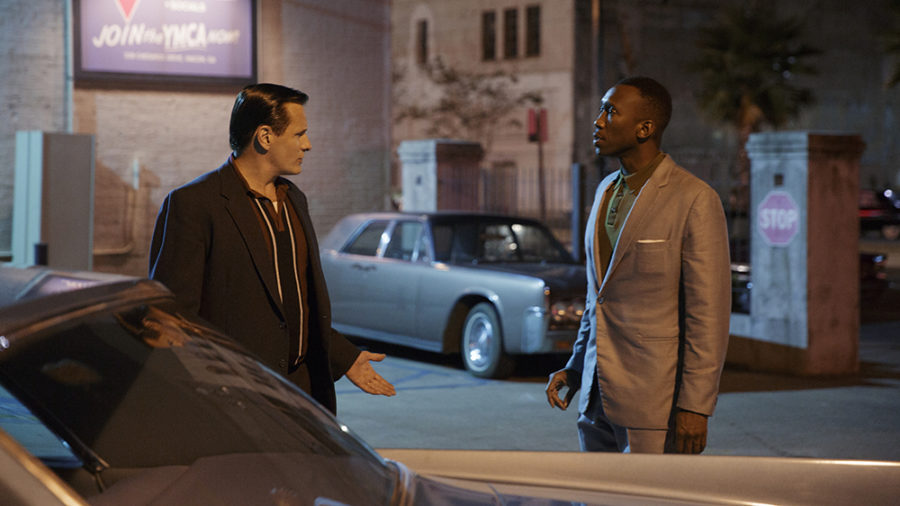
    Directed by Peter Farrelly — one half of the gentlemen responsible for “Dumb and Dumber” and “There’s Something About Mary“) — he indulges in the duo’s proclivity for road movies but otherwise restrains himself from turning the true story of a Jamaican classical pianist being driven through the 1960s Deep South by a foul-mouthed Italian bouncer into an unsuitably raunchy, lowest-common-denominator comedy. Mahershala Ali and Viggo Mortensen, as passenger and driver, respectively, form an occasionally discordant but ultimately satisfying pair as their characters’ real-life adventure offers a canny reversal of many of the tropes of movies about learning to see past skin color.

    Mortensen plays Frank “Tony Lip” Vallelonga, a doorman and bouncer who finds himself out of a job when the Copacabana closes for repairs. While scrounging for cash by challenging neighborhood heavyweights to eating contests, he receives an unexpected job offer from Dr. Don Shirley (Ali), a black pianist who needs a driver and valet to shepherd him through the Deep South for a tour with his trio.

    Frank’s insular life in New York — in the same neighborhood his parents lived in before him, and his children would after him — fails to prepare him for the opposition Dr. Shirley faces in towns where the musician cannot eat or use the bathroom in the same venue he is scheduled to perform. Nevertheless, he quickly proves valuable as an enforcer and one-man security team when Shirley, isolated in a different way from not just his band mates or the locals, but what is considered his own culture, occasionally forgets that he is unwelcome among whites as soon as he steps off stage.

    Soon, Frank and Dr. Shirley form an uneasy friendship as they cross the Deep South, discovering uncomfortable truths about each other, and eventually, themselves.

    Universal

    The first part of the movie takes place largely in Frank’s community — full of stereotypical wiseguys and the kinds of Italian caricatures I guess the world has collectively decided are inoffensive. Even so, it comes as a surprise that the performance that Mortensen gives as Frank is quite so broad. But the real Vallelonga’s son, Nick, co-wrote the script with Farrelly and Bryan Hayes Currie, so one imagines that at the very least it’s faithful to who he was. Mortensen gives him a vibrancy and a humanity that makes his transformation into a more tolerant person feel incremental instead of a grand epiphany. As Shirley, meanwhile, Ali taps into a Sidney Poitier-like character type — an exemplary and therefore “harmless” specimen of his race — and finds the frustration, and powerfully, confusion roiling beneath that placid surface.

    Shirley understands all too well what he must do in order to be able to play and enjoy the artistic freedom that his talent affords him, and understands the cost — to his relationships, and to his very sense of identity. He aims to hold both he and Frank to that impossible standard, correcting his driver’s diction, demeanor, behavior and even his worldview, and Ali communicates how exhausting, and exasperating, maintaining that can be.

    Conversely, and though the film seems to soften Frank’s racism (he always seems more frequently adjacent to the most offensive stuff instead of participating in it), he becomes a witness less to Shirley’s race than to his discipline, artistically and personally. He does so while still being able to enjoy the luxury of being a white man who can get into a scuffle or talk back to a mouthy jerk or even just ask for what Shirley has earned and deserves. “Dignity always prevails,” Shirley correctly observes, but Frank knows that it helps to fall back on the language of a tour rider — or, in a clinch, a revolver hidden in his waistband.

    Though they eventually narrow their view to one or two unlucky so-and-sos, Farrelly’s films are very often about families or large communities, and this one is the same — and in particular, it’s about learning that the community in which we live is bigger than we think. Such realizations with regard to race are, certainly at this date, more than a little bit hokey, but this film can be forgiven for showcasing average whiteness learning some important lessons from black exceptionalism, especially with two incredibly gifted actors behind the wheel, steering us towards the better angels of our nature.

    Ultimately, “Green Book” is maybe not a masterpiece, but it’s a master-class from two of our most talented actors. Most of all, it is a balm for times that seem determined to remain volatile, and often painful. It, like the many dozens of movies before it about the black-white relations of generations past, will not likely solve the problems of modern racism, but it’s still an important reminder that we can always learn new things about and from one another — in which case, it’s a good idea to keep one’s mind, and heart, open.

    RYQOk0teJoSoTG798eHJT7
  • ‘Creed II’ Review: If Only All Sequels Were This Good

    ‘Creed II’ Review: If Only All Sequels Were This Good

    MGM/WB

    After six “Rocky” films, “Creed” was a remarkable triumph — what seemed superfluous at best became essential.

    The first “Creed” movie is not just a great entertainment,  but it is also a catharsis for one character and a vivid introduction for another. Consequently, “Creed II” only needed to be a well-deserved victory lap for Michael B. Jordan, who rocketed to stardom as Adonis “Donnie” Creed, not to mention Sylvester Stallone, whose signature series passed to more than capable shepherds. But like its predecessor, this kinda-sorta double sequel (both to its immediate predecessor and to “Rocky IV”) wrestles with powerful issues, deepens the first film’s characterizations, and resolves lingering details in the franchise’s timelines with humanity and grace. “Creed II” elevates the literal and metaphorical challenges of following up improbable success to something meaningful and eventually transcendent of the formulas that it relies upon.

    Following his bout with Ricky Conlan (Anthony Bellew) at the end of the first film, Donnie has spent his subsequent time in the ring proving that he can trade blows with the best in the boxing world, culminating in a decisive victory over Danny “Stuntman” Wheeler (Andre Ward) that makes him heavyweight champion of the world. But when ambitious promoter Buddy Marcelle (Russell Hornsby) approaches him with an offer to fight Viktor Drago (Florian Munteanu) — son of Ivan Drago, the man who killed Apollo Creed 30 years ago — Donnie jumps at the opportunity to avenge his father and burnish his own reputation in the ring.

    MGM/WB

    Rocky (Stallone) discourages Donnie from facing an unproven fighter who’s been weaned on Ivan’s festering bitterness and anger, and who seems determined to exact as much pain as possible upon the protégé of the man who defeated his father. But when Donnie learns that Bianca (Tessa Thompson) is pregnant with their daughter, and should history repeat itself — a defeat might deprive the newborn of knowing her father — he is forced to contemplate not just whether or not he can win, but why it matters for him to fight in the first place.

    Even as the film falls into the sometimes predictable rhythms of the series — triumphant victories giving way to devastating defeats, and vice versa — writers Sylvester Stallone and Juel Taylor showcase what seems like a very real feeling for competitors at the top of their game, and Donnie feels unfocused and perhaps appropriately decentralized in his own story. He is less a person than a character in a narrative that the world is determined to control — a narrative that loves nothing more than perfect parallel lines between generations as one yields for the next to secure its own legacy. In the first half of Donnie’s journey, he seems to be doing what he thinks he’s supposed to, or is afraid not to — a realistic and understandable course of action for a kid who, by the end of the first film, had only begun to discover himself, much less his febrile talents.

    But abject losses have a way of forcing reflection upon people who pursue excellence, and director Steven Caple Jr. harnesses these necessary, almost predetermined story beats and turns them into moments of searing introspection — and, eventually, powerful self-actualization. Jordan, proving again he has more than enough charisma and talent to be both a movie star and bona fide actor, returns to a character facing questions that undoubtedly hit close to home as he plots his next career move: Once you’ve earned success, how much is enough? And more vitally, what drives that pursuit? The young actor’s physical commitment to the role is readily visible, but it’s the overall sharpness of his performance, including moments of heartbreaking vulnerability, that elevate his journey from the son of Apollo Creed to his own man.

    MGM/WB

    Meanwhile, the movie gives all of its characters much to do, and feeds off of their interactions in an uncommonly generous way. Tessa Thompson exudes self-assurance and restless creativity as Bianca, Donnie’s ride-or-die partner and sounding board. Bianca is skeptical in the most empathetic ways of Donnie’s pursuits and ambitions, even as she refuses to sideline her own.

    As Mary Anne, Apollo’s widow, Phylicia Rashad continues to feed her adoptive son unvarnished truth and unconditional love, often dispensing one when he thinks he needs the other. And even if Rocky has largely accomplished all that the character ever needs to on screen, Stallone undercuts his shaggy authority as Donnie’s pride and fear becomes an uncomfortable mirror for the failures Rocky has left unresolved for too long. He shows that armchair philosophers can still learn as well as they teach.

    If the film falls short of its predecessor, it’s because the dramatic scenes are so good, and the journeys taken outside of the ring are so vivid, that the fights feel almost like an afterthought, or a concession to the demands of the series. Caple’s technique doesn’t quite feel as effortless or elegant as Ryan Coogler’s did on “Creed,” which may account both for the sequel’s over-modulated sound design — every punch lands with an ear-shattering thud — and its overuse of ringside commentators. (When the storytelling is otherwise this skillful, it feels unnecessary to have the stakes of the fight, including its “Shakespearean overtones,” repeatedly verbalized.)

    But ultimately, Caple proves more than a worthy successor to Coogler (who returns as executive producer) in that he elevates and reshapes what could have been formulaic parallel story and character lines — fathers and sons, mothers and children, legacies secured and destroyed, and purposes questioned and found — into one converging, thrilling, deeply affecting narrative.

    Because “Creed II” works wonderfully as a follow-up to the first “Creed” and the fourth “Rocky,” but the similarities to those earlier films are quite frankly the least of its charms. And like Adonis, what proves most remarkable is how successfully what could easily be dismissed as a lesser copy or pale imitation combats a suffocating legacy to prove it can, and should, stand on its own.

    ou2agYX5nmO6dtaAKzaGe5
  • Joel Kinnaman Is Caught Between The Mob, The NYPD And The FBI In ‘The Informer’ Trailer

    Joel Kinnaman Is Caught Between The Mob, The NYPD And The FBI In ‘The Informer’ Trailer

    3secs_LD_005.NEF

    After playing Robocop and “Suicide Squad”’s Rick Flagg, Joel Kinnaman finds himself on the other side of the law in “The Informer,” the new film from Andrea Di Stefano (“Escobar: Paradise Lost”).

    Aviron Pictures released the first trailer Friday from the upcoming thriller, which also stars Rosamund Pike (“A Private War”), Clive Owen (“Valerian and the City of a Thousand Planets”), Ana de Armas (“Blade Runner 2049”) and Common (“The Hate U Give”). In the film, Kinnaman’s character Pete Koslow, a former Special Ops soldier, agrees to become an informant for the FBI in exchange for reduced prison time after getting into a violent altercation to protect his wife. But when the FBI sting he’s participating in results in the death of an undercover police officer, Koslow finds himself caught between the federal agents he’s working for, the mobsters he’s convinced he’s working with, and the cops who want to pin their colleague’s death on him.

    Check out the trailer below:

    Following his Hollywood breakthrough in “Robocop,” Kinnaman has quickly become one of the industry’s most versatile performers, shuffling between film and TV projects such as “House of Cards,” “Knight of Cups,” “Altered Carbon,” and the upcoming series “Hanna,” based on the 2011 film starring Saoirse Ronan.

    The film was adapted from Borge Hallstrom and Anders Roslund’s novel of the same name by Matt Cook, who previously wrote “Triple 9” and “Patriots Day.” “The Informer” opens in theaters nationwide March 22, 2019.

  • ‘Princess Bride,’ ‘Butch Cassidy’ Screenwriter William Goldman Dies At 87

    ‘Princess Bride,’ ‘Butch Cassidy’ Screenwriter William Goldman Dies At 87

    William Goldman, screenwriter of “The Princess Bride,” “Butch Cassidy and the Sundance Kid” and “All the President’s Men” died Friday at the age of 87. A playwright and novelist who transitioned into screenwriting, Goldman was a self-effacing success who began his 1983 memoir with “Nobody knows anything,” a confession that since became a Hollywood truism despite his award-winning, virtually unparalleled influence on industry storytelling conventions.

    Goldman won an Oscar for his 1969 script for “Butch Cassidy,” and another seven years later for “All the President’s Men,” his adaptation of the book by Bob Woodward and Carl Bernstein. Though he considered himself a Hollywood outcast in the 1980s, he nevertheless managed to craft two of that decade’s most indelible stories – “The Princess Bride,” based on his book of the same name, and “Misery,” a box office and critical smash that at the time was considered one of Stephen King’s least adaptable novels. He parlayed that clout into an ongoing gig as a script doctor or consultant, often uncredited, on everything from “A Few Good Men” to “Good Will Hunting.”

    Per Variety, Goldman’s daughter Jenny confirmed the news Friday morning, after he succumbed to complications from colon cancer and pneumonia. His two memoirs about his time in Hollywood, “Adventures in the Screen Trade” and “Which Lie Did I Tell?” remain some of the most vivid, honest and engaging insider portraits of the entertainment industry. He is survived by Jenny and Susanna Goldman, his two daughters, as well as a body of work, and a legacy, that continues to entertain and inspire aspiring storytellers today.

  • ‘Ralph Breaks The Internet’ Review: Disney’s Much-Anticipated Sequel Is a Wild, Unpredictable Ride

    ‘Ralph Breaks The Internet’ Review: Disney’s Much-Anticipated Sequel Is a Wild, Unpredictable Ride

    Disney

    The long-awaited sequel to “Wreck-It Ralph” is titled “Ralph Breaks the Internet,” but it’s probably more accurate to say that the internet breaks him.

    After years of gameplay in the 8-bit world of “Fix-It Felix Jr.,” the character’s first foray into the weird, wild world of the Web is as cacophonous and overwhelming as you might expect. But of the many goods and services provided at the click of a button, the most dangerous for Ralph — and the most needed — is a mirror for his own behavior. John C. Reilly and Sarah Silverman return as the anchors of this delightful digital journey, but for such a vivid and energetic look inside the internet, directors Rich Moore and Phil Johnston offer a shrewd and surprisingly unsentimental look at the dangers of focusing on just one thing in a world full of endless opportunities to connect.

    Six years after the events of the first film, Ralph (Reilly) and Vanellope (Silverman) have settled into a familiar routine — “working” in their games by day, boozing it up at Tapper’s at night. But when the Sugar Rush game breaks in the real world, Mr. Litwak (Ed O’Neill) shuts it down, forcing Vanellope and her fellow drivers to seek shelter elsewhere in the arcade. Ralph, determined to help his best friend, infiltrates Litwak’s newly acquired internet connection and the two venture into its new and overwhelming landscape in search of replacement parts. What they soon learn, however, is that even digital characters need money, and after inadvertently driving up the price of the part, they need lots of it.

    Crossing paths with J.P. Spamly (Bill Hader), who promises opportunities to score quick cash playing video games, Ralph and Vanellope start doing what they do best in other worlds — including Slaughter Race, a brutal Mad Max-like racing game where Vanellope meets her match, and possible new BFF, in Shank (Gal Gadot), its head driver. But when Ralph becomes threatened by Vanellope’s burgeoning curiosity about a world outside not just their respective games but the friendship he holds most dear, he begins to discover just how fickle the internet can be. Soon, he is forced to consider whether his insulated life of routine is protecting him from the rest of the world, or keeping him from exploring it.

    If you’ve seen a single pixel of footage from the movie in advertisements, then you know that the Disney princesses make an appearance — a sly and hilarious display of corporate synergy that sends up not only the internet’s bottomless reservoir of time-wasting crossovers, but also many of the bygone conventions applied to the studio’s animated heroines. Moore and Johnston don’t quite always fall on the right side of when to include a “real world” company like Google or Ebay and when to make one up, but the movie is most successful when it’s skewering not just the companies and properties that comprise our great electronic unifier but the method and rhythms of our interactions with it. Ralph’s efforts to generate “hearts” in exchange for cash is hysterical and sort of wonderfully depressing in its pandering desperation — he will literally do anything, no matter how shameless — but it connects the movie to some real and unflattering truths about the web, and via the title character, some of the folks who spend the most time on it.

    Specifically, Ralph has built himself a comfortable existence as Vanellope’s best friend, and just as he feels complete satisfaction from that dynamic, he expects her to feel the same way — and when she doesn’t is when the whole internet comes crashing down. The movie explicitly articulates some simple, important truths — “never read the comments” — but the more oblique ones are probably the most essential to heed, especially as Ralph’s determination to “protect” and “help” Vanellope manifests itself in increasingly unhealthy ways. Such lessons are of course relevant in electronic space where cruelty and kindness can be dished out carelessly and be dismissed (especially by the perpetrator) as intangible. They feel particularly necessary, however, and astute, in a real world where “finding one’s tribe” can lead easily to a sense of isolation — and marginalization.

    That this culminates in a literal 800-foot Ralph, constructed from a swirling mass of smaller Ralphs, chasing Vanellope unfortunately threatens to overshadow such messages. Few animated movies in recent memory, much less from the likes of Disney, seem to wholeheartedly embrace the outlandish and fully bizarre visual opportunities that premises like this one introduce, but indulging them also makes for a wild and unpredictable ride. But then again, that’s sort of the point of the whole film, certainly for Vanellope — if you knew what you were getting into, or you’d already gotten into it, why take the ride again? And of course, per Ralph, there’s also something to be said about the security, and the reassuring familiarity, of experiencing something that’s at least somewhat like something you’ve done before.

    But ultimately, that’s why as discordant and unconventional as it sometimes is, “Ralph Breaks the Internet” resonates powerfully — because in addition to having a healthy perspective about both the pluses and minuses of the web, it takes some significant virtual epiphanies and applies them to characters who feel truly human.

    20085282