Author: Jami Philbrick

  • Fede Alvarez Talks ‘Texas Chainsaw Massacre’

    Mark Burnham as Leatherface in Netflix's 'Texas Chainsaw Massacre.'
    Mark Burnham as Leatherface in Netflix’s ‘Texas Chainsaw Massacre.’

    Premiering on Netflix beginning on February 18th is the direct sequel to the classic 1974 horror film ‘The Texas Chain Saw Massacre,’ entitled ‘Texas Chainsaw Massacre.’ Directed by David Blue Garcia (‘Tejano’) and written by Chris Thomas Devlin (‘Cobweb’), the movie is based on a story developed by ‘Don’t Breathe’ director Fede Alvarez, who is also a producer on the film.

    The new story picks up several decades after the original film and focuses on the serial killer Leatherface (Mark Burnham), who targets a group of young entrepreneurs that purchase an abandoned town in Texas. The deranged killer eventually comes face to face with Sally Hardesty (Olwen Fouere), a vengeful survivor of his original murders.

    In addition to Burnham and Fouere, the cast also includes Sarah Yarkin (‘Happy Death Day 2U’), Elsie Fisher (‘Eight Grade’), Jacob Latimore (‘The Maze Runner’), Nell Hudson (‘The Queen Mary’), William Hope (‘Aliens’), Alice Krige (‘Thor: The Dark World’), and John Larroquette (‘Stripes’) reprising his role from the original as the Narrator.

    Filmmaker Fede Alvarez is no stranger to rebooting classic horror franchises as he made his feature film directorial debut with 2013’s ‘Evil Dead.’ Alvarez went on to direct the box office hit ‘Don’t Breathe,’ as well as write and produce its sequel, ‘Don’t Breathe 2.’ He also directed ‘The Girl in the Spider’s Web,’ which was a soft-sequel/reboot to David Fincher’s ‘The Girl with the Dragon Tattoo.’ He now returns to the horror genre with ‘Texas Chainsaw Massacre,’ of which he developed the story and also produced.

    Moviefone recently had the pleasure of speaking exclusively with Fede Alvarez about his work on ‘Texas Chainsaw Massacre.’ The producer discussed the new movie, his love for the franchise, creating the new story and characters, what he learned from rebooting ‘Evil Dead,’ the importance of bringing back Sally Hardesty and John Larroquette as the narrator, his favorite scares, and why Leatherface has become so iconic.

    'Texas Chainsaw Massacre' Producer Fede Alvarez.
    ‘Texas Chainsaw Massacre’ Producer Fede Alvarez.

    Here is what Fede Alvarez had to say about ‘Texas Chainsaw Massacre.’

    Moviefone: To begin with, when did you first see ‘The Texas Chainsaw Massacre’ and fall in love with the franchise?

    Fede Alvarez: I’ll tell you. I probably watched the original when I was too young to watch it and I regret it. It was part of that group of horror movies that you thought was just another movie like ‘A Nightmare on Elm Street’ and you would have a laugh. Then this one probably alongside with ‘The Evil Dead’ are those that are like, “Oh God. What have I done,” when I watched this movie. Just too terrifying for my age. But then I think I really loved it, the franchise.

    I think it’s when I watched the 2003 remake that Marcus Nispel directed when they rebooted back then. The movie was so stylized, and it showed the timeless theme of the cultural clash between the countryside and the city. It never expires. It’s always a great theme for a horror movie.

    MF: What did you learn about rebooting popular horror franchises from directing ‘Evil Dead’ that you were able to apply to your work producing this project?

    FA: Something I definitely learned on ‘Evil Dead’ was that those movies are such classics and they come from the times where movies were done differently. Where everything was crude and real, and there was no CGI. Even ‘Texas Chain Saw,’ when I was a kid, I remember watching it thinking it was real. I thought I was actually watching some documentary, something that had actually happened. That adds such a great layer of terror for the experience of watching the film.

    So, I think that was something I always wanted to bring back to the new movie. So, that’s how we shot ‘Evil Dead.’ Everything was on camera. The blood was actually practical blood. It was not CG. So, there wasn’t a computer graphic. Every monster in the movie was a person in a suit.

    That sort of thing adds some crudeness to it that the true horror fans always love. I think any movie fan loves to watch something they feel is real, particularly for horror. So, that’s the same we did in ‘Texas Chainsaw.’ We just really wanted everything we shoot to be with technology that was available in the ’70s. Obviously, cameras are digital, but then everything that happens on camera including the way they do tricks, the way they do blood; a blood rig is exactly how they would’ve done it back then. So, that adds some authenticity, I would say, to the film.

    MF: Was it always the plan for this movie to be a direct sequel to the original, and not incorporate any of the elements from the other films?

    FA: I think what this is, is part of the original franchise. What it’s not, because it couldn’t be even if you wanted, is part of the one that was rebooted in the 2000s. The Marcus Nispel movie and what followed that, and a couple more that came after that. I think because that’s a different canon, I would say. This is part of the original canon of the original ‘Texas Chain Saw Massacre,’ ‘The Texas Chainsaw Massacre 2,’ ‘Leatherface: The Texas Chainsaw Massacre III,’ and ‘Texas Chainsaw Massacre: The Next Generation,’ which is part four. This is that Leatherface. You know?

    In the story, you’ll find Leatherface as a kid, as a teenager. He was secluded into this orphanage. But that doesn’t mean he didn’t escape. Like, he went to the orphanage, then left to do part two, and then went back, and then left again to do part three. I think all those movies could have happened. Because he never really dies in that franchise. Technically, supposedly, he died at the end of part two. But then at beginning of part three, they say he didn’t. So, that’s the way we see. It’s part of the original franchise.

    So, I think that there’s something holy and kind of magical to connect it with that original film that makes it more legit to me. Also, because the original writer is a producer on this film and he was involved in the creation of it. Kim Henkel co-wrote the film with Tobe Hooper, who directed the originally. So, the fact that he was involved, I think allowed us to say, “Yes, let’s create one like what could have been the follow-up to that original franchise.”

    (L to R) Elsie Fisher, Sarah Yarkin, Nell Hudson and Jacob Latimore in 'Texas Chainsaw Massacre.' Cr. Yana Blajeva / ©2021 Legendary, Courtesy of Netflix.
    (L to R) Elsie Fisher, Sarah Yarkin, Nell Hudson and Jacob Latimore in ‘Texas Chainsaw Massacre.’ Cr. Yana Blajeva / ©2021 Legendary, Courtesy of Netflix.

    MF: Can you talk about devising the new plot and new characters for ‘Texas Chainsaw Massacre?’

    FA: I think it was inspired a little bit by a trend that I’ve seen happening. t was this particular restaurant that I went to that was in the middle of nowhere, in this like dead town. But it was this restaurateur that was super cool and famous and decided to open his restaurant in this dead town to attract people. So, he started moving there, and other artists and galleries started popping up.

    Then, every time you watch one of these restaurants shows on Netflix, there’s always someone that opened his restaurant in the middle of nowhere, like back where his family was from. Suddenly, all these people from the city just storms that town. So out of that, we came up with the idea. That is a great way to get the countryside folk and the city people to clash in a realistic way, in a kind of grounded way. Why would all these people end up in a dead town? What would attract them there?

    I think something that is a trend that I think is happening there will happen even more is that young people want to escape the cities. I think after the pandemic, it made even more sense. I mean, everybody during the pandemic wanted to escape the big cities. Anything with a subway, they didn’t want to be near. Any place that had a bit more open air, it felt like the place to go. So, I felt that it was a grounded yet kind of magical approach to the story, a way into the story to get these two sides of the country to clash.

    MF: Can you talk about creating the lead characters, Melody and Lila?

    FA: I think what was fun about having these two sisters both be the main role was that it made a way more interesting classic game of watching a horror movie where you have to guess who’s going to be the final girl. That is always the game of a horror movie. You get introduced to a bunch of characters. Most of the time, I would say it’s pretty obvious who’s going to be the final girl. It used to be the good girl, the virgin, or whatever. But I think in this day and age, things have changed drastically.

    I think it was so much fun to show two characters that represents two slightly different stereotypes of horror characters and having the audience scratching their heads in end, wondering “Which one is going to die?” Because it could go either way. Either of them can die and it would make complete sense.

    I think I would say, the perverse game we’re playing as writers is to have two sisters where both of them have their reasons to live, and both of them deserve to die on certain levels during this movie. They always do some original sin at the beginning of the movie that allows for the horror to be triggered. So, that was kind of part of the idea, to really have two, and having you guessing. So, that was part of the game.

    MF: Can you talk about the importance of bringing back the Sally Hardesty character from the original, and was it difficult knowing that you would have to recast the role?

    FA: It was difficult. You really want to honor that character, particularly when the original actor (Marilyn Burns) who played it passed away. You really want to make sure you bring the best actor you can to play it. You want someone that she would be proud is playing her role. I think Olwen, the actor who plays her, was fantastic. She did a great job with it.

    But also, in a way, because that’s been done recently in some other franchises like Halloween, you want to make sure that you tell the story in a different way. That way I can promise the audience that this doesn’t go down the same way. This is not both of them obsessed with each other and having that final confrontation. This is kind of more realistic in a way, a more grounded approach to that relationship between the victim and the psychopath.

    Olwen Four as Sally Hardesty in 'Texas Chainsaw Massacre.' Cr. Jana Blajeva / ©2021 Legendary, Courtesy of Netflix.
    Olwen Four as Sally Hardesty in ‘Texas Chainsaw Massacre.’ Cr. Jana Blajeva / ©2021 Legendary, Courtesy of Netflix.

    MF: Can you also talk about bringing back John Larroquette to reprise his role from the original as the narrator?

    FA: Again, it was part of the thing of like, “Let’s try to make it as legit as possible. Let’s really go back to anybody that we would use, anything that we can do that they would’ve done in the original. Let’s do it again.” Larroquette wanted to do it. Again, using things that were available in ’70s. He was, and he still is. He loved to do it. He went in, and I think he did just one take. The director said, “Can you do another one?” He’s like, “What for? It’s perfect.” That’s the take in the movie. He’s a total pro, but it was one of those things that just made the moment magical for everybody involved in the movie.

    MF: Do you have a favorite scare in the movie?

    FA: My favorite is the sledgehammer, sledgehammer to the head, because it’s when you think you didn’t need more, and he just goes overboard. I personally love that tone. I think horror done right, it’s got to be right on that edge that if it goes one inch further, it is a comedy. But if it moves too far away from that line of comedy, it retreats into horror and it becomes unbearable. Something too bleak to watch. Those movies you watch and you’re like, “Well, I’ll run away,” and you turn them off and then say, “What am I watching?” I think ideally it has to have that tone that, and the absurdity makes it funny for me. That gives you the release you need in a horror movie that can be really scary at times. So, I think that that’s why that’s my favorite one, the sledgehammer to head.

    MF: Finally, why do you think Leatherface has remained such a popular and iconic cinematic character after all these years? What is it about him that you think audiences find so fascinating?

    FA: Well, I think he represents someone’s deepest fear about what you could find in the middle of nowhere in the countryside. It’s that kind of a mix of hillbilly and redneck. I don’t know what it is. But the reason why he attacks you is because he’s scared of you. The violence of Leatherface comes out of not understanding these people that just show up from the city.

    There’s something about that because most of us will see ourselves as that person from the city, just terrified of that character. But you don’t even see his face. He doesn’t talk. But there’s a true human being behind it, which is different from Michael Myers or Jason Voorhees, where they’re more like ghosts. There doesn’t seem to be a real person behind it.

    But Leatherface is real. You can see in the movie that he’s scared, that he’s nervous, that he’s heartbroken. You see him going through these emotions, which you never do with those other characters. So, the more humane he is, the scarier he is, and the more you feel like that character could exist in real life. So, that I think that’s what’s very special about him. It’s great in the original movie.

    Leatherface seems to be more terrified than the kids at some points. He’s running around, he made a mask, and he’s trying to hide the bodies. He gets bullied by his own family. It’s a really strange character, but that’s what makes him unique. It just felt real. It felt way more real than a lot of the other classic horror monsters.

    1vMu44Nq

    To watch our exclusive interviews with actresses Sarah Yarkin and Elsie Fisher about ‘Texas Chainsaw Massacre,’ please click on the video player above.

    s7do3B21amYXDraqNKPub1
  • Sharlto Copley and Tony Stone Talk ‘Ted K’

    Sharlto Copley as Ted Kaczynksi in 'Ted K'
    Sharlto Copley as Ted Kaczynksi in ‘Ted K’

    Opening in theaters and on digital beginning February 18th is the new biopic ‘Ted K,’ which is based on the life of Ted Kaczynksi, better known as The Unabomber.

    Directed by documentary filmmaker Tony Stone (‘Peter and the Farm’), the movie stars ‘District 9’ actor Sharlto Copley as the title character, while the film explores Kaczynksi’s life leading up to his time as The Unabomber.

    Moviefone recently had the pleasure of speaking with both Sharlto Copley and Tony Stone about their work on ‘Ted K.’ The actor and filmmaker discussed the new movie, why they wanted to make a film about Kaczynksi, Sharlto’s approach to the role, and the movie’s use of Alice in Chains’ “Rooster.”

    7VXTklNf

    You can read the full transcript of our interview below, or watch a video of the interviews in the player above.

    Moviefone: To begin with, Tony, what fascinated you about the life of Ted Kaczynksi and what did you want to say about him with this movie?

    Tony Stone: I just was always fascinated with the tale of the Unabomber since I was in high school. He was arrested, covered in dirt and was living with no running water or electricity. The fact that he had this bombing campaign that paralyzed the country and shut down airports. He was able to pull this off with basically a letter-writing campaign.

    After 9/11, I was just interested in him a little more, just looking at American terrorism and what an American terrorist is. But also, the complexities of Ted, that he was, in a way, a serial killer, but he was a serial killer with a belief system and killed out of that.

    So, the more I dived into the story, the more complicated it got. The Manifesto that he wrote has become way more relevant than it was when he had written it. So, I just wanted to get into his mind, tell the story, and also let the audience decide how they feel about him.

    So, I didn’t want it to be a morality tale that a lot of films these days can be. I just wanted to leave it open for interpretation, and how you feel about him. There are moments you’re with him, moments you can’t believe the way he is acting and then realize, these violent actions, how heinous they are.

    So, I just wanted to create this spectrum of the person, but also just humanity in general, where we are saturated by simplistic vilification narratives. I really just wanted to show some of the complexities of the human condition, in a way.

    MF: Sharlto, can you talk about your preparation for this role, and what did you learn about Kaczynksi that you did not previously know?

    Sharlto Copley: I knew very little about him. I grew up in South Africa and it was on the news there. But when the project came around, I thought this is just another serial killer. I don’t want to do it. But then I looked him up. I read the Manifesto. That changed my mind, completely. So, whatever was in the press about him, now I was looking retrospectively. What had been written about him, this mad man that was put in jail. I was like, wait. That doesn’t quite add up. This is intriguing.

    The man was incredibly self-aware. He was brutally honest about himself, about the people around him, and had a genius IQ. So, it became something that was very interesting to me. There’s only one recording of him speaking from jail. When I looked at some of the other adaptations and actors that had played him, I was like, nobody’s done his voice. Nobody’s done his energy level. This is not the creepy weird guy that you wouldn’t be able to talk to. When you listen to him in jail, it’s like, I could talk to this guy.

    So, that was some of the background. Then, getting into it, it was really just seeing that there was a real human being there. He’s like a shrink on himself in his diaries. You see his loneliness, you see his desperation for female company, his frustration of what technology’s doing and how it’s making people so miserable.

    When you look at our suicide rate today, people are seriously miserable. Our suicide rate is monstrously higher than the number of people that died in war and violent crimes combined. It’s higher now, in terms of people killing themselves, which is staggering to me. So, it became a very interesting tale.

    Sharlto Copley as Ted Kaczynksi in 'Ted K'
    Sharlto Copley as Ted Kaczynksi in ‘Ted K’

    MF: I want to ask both of you if you had any concerns at all that perhaps you were making Ted Kaczynksi too sympathetic a character in this film?

    SC: There was no concern about that for me, because my job is to just portray him as much of a human being as I can. I see that as the function of the acting. With a producer hat, I feel quite strongly as an anti-violence person in my own in life, but I feel like there’s an enormous amount of hypocrisy in our society.

    I think if we were talking about like, “Don’t glorify this villain.” I’m like, “Well, look at every single television show and movie that we are making.” We are unquestionably glorifying violence. Whether or not that is affecting kids or not, we can have that debate. That’s a three-hour conversation. But to say, of all the violent roles that I’ve played, I was the most comfortable with this one because it was at least honest.

    It was at least looking at, why do people do this? We are a violent animals, the males of the species in particular. From my father’s generation, back, in my view, there was at least a 50% chance that if you were male, you were killing or defending with your life. That was normal male existence for thousands of years.

    Really, it’s only since the World War II that we’re going, “Violence? We don’t do that.” It’s like, no, no. We do!” It’s deep in our genetics. We’re already seeing it in our societies now. It’s bubbling just under the surface. So, at least we’re dealing with violence in a way that is like, let’s get under the hood in a little bit more of an honest way. It’s like, look at every movie that’s made. ‘Game of Thrones’ is the biggest show in the world, and you’re complaining about humans being so tribal and violent. You don’t see any connection?

    TS: We did approach the film from the documentary perspective. So, I just felt, doing all the research, understanding Ted, as well as you could, that we just would strike a balance. I don’t think anybody goes to see this film and wants to repeat what he’s done. It’s in the traditional anti-hero characters in cinema, and cinema is this escapist media. That’s why I like it.

    So, I think it was just to create an experience of what this villain is like and add some humanity to it. So, there’s humanity. There’re moments of empathy, of course. It’s like as if you were Ted Kaczynski’s family member and you were watching this film. You’d have disappointments in his actions, but also understand that this person is a human being.

    MF: Tony, there is a pivotal moment in the movie when you use for the music, Alice in Chains’ “Rooster.” I thought it was a perfect marriage of that song and that particular moment in the film. Can you talk about choosing that song for that scene?

    TS: Glad you asked. Thank you. That almost happened by accident. That was not pre-planned. It just aligned, so well. It comes in a moment where Ted has reached his high point, and he’s paralyzed the nation with his mail bombing campaign. Then, obviously, it’s so specific to the period.

    Weirdly, the lyrics align with Ted Kaczynski at that moment. I think there’s absurdism to it, too. But also, really putting you in the time and place. Obviously, it’s a song that Ted Kaczynski would’ve despised. He was obviously more Baroque focused, which we use a lot of in the film.

    Sharlto Copley as Ted Kaczynksi in 'Ted K'
    Sharlto Copley as Ted Kaczynksi in ‘Ted K’

    MF: Sharlto, was it difficult for you as an actor to get Ted Kaczynksi out of your head when you were done making the movie?

    SC: No. What was difficult was to live that experience and see how right he was about what’s happened to society. So, when I come back, and I look at my phone, and just look at my screen time every week, every day, or whatever, it haunts me. The experience of living and spending the time we did, because we went back for all the seasons.

    So, we spent a lot of time out there, lived in that environment, and filmed on his actual land. So, that’s been difficult to shake, the idea that we really are in a tough spot as a society. It’s like, what do I do? I can’t do anything. I’m just a domesticated cow. Just in the system. That bugs me, for sure.

    MF: Finally, Tony, what do you hope audiences take away from this movie about the life of Ted Kaczynksi?

    TS: I don’t know if I can answer that. That’s where I want to let the film speak for itself, and people to come to their own conclusions. So, we leave the film as an open book for the audience members to feel what they want and connect with some of the ideas, or not. I just wanted to leave it open ended for them to interpret.

    8JUnB4cWqfTxrH6MQOoX03
  • Angela Sarafyan Talks ‘King Knight’

    Angela Sarafyan in 'King Knight'
    Angela Sarafyan in ‘King Knight’

    Opening in select theaters, on digital, and On Demand February 17th  is the new dark-comedy ‘King Knight,’ which was written and directed by Richard Bates Jr. (Tone-Deaf).

    The movie stars Matthew Gray Gubler (‘(500) Days of Summer’) as Thorn, the leader of a coven of witches, along with his wife, Willow (Angela Sarafyan). But, when Willow discovers that Thorn was popular in high school, and not the antisocial teenager he claimed to be, the coven votes him out. Now, in order to earn back the trust back of his wife and his coven, Thorn must attend his high school reunion and face his greatest fear … his mother (Barbara Crampton).

    Actress Angela Sarafyan has been working in Hollywood for over 20 years and has appeared on such popular TV shows as ‘Buffy the Vampire Slayer,’ ‘The Shield,’ and ’24.’ She has also appeared in movies like ‘Paranoia’ with Harrison Ford and Gary Oldman, ‘The Promise’ with Oscar Isaac and Christian Bale, and ‘The Twilight Saga: Breaking Dawn – Part 2.’ But Sarafyan is probably best known for her work as Clementine Pennyfather on HBO’s hit series ‘Westworld.’

    Moviefone recently had the pleasure of speaking with Angela Sarafyan about her work on ‘King Knight.’ The actress discussed her new film, her character, and working with Matthew Gray Gubler, as well as her experience working on ‘Westworld.’

    (L to R) Matthew Gray Gubler and Angela Sarafyan in 'King Knight'
    (L to R) Matthew Gray Gubler and Angela Sarafyan in ‘King Knight’

    Moviefone: To begin with, what was it about the screenplay that really grabbed you and made you want to be a part of this project?

    Angela Sarafyan: When I read the script, I thought it had humor that I hadn’t really read on a page before. I love the ideas in the story. So being an outcast in ways, trying to be true to yourself and to have a lot of humor about it, and to have great lessons with humor. So, that tone really was attractive and then I saw Ricky’s other films and spoke to him and thought this would be a really wonderful adventure to go on. I love Matthew. Matthew and I have worked together in the past. So, I thought this is so good.

    MF: What can you tell us about your character Willow, and how you prepared and approached playing this role?

    AS: I had one rehearsal with Ricky and Matthew and we were trying to find who Willow and Thorn were together. So, with a few readings of it, I could sense, oh, this is where her voice is. This is how she works. She’s like the wind. She’s like that soft, warm wind in the spring. Everything happens with ease and love and there’s something funny about that. So, we were finding that that relationship really was about supporting each other and supporting their coven until a lie comes out. Then it’s a betrayal of the greatest level. So, it’s really actually poignant because betrayal of yourself is a betrayal of others. So, you kind of see that through the film.

    This was a really quick turnaround. I was actually in the midst of shooting season three of ‘Westworld’ and in a fitting and got an email with this script. My brother happened to be there. He read the script and then I read it. It was only a matter of four or five days before I was on set. So, I started to build the character as we were filming almost. I trusted Ricky a lot and Matthew, and they really knew what was working. So, it just happened very simply and easily. I don’t usually do that. I like to have some time to prep a role.

    MF: Can you talk about the relationship between Thorn and Willow, and working on that with Matthew Gray Gubler?

    AS: I think they have true love. I think they’re like the same kind of soul. They found each other, and they really were supposed to be outcasts in Willow’s mind, but that wasn’t the case. I think also Willow grows at the end of this because it’s not about being one thing. You can be the jock and be prom king and still connect with the outcast. I, myself was a loner in school. I was hanging out in the library and didn’t have boyfriends and never kissed a guy, none of that happened for me in high school. So, I relate so much to Willow in that sense.

    But with Matthew, it was just very easy. Like we have great chemistry I think. Maybe I shouldn’t say that, but I think we did. I think it was just so easy. Everything happened, just flowed and I think it was like finding the humor in the scenes by playing it straight.

    (L to R) Angela Sarafyan and Matthew Gray Gubler in 'King Knight'
    (L to R) Angela Sarafyan and Matthew Gray Gubler in ‘King Knight’

    MF: Can you talk about the betrayal that both Willow and the coven feel when they discover Thorn’s secret?

    AS: Well, it’s based on an illusion of who I think he is. So, when you meet someone, you have these ideas about who they are and who they’re going to be, or who they once were. She’s built an entire relationship based on, “we’re the same.” And it turns out he was the complete opposite. So, that in itself is betrayal. I take it very seriously because I want to know who I’m going to be in a relationship with and lying is not a good thing. But at the end of the film, you realize that we don’t have to judge where we come from, it’s who we are today with each other, and that’s all that matters.

    MF: Can you talk about working with director Richard Bates Jr. and what it was like watching him execute his vision for this project?

    AS: He’s such a wonderful director. He’s got great energy. He’s positive. He doesn’t stress out about anything. He’s really encouraging, and he gets the best out of his actors. He knows how to direct with very few words to get you where he wants you. I loved working with him. He’s a clear visionary. He knows what he wants, and he writes it and films it. So, I loved working with him. I think there was a scene where he was like, “All right, everybody, this is a drama. This is Sophie’s choice or something like that.” And I was like, I’m already there, bro. You got to play the truth of the scene.

    MF: Finally, what has the experience of being a part of a series like ‘Westworld’ been like for you both personally and professionally?

    AS: I think it was seven years ago when we started, when we filmed the pilot. I have changed from the person I was to the person I am today. I think Clementine as well has, if you watch all the seasons. The way the character developed also inspired me and corresponded with where I was in my life. I love working with everyone on that set. We’ve become a family. Jonah (Nolan) and Lisa (Joy) and our crew, everyone does their best work. I feel grateful, very grateful that I could be a part of that story, a part of that crew and that we continue to make them.

    yoSd2cCPpxFW6jwQvyFKf2
  • Tom Holland Talks ‘Uncharted’

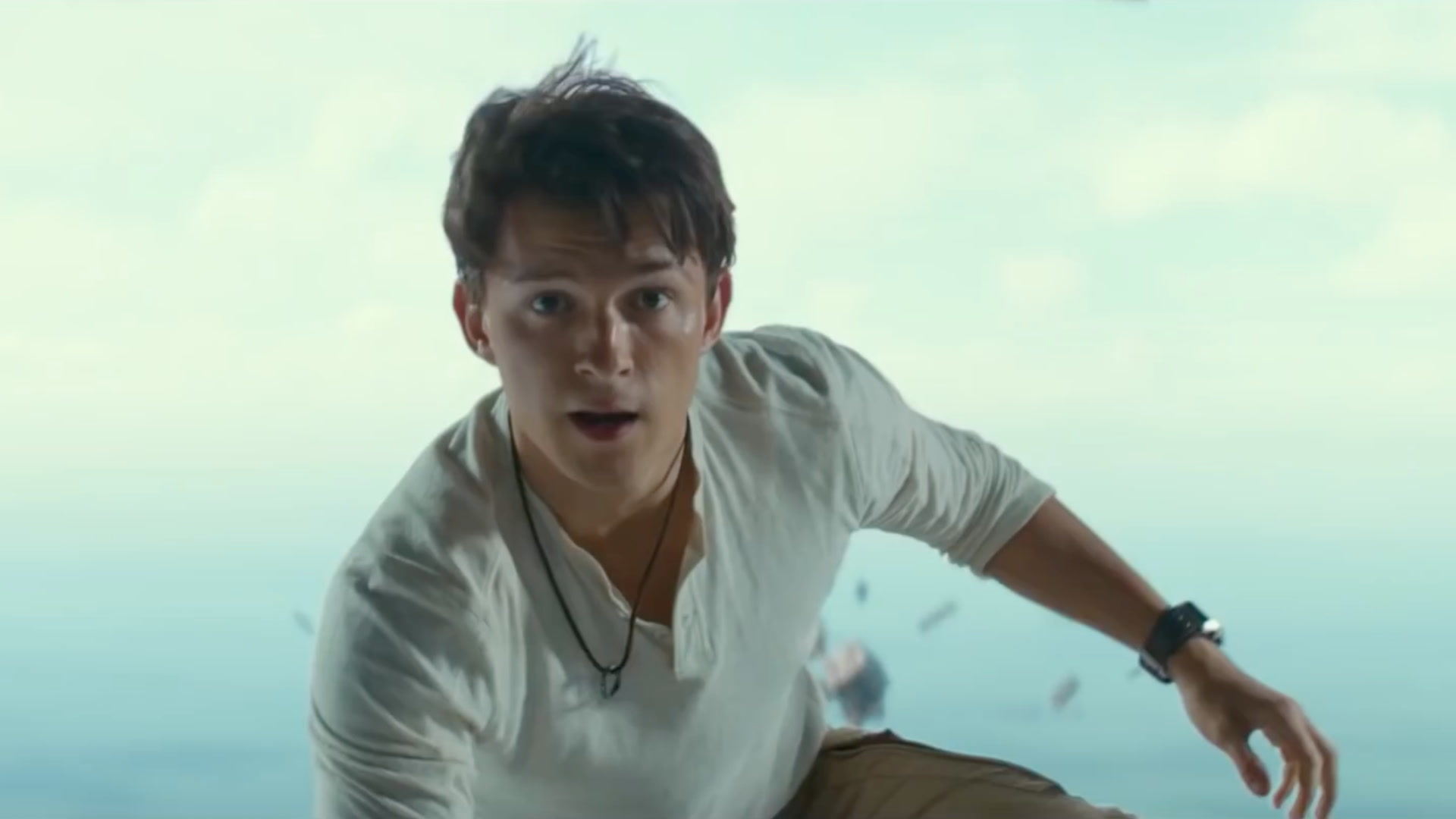
    Tom Holland in Columbia Pictures' 'Uncharted.' Photo by: Clay Enos.
    Tom Holland in Columbia Pictures’ ‘Uncharted.’ Photo by: Clay Enos.

    Opening in theaters on February 18th is the new movie ‘Uncharted,’ which is based on the popular video game of the same name. Directed by Ruben Fleischer (‘Venom’), the film stars Tom Holland (‘Spider-Man: No Way Home’) and Mark Wahlberg (‘Transformers: Age of Extinction’) as treasure hunters Nathan Drake and Victor “Sully” Sullivan, respectively.

    In the movie, Drake and Sullivan must race against the ruthless Santiago Moncada (Antonio Banderas) in order to find the treasure of the Magellan expedition. In addition to Holland, Wahlberg, and Banderas, the movie also stars Sophia Ali (‘Truth or Dare’), Tati Gabrielle (’The Emoji Movie’), and Rudy Pankow (‘The Politician’).

    Moviefone recently had the opportunity to speak with actors Tom Holland and Mark Wahlberg about their work on ‘Uncharted.’

    AyUtiotC

    Below you can read our full interview with Tom Holland, or you can watch the both interviews in the video player above.

    Moviefone: To begin with, is it true that you were a huge fan of the game ‘Uncharted’ before you were cast in the movie?

    Tom Holland: Yeah, absolutely. I was playing the fourth Uncharted game while shooting ‘Spider-Man: Homecoming.’ It was a lunch between (Chairman of Sony Pictures) Tom Rothman and I, where the idea of me playing Nathan Drake kind of came about. I think it was probably five years later that we finally went into production. So, it’s kind of crazy to be here today and that something as simple as two mates playing a video game could result in a massive movie that I’m incredibly proud of.

    MF: Did your preparation for this movie include going back and playing the video game again?

    TH: Yeah. It’s quite a nice thing to be able to say that spending a lazy day on the couch playing video games is technically work. So, I really enjoy that aspect of the prep. (When I was a kid) my mom would be like, “Go outside. You’re never going to make any money playing video games.” And now I’m like, “I’m actually being paid to do this mom.”

    Tom Holland in Columbia Pictures' 'Uncharted.' Photo by: Clay Enos.
    Tom Holland in Columbia Pictures’ ‘Uncharted.’ Photo by: Clay Enos.

    MF: Can you talk about how the stunts in ‘Uncharted’ compare to the stunts in ‘Spider-Man: No Way Home?’

    TH: That’s a great question. I mean, there were obviously a lot of similarities. The ways in which we did certain stunts were very similar, but naturally with these two characters, they’re very different. Spider-Man is a fantastical character who can do things that a human could never dream of doing. Whereas Nathan Drake is a character that is obviously very grounded in reality.

    So, rather than thinking about a stunt that will eventually be taken over into a CG world, we need to think about the beginning of the stunt, the middle of the stunt and the end of the stunt. Unfortunately for myself and my two stunt doubles, the end of the stunt usually results in us on our back, on our head, or on our front in some sort of uncomfortable position. So, this film was brutal to make from a physicality point of view. But if you see the film, it really pays off.

    In the Spider-Man suit when you’re doing these stunts, you can pull the most grotesque faces because you are going through huge amounts of stress to achieve some of these stunts. With ‘Uncharted,’ obviously I don’t have the luxury of hiding my face. So, I had to sort of retrain myself to look cool and heroic while doing things where I felt incredibly scared. So, it was tough and my stunt doubles would come up to me and be like, “That was great. Just less face. You’re doing too much with your face.” I was like, okay, brilliant. I’ll try my best.

    (L to R) Mark Wahlberg and Tom Holland in Columbia Pictures' 'Uncharted.' Photo by: Clay Enos.
    (L to R) Mark Wahlberg and Tom Holland in Columbia Pictures’ ‘Uncharted.’ Photo by: Clay Enos.

    MF: What was your experience like working with Mark Wahlberg?

    TH: I mean, it was kind of a dream come true. I’ve been a huge fan of his for a long time and his body of work is so impressive. So, for a young actor to get the opportunity to work with him, it has been a real honor. He’s a good guy and we had a lot of fun working together. The relationship between Nate and Sully was very, very important to get right. I’m really glad it was Mark because the chemistry was something that came very naturally to us.

    MF: Finally, Sully is Nate Drake’s mentor in the movie. Did Mark Wahlberg mentor you at all on set?

    TH: Yeah, absolutely. He’s a real entrepreneur and he has his fingers in so many different pies. He’s always working and I admire his work ethic. His fitness is something as well. When we were shooting this movie, we came to set for the first day of shooting and I realized how much smaller I was than him because he is massive. Then we shut down because of COVID for five months. So, I went home and did nothing but eat and train, and eat and train, and eat and train. When I came back, he did make a comment about how much size I’d put on, which I was very chuffed about. So, he has inspired me and given me loads of great advice.

    fqUdMYTuLEdhAR097yZ5B3
  • Movie Review: ‘Uncharted’

    (L to R) Mark Wahlberg and Tom Holland in Columbia Pictures' 'Uncharted.' Photo by: Clay Enos.
    (L to R) Mark Wahlberg and Tom Holland in Columbia Pictures’ ‘Uncharted.’ Photo by: Clay Enos.

    Opening in theaters on February 18th is the new action-adventure movie ‘Uncharted,’ which is based on the popular video game of the same name. Directed by Ruben Fleischer (‘Venom’), the film stars Tom Holland (‘Spider-Man: No Way Home’) and Mark Wahlberg (‘Transformers: Age of Extinction’) as treasure hunters Nathan Drake and Victor “Sully” Sullivan, respectively.

    In addition to Holland and Wahlberg, the movie also stars Antonio Banderas (‘The Expendables 3‘),  Sophia Ali (‘Truth or Dare’), Tati Gabrielle (’The Emoji Movie’), and Rudy Pankow (‘The Politician’). The result is another mediocre movie adaption of a video game with little to offer except one great action sequence and a charming performance from Tom Holland, but is an otherwise forgettable film.

    ‘Uncharted’ begins with an origin story for Nathan Drake (Holland) and his brother Sam (Pankow) before jumping forward to present day. Sam has gone missing and Nathan is working as a bar tender and pick-pocket when he is recruited by his brother’s former partner, Victor “Sully” Sullivan (Wahlberg) to look for the hidden treasure of the Magellan Expedition. Hoping to discover what happened to his brother, Drake agrees to help Sullivan, but he doesn’t trust him.

    Their rival for the treasure is a wealthy businessman named Santiago Moncada (Banderas), who believes the treasure is his birthright, and mercenary Jo Braddock (Gabrielle). But in order to get to the treasure first, Drake and Sullivan will have to work with fellow fortune hunter Chloe Frazer (Ali), who possesses an important key to finding the hidden gold. Now, trusting no one, they must travel the world looking for clues to the treasure, while Nathan searches for answers to his brother’s disappearance.

    I love video games, but let’s be honest, there has never been a great movie adapted from a video game. The list of mediocre movies adapted from video games is long and includes ‘Warcraft,’ ‘Assassin’s Creed,’ ‘Doom,’ ‘Hitman: Agent 47,’ ‘Need for Speed,’ ‘Rampage,’ ‘Prince of Persia: The Sands of Time,’ and ‘Max Payne‘ (which also starred Mark Wahlberg). Unfortunately, you can add ‘Uncharted’ to that list.

    But let’s start with what is good about the movie. The film begins with an incredible action sequence featuring Holland falling out of a plane, which is actually just a preview of the full sequence that actually takes place in the third act. The filmmakers were wise to start the movie with part of that action scene, since it is the most stunning sequence in the entire film.

    (L to R) Mark Wahlberg and Tom Holland in Columbia Pictures' 'Uncharted.' Photo by: Clay Enos.
    (L to R) Mark Wahlberg and Tom Holland in Columbia Pictures’ ‘Uncharted.’ Photo by: Clay Enos.

    I have to wonder if the screenplay was designed that way, or if the filmmakers realized in post-production that they didn’t have an action sequence in the first 45 minutes of the movie and needed to pull some excitement from the third act. Either way it works but unfortunately, it is the only exciting action sequence in the movie, including the final fight scene.

    Tom Holland is fantastic! The young actor known best for playing Spider-Man gives an absolutely charming performance as Nathan Drake. The character is tougher, and rougher around the edges than Peter Parker, but still has Holland’s signature sweetness and charm. The actor also buffed-up for the role and is completely believable in all of his action sequences. Like “Tom Cruise hanging off the side of a plane” believable! He completely out classes and out shines his co-star Mark Wahlberg and gives a very strong leading-man performance. It’s almost heartbreaking that Holland wasted his talent on such an ordinary film.

    With a movie as unspectacular as ‘Uncharted,’ you have to look at the person behind the camera, in this case, director Ruben Fleischer. The filmmaker made a fantastic debut with 2009’s ‘Zombieland,’ but followed it up with disappointments like ’30 Minutes or Less’ and ‘Gangster Squad.’ Fleischer had a huge box office success with ‘Venom,’ but we can argue whether that was actually a good movie or not. And you have to wonder why the director was not asked back for ‘Venom: Let There Be Carnage.’ That being said, Ruben Fleischer is a serviceable director at best. So, it should be no surprise that the direction of the movie lacks any real feeling of urgency or cinematic style.

    While the movie is loosely based on “Uncharted 4: A Thief’s End,” it incorporates elements of the mythos from the entire franchise. However, the screenplay unfolds like an actual video game, with no real plot other than “We have to go to A to get B to go to C.” With so much mythology to choose from, I wish they had incorporated more of that in the film and allowed it to drive the story, rather than having the story driven simply by “We have to achieve this goal to achieve the next.”

    Actresses Sophia Ali and Tati Gabrielle are both fine in their roles, but not given enough to be truly memorable. Antonio Banderas’ villain is completely over-the-top and one dimensional, and isn’t given enough screen time to be truly threatening. Mark Wahlberg, who has been attached to this project for over a decade and at one point was going to play Nathan Drake, basically phones in his performance and is over shadowed by Holland in every scene. You never really get a sense of who the character of Victor Sullivan really is, and instead it feels more like Mark Wahlberg is just playing Mark Wahlberg.

    In the end, ‘Uncharted’ is a just disappointing movie. The source material offers an extremely rich and intriguing mythology that basically goes to waste with no real character development explored at all. A commanding leading performance from Tom Holland and an exhilarating action sequence is just not enough to make ‘Uncharted’ a movie worth seeing.

    ‘Uncharted’ receives 2 out of 5 stars.

    fqUdMYTuLEdhAR097yZ5B3
  • Penelope Spheeris Talks ‘Wayne’s World’

    ‘Wayne’s World’ director Penelope Spheeris
    ‘Wayne’s World’ director Penelope Spheeris

    “We’re not worthy!”

    The groundbreaking 1992 comedy ‘Wayne’s World,’ which was based on the popular Saturday Night Live sketch and released a Limited-Edition Blu-ray Steelbook on February 1st, celebrates its 30th anniversary this month.

    Directed by Penelope Spheeris, the movie stars Mike Myers and Dana Carvey as their SNL characters Wayne Campbell and Garth Algar, respectively, and follows them and their friends as they produce a public-access cable show in Aurora, Illinois. The cast also includes Rob Lowe, Tia Carrere, Lara Flynn Boyle, Chris Farley, Ed O’Neill, Meat Loaf, and Alice Cooper.

    Spheeris began her career in the late 60’s producing and directing Richard Pryor’s unreleased film, ‘Uncle Tom’s Fairy Tales,’ before producing Albert Brooks’ ‘Real Life’ in 1979. In the 1980s, she directed the seminal rock ‘n roll documentaries ‘The Decline of Western Civilization’ and ‘The Decline of Western Civilization Part II: The Metal Years,’ and eventually 1998’s ‘The Decline of Western Civilization Part III.’ But it was ‘Wayne’s World’ that finally allowed the talented filmmaker to merge her passion for comedy and music into the same film.

    Moviefone recently had the pleasure of speaking with director Penelope Spheeris about the 30th anniversary of ‘Wayne’s World.’ She discussed how her previous work prepared her to direct the movie, working with Mike Myers and Dana Carvey, the iconic “Bohemian Rhapsody” scene, Alice Cooper’s special request, casting the late great Meat Loaf, and more.

    K0BnSBlh

    You can read the full interview below or watch a video of the interview above.

    Moviefone: As a filmmaker, what is it like for you to see that ‘Wayne’s World’ is still as beloved and relevant today as it was when it was first released 30 years ago?

    Penelope Spheeris: It’s actually kind of indescribable how it feels. I wish I had good words to describe how I feel that 30 years later people care about the movie and love the movie as much as they do. I feel really, really lucky for that. And really grateful that I was there at the right time, in the right place and with the right people. But honestly, I don’t like to wallow in the glory of anything, but it’s just astonishing that people still care about this movie.

    MF: You can you take us back 30 years and talk about how you became the director of ‘Wayne’s World?’

    PS: My agent sent me the script and said, “They’re looking for a director for this Saturday Night Live skit, and it’s over at Paramount”. I was like, “You mean I might be able to get my foot in the studio door? That would be cool.” So, I read the script and then I had to go to five different meetings. Then I had to meet with Mike, and then I had to jump through a hoop and balance a beach ball on my nose, and crawl on my belly like a reptile.

    I had to do all those things. A lot of times it was like, “Man, this is like a lot of cross examination to get the gig.” A couple of times I remember walking off the lot thinking, “You know what? I don’t care. I can’t handle this”. Then I kept going back and I’m sure glad I did.

    MF: Considering your history working with comedians like Richard Pryor and Albert Brooks, and your work directing the ‘Decline of Western Civilization’ documentaries, it seems like you were uniquely qualified to direct ‘Wayne’s World,’ because you already had experience with both comedy and rock ‘n roll.

    How did your past experience as a producer and documentary filmmaker prepare you to direct this movie?

    PS: Well, that’s a brilliant observation. Even I haven’t thought of that. Thank you. I was prepared comically, and I was prepared musically. I guess it’s just some cosmic coming together of the right things at the right time. I had no idea that I was going to be involved with a movie that has lasted this long and people love so much. None of us thought, “Oh, well, we’re going to make this big hip movie and get rich and famous. And everybody will be dressing up their babies like Wayne and Garth for 30 years.” None of us thought that.

    We just thought, “Geez, we could make this little movie, and maybe we’ll get it in a few theaters, and maybe I’ll get another gig in Hollywood.” So, I always tell people, young filmmakers, it’s like stop with the rich and famous already, just go do the work. That’s what we were doing back then.

    MF: Since they created the characters on television, I would imagine Mike Myers and Dana Carvey came to set knowing exactly who Wayne and Garth are, which is something that doesn’t always happen with actors when you are making a movie.

    What was that like for you directing them and getting the performances that you needed for the film?

    PS: It was a total luck out, and good pleasure. I’ll be honest with you, because as a director, if you have two leads coming in with characters that they don’t know, you got a big job cut out for you, and you got to know those characters yourself. Mike and Dana already knew them.

    So, I didn’t have to go crazy trying to say, “Stay in character, stay on track. That’s not what your character would say.” I didn’t have to do any of that, they knew exactly what they would do, and wear, and say. So that made it easier to be honest with you. I don’t look at it like, “Oh, I’m the director, you got to do what I say.” They knew, and I trusted them. I had to.

    (L to R) Mike Myers and Dana Carvey in 'Wayne's World.' ©2021 Paramount Pictures. All Right Reserved.
    (L to R) Mike Myers and Dana Carvey in ‘Wayne’s World.’ ©2021 Paramount Pictures. All Right Reserved.

    MF: The movie will forever be connected to the band Queen, and vice versa, because of the iconic “Bohemian Rhapsody” sequence. Can you talk about the process of shooting that scene?

    PS: Well, I mean, when we shot it, and we didn’t think, “Oh, people are going to be looking at this and loving it for so many decades.” We didn’t think that. I knew that it would be a good title sequence, because I had shot a similar scene in the movie I did called ‘Dudes,’ where Flea and John Cryer were banging their heads in a Volkswagen driving across the desert.

    So, I knew that that was a fun thing to be doing. But yeah, Mike had written “Bohemian Rhapsody” into the first draft. So, as much as people might want to give me credit for picking the song, I did not pick the song, it was Mike. I chose to shoot it the way I did, but he is the one that was smart enough to pick that song. What can I tell you, James Corden owes me a couple bucks!

    MF: Is it true that the studio fought you on the song choice and didn’t want you to use ‘Bohemian Rhapsody?”

    PS: No! Thank you for asking it because I’d like to set the record straight. The studio never challenged us on the use of the song. (Producer) Lorne Michaels never wanted to have Guns N’ Roses in the movie. I never wanted to have Guns N’ Roses in the movie, because they had just bailed out on me when I did the ‘The Metal Years.’

    So, I definitely wouldn’t want to license their song if they crapped out on me at the last minute when I did ‘The Metal Years’. So, this whole thing about somebody wanting to use Guns N’ Roses is not true. I just want to put that on the table, and they could fight me to the death on that one because I know.

    MF: But there was an issue with Alice Cooper only wanting to play a new song and not one of his classics in the movie, is that true?

    PS: That’s very smart of you, and here’s the thing. Having worked with bands forever, most of them don’t want to do their old music, they want to promote their new music. I understand that, because they want to be themselves, and they want to do their new material. I couldn’t argue with Alice, because there was no time to argue. It was like, “Okay, we got to shoot this scene at the amphitheater, it’s booked, and it costs a lot of money. So, let’s get the band over there and set up the stage, and do it”.

    I wasn’t in love with the song at the time. It’s a goofy title. But Alice is a prince, and we threw three pages of dialogue at him, on the day he came in. He didn’t even have a night to look at it. To this day even he says that he can’t believe he remembered all that dialogue. We had to write these signs, we had to write prompter signs. We had people writing on them, so he could remember the lines. But he did it, and he looked perfectly natural doing it.

    MF: Finally, you cast Meat Loaf in the movie, who unfortunately just passed. What are your memories of working with Meat Loaf?

    PS: It’s very tragic, of course, that Meat Loaf has gone, and very unexpected. He was way too young to go. He and I were very, very good friends during the 1980’s when we would party at the Rainbow Bar, The Roxy, and Whiskey a Go Go. I have very fond memories of hanging out with him. And if anybody doesn’t mind, I’ll take the credit for casting him in that sweet role.

    The ‘Wayne’s World’ Limited-Edition Blu-ray Steelbook was released on February 1st.

    5981
  • Apple TV+ Series ‘Suspicion’ Exclusive Interviews

    (L to R) Kunal Nayyar, Elizabeth Henstridge and Tom Rhys Harries Promoting ‘Suspicion,' which premieres on Apple TV+ February 4th.
    (L to R) Kunal Nayyar, Elizabeth Henstridge and Tom Rhys Harries Promoting ‘Suspicion,’ which premieres on Apple TV+ February 4th.

    Premiering February 4th on Apple TV+ is the new series ‘Suspicion,’ which is based on the Israeli series, ‘False Flag.’ The series follows five people whose lives are turned upside down after London police identify them as suspects in the kidnapping and disappearance of an American media mogul’s son.

    Created by Rob Williams (‘The Victim’), the series stars Kunal Nayyar (‘The Big Bang Theory’), Elizabeth Henstridge (Agents of S.H.I.E.L.D.), Tom Rhys Harries (‘The Gentlemen’), Georgina Campbell (‘Black Mirror’), Elyes Gabel (A Most Violent Year), Noah Emmerich (‘The Americans’), and Uma Thurman (‘Pulp Fiction’).

    Moviefone recently had the opportunity to speak with actors Kunal Nayyar, Elizabeth Henstridge, Tom Rhys Harries, and Noah Emmerich about their work on ‘Suspicion.’

    WfK3EFGg

    You can read the full transcript of our interview with Kunal Nayyar, Elizabeth Henstridge, and Tom Rhys Harries below, or watch all the interviews in the video played above.

    Moviefone: To begin with, Elizabeth, can you talk about the incident that brings these five strangers together in the series?

    Elizabeth Henstridge: Well, I was in this show called ‘Suspicion,’ where Uma Thurman plays a corporate PR strategist. She’s a very powerful woman who has just been named US ambassador to the UK. Her son has been kidnapped. We play British citizens that happen to be in New York on the day that Leo was kidnapped. Then we are accused of this crime, or at least suspects of this crime.

    So we kind of follow how that unfolds for Uma Thurman’s character, Catherine Newman. You see the impact it has on our lives and the lengths that you go to, to try to clear your name and how difficult that is when the truth is being blasted all over social media, which might not be your truth. It’s hard to know who to believe in and what is the truth.

    MF: Kunal, the show deals with the theme of trust. Can you talk about the level of trust between these five strangers when they first meet?

    Kunal Nayyar: It’s difficult, again, to speak about these things without giving spoilers away. But obviously as you see these characters and the journey that they’re on, I think that the level of trust switches, it’s not so black and white. I think it’s a gray area. I think all we know is that they need each other.

    They definitely need each other to accomplish whatever it is that they’re trying to accomplish, whether it’s clearing their name or actually trying to get the job done, we don’t necessarily know. So I think the level of trust shifts every episode, and I think for the audience perception, it’ll be impossible for them to tell who trusts who, who’s done what, and who’s responsible for the end game.

    MF: The series also deals with the themes of technology and surveillance, and how we deal with them in our modern society. Tom, can you talk about how those themes affect these five strangers?

    Tom Rhys Harries: Well, yeah. The surveillance and the social media and our digital footprint paper trail, it’s become sort of so interwoven with how we lead our day-to-day lives and very quickly. If you’d have told someone 20 years ago that most of us would be kicking about with a piece of tech that’s worth however much it’s worth in your pocket, I think people wouldn’t have believed it. Also, the amount of information that we have access to. That comes with really difficult questions that we have to ask as a society.

    I think it’s important for us to be asking these big questions, particularly for a younger generation, because I don’t think we’ve quite cracked it yet on how to manage surveillance, the ethical issues and moral issues of all of that. I think what I really dig about the show is that it’s asking a lot of big questions about these very current themes that are prevalent in society and it feels very timely. That this show is coming out when it is coming up.

    MF: Another theme in the series is truth. Kunal, can you talk about that and how your character really learns the truth about himself?

    KN: Look, it’s a very good question, really. I think you have to be lost to be able to be found, and I think that’s what we see in this character. He’s definitely lost and because he’s lost, he finds purpose in something that you don’t know if it’s good, you don’t know if it’s bad, and that’s the beauty of this show.

    Even when you figure out what happens and who did it and how it happens, you still don’t necessarily leave feeling like, “Oh, that was the right thing to do.” Or, “that was the wrong thing to do.” That kind of narrative, that kind of perception is going to be very individual and very individualistic.

    MF: Elizabeth, ‘Suspicion’ could easily have been done as a movie, but it would have had to be condensed for time. What has it been like for you to do it as a series and have more time to develop your characters?

    EH: Oh, it’s brilliant. I love TV for that reason. That you can explore big themes and then also things where you can discover so much about your character. Aadesh faces the truth or finds the truth out as we go, but as an actor that’s just such a gift to be given all that time with his character and to go through such extreme circumstances.

    I think it suits itself perfect to a mini-series in that we’d lose so much at being a movie, but then with it being eight episodes, it’s a very intense week in these people’s lives. I think that it keeps the suspense and it keeps the pace and, hopefully week-to-week, people are going to be shocked.

    KN: That’s why we were talking about how much we love the fact that it’s a show like this. A show like this, it’s perfect that it’s coming out one week (at a time). I mean, except for the initial two episodes. I think that is going to really lend to the stakes.

    (L to R) Tom Rhys Harries, Kunal Nayyar, Georgina Campbell, and Elizabeth Henstridge in ‘Suspicion,' which premieres on Apple TV+ February 4th.
    (L to R) Tom Rhys Harries, Kunal Nayyar, Georgina Campbell, and Elizabeth Henstridge in ‘Suspicion,’ which premieres on Apple TV+ February 4th.
  • Movie Review: ‘Death on the Nile’

    Kenneth Branagh as Hercule Poirot in 'Death on the Nile.' Photo Courtesy of Walt Disney Studios.
    Kenneth Branagh as Hercule Poirot in ‘Death on the Nile.’ Photo Courtesy of Walt Disney Studios.

    Opening in theaters on February 11th is ‘Death on the Nile,’ which is a sequel to 2017’s ‘Murder on the Orient Express.’ Based on Agatha Christie’s classic novel, the movie is once again directed by Kenneth Branagh, and also stars Branagh as the world-famous detective, Hercule Poirot.

    The supporting cast includes Gal Gadot (Wonder Woman 1984), Armie Hammer (Call Me by Your Name), Emma Mackey (‘Sex Education’), Annette Bening (American Beauty), Russell Brand (Forgetting Sarah Marshall), Rose Leslie (‘Game of Thrones’), Letitia Wright (Black Panther), and Tom Bateman as Bouc, who also reprises his character from ‘Murder on the Orient Express.’ The result is an entertaining mystery, that is not difficult to solve, but is lifted up by the cast, Branagh’s direction, and his signature performance as Poirot.

    The movie begins with the origin story of Hercule Poirot (Branagh), which explains why he sports such a large mustache. We then see him years later at a jazz club, where he witnesses a romance between Jacqueline (Mackey) and Simon (Hammer), and Simon’s first meeting with Jacqueline’s friend, heiress Linnet Ridgeway- Doyle (Gadot).

    We next find the detective, sometime after the events of ‘Orient Express,’ vacationing alone in Egypt. He quickly bumps into his old friend Bouc (Bateman), and his mother (Bening), who are there for the wedding of a friend. Poirot’s friend invites him to the celebration, and the detective is surprised to find that the newlyweds are Simon and Linnet, who he observed from a far when they first met.

    Trouble begins when Linnet’s old friend and Simon’s jilted lover, Jacqueline arrives on the scene. Linnet and Simon ask Poirot to intervene, but since she has committed no crime, there is nothing he can do. In order to get away from Jacqueline, Linnet hires a ship to take her and her guests down the Nile. Poirot joins the party, but when a murder takes place, and everyone is a suspect, the detective will have no choice but to do what he does best … solve the crime!

    ieNmxTKc

    After a decade of directing studio blockbusters like ‘Thor,’ ‘Cinderella,’ ‘Jack Ryan: Shadow Recruit,’ and ‘Murder on the Orient Express,’ Branagh was finally able to make his passion project, ‘Belfast.’ The film was critically acclaimed and has recently gone on to be nominated for several Academy Awards including Best Picture and Best Director for Branagh. ‘Death on the Nile’ was shot in 2019, before ‘Belfast,’ and was delayed because of the pandemic. While his new film can’t compare to the brilliance of ‘Belfast,’ it is a serviceable murder mystery and an enjoyable movie, with a very entertaining cast and a really great performance from Branagh himself.

    Hercule Poirot is a classic literary character and a difficult role to play, as it is easy for an actor to get lost behind that mustache, as Branagh did a bit in ‘Orient Express.’ But by showing the character’s origin story, while also explaining why he lives a solitary life, it makes the character more relatable to the audience. Branagh is also more comfortable in his role this time around, and really commands the screen every scene he’s in. It was also really smart to bring back Tom Bateman as Bouc, which not only bridges Branagh’s two Agatha Christie movies, but also gives Poirot a confidant and someone to care about.

    The supporting cast are all very good in their roles, especially Annette Bening as Bouc’s overbearing mother. English comedians Jennifer Saunders and Dawn French are very funny as a socialite and her nurse, while Russell Brand gives a very against-type performance as the quiet and vulnerable Linus, Linnet’s former fiancé. Actress Emma Mackay gives an outstanding breakout performance as Jaqueline, and based on her work, I think we’ll be seeing a lot of great things from the ‘Sex Education’ actress in the future.

    But outside of Branagh’s performance as Poirot, the film really belongs to Gal Gadot. She is absolutely stunning in the film and commands her scenes with grace and power. She plays Linnet as a kind soul with too much money at her disposal, forcing her to trust no one. This can make the character a bit cold at times, but Gadot’s performance is never unlikable. In one of her best scenes, Gadot does not say a word, just simply walks the length of the ship while sailing on the Nile. Beautifully shot by Branagh, this scene tells us everything we need to know about the character.

    While it may be a better movie pound-for-pound than ‘Orient Express,’ ‘Nile’ is not without its faults. The film allows more time for character development, especially with Poirot, which is great, but it also means that the “mystery” really doesn’t begin until halfway through the movie. There is a lot of set up. Necessary of course, but perhaps it could have been streamlined a bit.

    Unfortunately, even if you’ve never read an Agatha Christie book or seen an adaption before, her work is so baked into our culture now, her mysteries can be very predictable. Without reading the novel or seeing the 1978 movie, I knew who the killer was almost as soon as the murder took place. I just know how Agatha Christie mysteries work, which is the biggest problem with the film. But in the end, thanks to Branagh’s performance, as well as Gadot and the supporting cast, ultimately ‘Death on the Nile’ is still an entertaining movie.

    ‘Death on the Nile’ receives 3.5 out of 5 stars.

    cLRLwhKUxdUQZaUl5LmuO3
  • Phil Morris Talks ‘Ghosts of the Ozark’

    Phil Morris in 'Ghosts of the Ozarks'
    Phil Morris in ‘Ghosts of the Ozarks’

    Opening on digital and On Demand beginning February 3rd is the new supernatural Western ‘Ghosts of the Ozarks,’ which was directed by Matt Glass and Jordan Wayne Long. The film stars Phil Morris (‘Star Trek III: The Search for Spock’), Thomas Hobson (‘Stone Fruit’), Tara Perry (‘12 Hour Shift’), Tim Blake Nelson (‘The Incredible Hulk’), and David Arquette (‘Scream’).

    The new movie takes place in post-Civil War Arkansas, as a young doctor, James McCune (Hobson) is mysteriously summoned to a remote town in the Ozarks only to discover that the utopian paradise is filled with secrets and surrounded by a menacing, supernatural presence. The town’s leader is James’ uncle, Matthew McCune (Morris), who may know more than it seems about the town’s strange ghost problem.

    The son of ‘Mission: Impossible’ TV series star Greg Morris, Phil Morris actually portrayed his father’s character’s son on the 80’s reboot series, which also featured original series star Peter Graves. The actor would go on to appear in numerous film and TV projects including ‘Star Trek III: The Search for Spock,’ ‘Jingle All the Way,’ ‘Wag the Dog,’ ‘Seinfeld,’ and ‘Melrose Place.’ But he’s probably best known to DC Comics fans for playing Martian Manhunter on ‘Smallville’ and Cyborg’s father, Silas Stone on HBO Max’s ‘Doom Patrol.’

    (L to R) David Arquette, Thomas Hobson, Phil Morris and Tim Blake Nelson in 'Ghosts of the Ozarks'
    (L to R) David Arquette, Thomas Hobson, Phil Morris and Tim Blake Nelson in ‘Ghosts of the Ozarks’

    Moviefone recently had the chance to speak with Phil Morris about his work on ‘Ghosts of the Ozarks.’

    Moviefone: To begin with, as an actor, can you talk about the challenge of working within a period piece? Is it more challenging than playing a character from your own time period?

    Phil Morris: It’s an interesting question because here’s what I think. When you’re so adorned with wardrobe, makeup, the sets and the background and everything is so period perfect, it’s almost as though you have to try to get it wrong. You know what I mean? It gives you a great cover for you as an actor, and it informs you more and more. I’ve done a lot of ‘Star Trek,’ and every time I put on the wardrobe or the makeup of a Klingon, you know who you are. In this movie, it was no different.

    I was very fortunate to have some of the best makeup people, wardrobe people and hair people. So, each layer of the character, interestingly enough, gets layered on as you hit the makeup trailer, as you sit in the chair. It’s a process that I, as an actor, really appreciate. It informs me more and more every day that I go in and it sets up the character more and more.

    Yes, you do have to do your research on that period, on people of the period, what they looked like, how they sounded, how they stood, and how they walked. That informs you going forward as to how this character behaves and what their wants and dislikes are.

    MF: What can you tell us about your character Matthew, and the utopia that he has created in this small town?

    PM: Well, at the time, there were a few communities of color and diversity in the United States that were trying this grand experiment of inclusion. One of the most famous is Tulsa in Oklahoma and Black Wall Street, and we all know what happened there. Or if you don’t, check out your history. So, there were several attempts to try and bring this country together in these communities, so our community is no different.

    Matthew’s different in that there’s the phrase that “power corrupts, and absolute power corrupts absolutely,” and that’s what happens to Matthew. I believe Matthew had all the good intentions, and all the right intentions. My prep for Matthew was that he was an ex-slave, but he was a very educated ex-slave. He learned control and he learned manipulation from his masters, from his overseers. How else would he get it? How else would he know it?

    So, when he comes to town and he has all the best intentions, as everybody does, and he realizes what is really in the town, that sense of control that he learned from his white masters starts to overwhelm him. I believe that the difficulty of being a Black man at that time never left him, so there was always an underlying sense of difficulty, upset, and revenge.

    So, when he had the chance to exert his power, in the movie, we see what happens. It was a very difficult character for me to play, very complex, and very nuanced. I had a very difficult time approaching him, because I knew that his controls were not mine, not Phil Morris’ controls. But I had to commit to this character of Matthew so that he lived and breathed beyond Phil Morris.

    Like I said, he’s using the same controls that are used on him in a way. Not physically, not beating people and whipping them, but mentally subjecting them to a servile role almost in a way. They were doing his bidding. So, that was hard for me. It isn’t who I am as a human, and I had to make him believable and real. So, I had to own those controls, and that was a challenge quite honestly.

    MF: On one level the movie tells an entertaining supernatural story, but on another level, it also deals with serious real-world themes. Was it nice to be in a project that really does both, educate and entertain?

    PM: That was terrific. It was incredibly unique, and I believe a very authentic vision from Matt Glass, Tara Perry, and Jordan Wayne Long, the creators of the film. So, it was a joy. We come with our own preparation and then all these layers are hitting you. As a film, it just makes it so textured and dimensional. So, you think you’re getting a period piece, then you think you’re getting a bit of a horror show, then you’re getting a bit of a social commentary. It’s like, what else can this movie throw at you?

    (L to R) Thomas Hobson and Phil Morris in 'Ghosts of the Ozarks'
    (L to R) Thomas Hobson and Phil Morris in ‘Ghosts of the Ozarks’

    MF: What was it like for you to work with your co-star, Thomas Hobson?

    PM: I had never met Tommy before the film, but I knew he was very good friends with Tara, Jordan and Matthew. I had worked with Tara on another little short film, so meeting Tommy, we met working on one of our most difficult days. What I realized about him was that he was just a game actor. He was ready to go. He was fearless, and that is beautiful to get into a scene, especially with somebody that you really don’t know. You’re trying to create this relationship that you’ve had for his whole life.

    To be with an actor who’s willing to throw down, who’s willing to kind of “go there with you” is a joy. That’s who Tommy Hobson is. He’s incredibly talented. He’s a triple threat. He’s a dancer, he is a singer, he’s an actor, and he brought something really special to this role. I think that the audience will see it and our relationship is palpable. I don’t know where this comes from. I really don’t know where actors get this from, this instant ability to connect and make real these relationships that are really kind of “add water and mix.”

    I don’t want to know everything. I like to be surprised. I like to be excited. I like to be thrilled and titillated. So, to work with another actor like Tommy Hobson, as the actor, I am entertained as well. I’m taken on a ride as well, and that’s the best way to work.

    MF: Finally, I know you only have one scene with him, but what was your experience like working with Tim Blake Nelson?

    PM: He was fantastic. I mean, this man has depth of creativity that a lot of us wish to have. So again, where Tommy’s a younger actor and not as experienced, working with Tim, or Angela Bettis, or David Arquette, those are more versatile, vintage, veteran actors that bring so much. It’s like your wardrobe, right, what we just talked about. When they bring that much, it’s best to just let it play.

    You have to get in there and play, and respond to this amazing energy. They bring this spirit, an actor like Tim Blake Nelson, that is so engaging for you as a performer, there’s no acting involved. You’re just being, and you’re just involved in this reality that they make much more palpable because of how much they bring to it. It was just a joy. It’s not working at all, it’s playing. It’s collaboration on the highest level.

    Tim Blake Nelson in 'Ghosts of the Ozarks'
    Tim Blake Nelson in ‘Ghosts of the Ozarks’
  • Oscar Nomination Predictions

    Courtesy of the Academy of Motion Picture Arts and Sciences
    Courtesy of the Academy of Motion Picture Arts and Sciences

    Oscar nominations are scheduled to be announced on February 8th by Tracee Ellis Ross and Leslie Jordan. With the cancellation of the Golden Globes, and the Critic’s Choice Awards and other ceremonies postponed because of Covid concerns, this year’s awards season is unusually wide open with no true frontrunner in the pack.

    Yes, it does seem that director Jane Campion’s ‘The Power of the Dog’ is set to receive several major nominations, but Kenneth Branagh’s ‘Belfast’ is fast on its heels, and don’t count out Denis Villeneuve’s ‘Dune’ just yet. In the acting categories, most are still open for some real surprises, with the exception of Will Smith and Kodi Smit-McPhee for Best Actor and Best Supporting Actor, respectively, who both seem to be locks.

    Below are our predictions for the titles and names that will be announced when the nominations are released on February 8th. We are only breaking down our predictions and possible surprises for the six major categories, Best Picture, Best Director, Best Actor, Best Actress, Best Supporting Actor, and Best Supporting Actress.

    Let’s Begin!

    (L to R) Caitriona Balfe, Jamie Dornan, Judi Dench, Jude Hill, and Lewis McAskie in 'Belfast,' directed by Kenneth Branagh
    (L to R) Caitriona Balfe, Jamie Dornan, Judi Dench, Jude Hill, and Lewis McAskie in ‘Belfast,’ directed by Kenneth Branagh

    BEST PICTURE

    As previously mentioned, ‘The Power of the Dog’ and ‘Belfast’ are both definitely a lock for Best Picture nominations. In theory, ‘Dune,’ and ‘Licorice Pizza’ are probably locks too, having racked up enough critic’s groups noms to assure their Oscar nominations. ‘CODA’ and ‘West Side Story’ are also in a pretty safe place, but anything could happen. After that, it’s pretty wide open.

    In past years, the Academy has had the option to nominate between five and ten films. This year, they will definitely nominate ten movies, so that leaves four spots fairly free. ‘Don’t Look Up’ has had a great run on Netflix and has gained a lot of last-minute love, and I think will likely be nominated. The same can be said for the streamer’s ‘Tick, Tick … Boom!,’ and Will Smith’s commanding performance in ‘King Richard’ should be enough to get the film nominated as well.

    Leaving just one spot left, I’m going with ‘Being the Ricardos’ over ‘The Tragedy of Macbeth.’ It could go either way, but the Lucille Ball biopic has gained some steam in the last few weeks after premiering on Prime Video and with both Nicole Kidman and Javier Bardem receiving surprise SAG nominations, it seems more likely. ‘Drive My Car,’ which seems a lock to win Best Foreign Film could sneak into the top ten, but unfortunately, the best reviewed movie of the year, ‘Spider-Man: No Way Home,’ seems very unlikely to even be nominated.

    Predictions:

    • ‘The Power of the Dog’
    • ‘Belfast’
    • ‘Dune’
    • ‘West Side Story’
    • ‘Licorice Pizza’
    • ‘CODA’
    • ‘King Richard’
    • ‘Don’t Look Up’
    • ‘Tick, Tick … Boom!’
    • ‘Being the Ricardos’

    Other Possibilities:

    • ‘The Tragedy of Macbeth’
    • ‘Drive My Car’
    • ‘The Lost Daughter’
    • ‘Spider-Man: No Way Home’
    K4k8Kl45Kv1evTSpJbePS6
    Director Paul Thomas Anderson on the set of 'Licorice Pizza'
    Director Paul Thomas Anderson on the set of ‘Licorice Pizza’

    BEST DIRECTOR

    With Jane Campion (The Power of the Dog’), Kenneth Branagh (‘Belfast’) and Denis Villeneuve (‘Dune’) as virtual locks for nominations, that only leaves two open spots. While Paul Thomas Anderson will certainly win his first Oscar for Best Original Screenplay for ‘Licorice Pizza,’ I still assume that he will receive a nomination for Best Director as well.

    But who will take that fifth spot? Safe money is probably on Steven Spielberg for ‘West Side Story.’ While I don’t think he deserves to be nominated for the beat-for-beat remake, he is the most beloved filmmaker in modern history, and the Academy might just give him the nod. If Spielberg doesn’t make the cut, it will be because of Ryusuke Hamaguchi for ‘Drive My Car,’ which would follow a trend in recent years where the Academy nominates a foreign film for Best Director.

    But, as I mentioned earlier there is a lot of love out there for ‘Don’t Look Up,’ so an Adam McKay nomination is possible, but may be a longshot. Another possibility but still a longshot is Sian Heder receiving her fist nomination for her work on ‘CODA.’

    Predictions:

    • Jane Campion – ‘The Power of the Dog’
    • Denis Villeneuve – ‘Dune’
    • Kenneth Branagh – ‘Belfast’
    • Paul Thomas Anderson – ‘Licorice Pizza’
    • Steven Spielberg – ‘West Side Story’

    Other Possibilities:

    • Ryusuke Hamaguchi – ‘Drive My Car’
    • Adam McKay – ‘Don’t Look Up’
    • Joel Coen – ‘The Tragedy of Macbeth’
    • Sian Heder – ‘CODA’
    V1t5cXVYYebEqNUvACthg7
    (L to R) Demi Singleton as Serena Williams, Saniyya Sidney as Venus Williams and Will Smith as Richard Williams in 'King Richard'
    (L to R) Demi Singleton as Serena Williams, Saniyya Sidney as Venus Williams and Will Smith as Richard Williams in ‘King Richard’

    BEST ACTOR

    Of all the acting categories, this one may be the most preordained. Unless something goes terribly wrong, Will Smith is poised to not only be nominated but also win his first Academy Award for his work in ‘King Richard.’

    Benedict Cumberbatch is likely to enjoy the ‘Power of the Dog’ love and receive a nomination, while Andrew Garfield will be nominated as well for ‘Tick, Tick…Boom!,’ earning his nom as much for his return as Spider-Man in ‘Spider-Man: No Way Home’ as he’s being rewarded for the Lin-Manuel Miranda movie. With his recent SAG Award nomination, and the buzz the film is getting, Javier Bardem will also be nominated for playing Desi Arnez in ‘Being the Ricardos.’

    That leaves one nomination open, which will most likely go to Denzel Washington for ‘The Tragedy of Macbeth.’ A month ago, it seemed that Peter Dinklage would be nominated for ‘Cyrano,’ but with the film’s release pushed because of Covid, its awards season chances are cooling off. However, Nicolas Cage has earned some surprise nominations this year for ‘Pig,’ as has Simon Rex for ‘Red Rocket,’ so either actor could hypothetically sneak into the Oscar race.

    Predictions:

    • Will Smith – ‘King Richard’
    • Benedict Cumberbatch – ‘The Power of the Dog’
    • Andrew Garfield – ‘Tick, Tick…Boom!’
    • Javier Bardem – ‘Being the Ricardos’
    • Denzel Washington – ‘The Tragedy of Macbeth’

    Other Possibilities:

    • Peter Dinklage – ‘Cyrano’
    • Leonardo DiCaprio – ‘Don’t Look Up’
    • Nicolas Cage – ‘Pig’
    • Simon Rex – ‘Red Rocket’
    myr6zVOo4ofBfxRyT2h6S4
    Nicole Kidman and Javier Bardem in 'Being the Ricardos'
    Nicole Kidman and Javier Bardem in ‘Being the Ricardos’

    BEST ACTRESS

    This might be the most interesting category this year. Assumed frontrunner Kristen Stewart is in some trouble, as she failed to receive a SAG or BAFTA nomination for her work in ‘Spencer.’ She could possibly get snubbed by the Academy, but I think she will still get the nom, however, her chances of winning are way down.

    Nicole Kidman, Olivia Colman, and Jessica Chastain all received SAG noms, but no BAFTA nominations, making Lady Gaga the only true lock at this point for her work in ‘House of Gucci.’ My guess is that all five actresses will ultimately be nominated for Oscars, but don’t count out a surprise nom from the likes of Penelope Cruz for ‘Parallel Mothers’ or Alana Haim for ‘Licorice Pizza.’

    Predictions:

    • Nicole Kidman – ‘Being the Ricardos’
    • Lady Gaga – ‘House of Gucci’
    • Olivia Colman – ‘The Lost Daughter’
    • Jessica Chastain – ‘The Eyes of Tammy Faye’
    • Kristen Stewart – ‘Spencer’

    Other Possibilities:

    • Alana Haim – ‘Licorice Pizza’
    • Penelope Cruz – ‘Parallel Mothers’
    • Rachel Zegler – ‘West Side Story’
    • Emilia Jones – ‘CODA’
    • Jennifer Hudson – ‘Respect’
    OH5kPDdStbR7laqpUNZPe7
    (L to R) Ben Affleck and Tye Sheridan star in 'Tender Bar' Photo: CLAIRE FOLGER © AMAZON CONTENT SERVICES LLC
    (L to R) Ben Affleck and Tye Sheridan star in ‘Tender Bar’ Photo: Claire Folger © Amazon Content Services LLC

    BEST SUPPORTING ACTOR

    By all accounts, Kodi Smit-McPhee is a lock for a nomination and will likely ultimately win, but he has some strong competition from two veteran actors and former Oscar nominees. First, while he’ll probably get snubbed for his stellar work in ‘Nightmare Alley,’ Bradley Cooper will be nominated for his comedic performance as producer Jon Peters in ‘Licorice Pizza.’ It will mark his fifth nomination for acting, but like Smit-McPhee, to finally take home the award, Cooper will have to beat a late entry in the awards season race, Ben Affleck.

    The Tender Bar’ opened late in December, but it seems a lot of voters are watching it on Prime Video as Affleck was suddenly thrown in the race after receiving a Golden Globe nomination. I actually think Affleck could end up being Smit-McPhee’s biggest competition as there is a lot of “good will” out there for his performance and overall career. After winning Best Picture for ‘Argo’ and being wrongfully snubbed for Best Director, there may be a sense that it is “his time,” a sentiment that could also help Cooper.

    I also think that Troy Kotsur will receive a nomination for his work in ‘CODA,’ leaving just one more space on the ballot. While it’s likely that a spot could go to either Cirian Hinds or Jamie Dornan for ‘Belfast,’ I actually think the two actors will cancel each other out. As much as I would love to see J.K. Simmons nominated for ‘Being the Ricardos,’ it doesn’t seem likely and after his recent BAFTA nom, you can’t count out Mike Faist from ‘West Side Story.’ But my money is on Oscar winner Jared Leto’s bizarre performance in ‘House of Gucci’ to round out the category.

    Predictions:

    • Kodi Smit-McPhee – ‘The Power of the Dog’
    • Bradley Cooper – ‘Licorice Pizza’
    • Ben Affleck – ‘The Tender Bar’
    • Troy Kotsur – ‘CODA’
    • Jared Leto – ‘House of Gucci’

    Other Possibilities:

    • Ciaran Hinds – ‘Belfast’
    • Jamie Dornan – ‘Belfast’
    • Mike Faist – ‘West Side Story’
    • J.K. Simmons – ‘Being the Ricardos’
    UNX6x9tNVK3OQ6LzDnbC16
    Ariana DeBose in ‘West Side Story’
    Ariana DeBose in ‘West Side Story’

    BEST SUPPORTING ACTRESS

    While Kirsten Dunst is still the assumed frontrunner for Best Supporting Actress, buzz for her performance has died down since the new year. While I still think she’ll score a nomination, she will have some stiff competition from her fellow nominees.

    Ariana DeBose and Aunjanue Ellis will both be nominated for their work in ‘West Side Story’ and ‘King Richard,’ respectively, and are probably Dunst’s biggest competition. But don’t forget actress Caitriona Balfe’s beautiful performance in ‘Belfast,’ which I definitely think will be nominated.

    That just leaves one open spot, which I think will go to Oscar winner Marlee Matlin for ‘CODA.’ However, if ‘CODA’ does not score well overall on Tuesday, then Ruth Negga will be nominated for ‘Passing.’ While it’s more of a longshot, after her recent BAFTA nom, character actress Ann Dowd could receive a surprise nomination for her work in ‘Mass.’

    Predictions:

    • Kirsten Dunst – ‘The Power of the Dog’
    • Ariana DeBose – ‘West Side Story’
    • Aunjanue Ellis – ‘King Richard’
    • Caitriona Balfe – ‘Belfast’
    • Marlee Matlin – ‘CODA’

    Other Possibilities:

    • Ruth Negga – ‘Passing’
    • Rita Moreno – ‘West Side Story’
    • Ann Dowd – ‘Mass’
    • Judi Dench – ‘Belfast’
    LvoSFaT71trXduEiFU4s96

    Don’t forget to check back with Moviefone for a list of all the nominees when the Academy Award nominations are announced on Tuesday, February 8th.

    Oscars Logo Courtesy of the Academy of Motion Picture Arts and Sciences
    Oscars Logo Courtesy of the Academy of Motion Picture Arts and Sciences