Author: Gary Susman

  • ‘Scream’ Movie Facts You Need to Know

    Scream movie 2022
    Paramount Pictures

    The new ‘Scream‘ movie is in theaters now and doing pretty well at the box office with $30.6M on it’s opening weekend.

    rIvyeDc2vhvbAOxRqYyXU7

    Since the first film’s release on December 20, 1996, there have now been four sequels that have grossed over $615 million worldwide, and counting, as well as a spinoff series on MTV. “Scream” not only became the most lucrative slasher-film series ever, but it also revitalized the teen horror genre.

    Still, as inescapable and relentless as the “Scream” franchise has been, there are still a lot of secrets behind that mask. Here are 16 terrifying tidbits of trivia.

    3309

    1. “Scream” was originally a screenplay by Kevin Williamson called “Scary Movie,” inspired in part by the real-life killings of five college students in Gainesville, Florida in 1990. But Dimension studio chief Bob Weinstein didn’t think the title reflected Williamson’s blend of horror and comedy.

    2. Inspired by the recent Michael Jackson hit, Weinstein renamed the picture “Scream” but kept the “Scary Movie” title for the horror-spoof franchise launched in 2000.

    3. Horror master Wes Craven turned down the movie several times, but the director changed his mind when he learned an actress of Drew Barrymore‘s stature was involved. Barrymore was initially cast as heroine Sidney Prescott, but she then shifted to the smaller role of first victim Casey Becker due to her busy schedule.

    4. Friends” star in a bitchy role. The filmmakers considered Brooke Shields and Janeane Garofalo, but Cox assured them she could play against type.

    5. The menacing phone voice of Ghostface in all the movies belongs to Roger L. Jackson, who also voices the villainous chimp Mojo Jojo on “Powerpuff Girls.” During production of the first three films, none of the other actors even met Jackson but only heard his voice when talking to him on the phone; Craven thought that would make their fear more convincing.

    6. Because of “Scream’s” extreme violence and gore, Craven had to recut and submit it to the ratings board eight times in hope of avoiding an NC-17 rating. Craven even lied that he had no alternate, less bloody take of Barrymore’s stabbing. Eventually, Weinstein persuaded the board that “Scream” deserved an R because the movie was satirizing violence, not glorifying it.

    7. With the success of “Scream,” the sequel was rushed into production, shooting in July 1997 for a release date that December. The haste led to a leak of the script, forcing Williamson to rewrite on set and change the identity of the killers.

    5305

    8. “I hate horror movies,” said Liev Schreiber, after he had played the menacing Cotton Weary in the first two installments. So why did he act in the series? Because he liked the idea of horror movies that were “in on the joke.” Also, he said, “because I knew I wouldn’t have to watch them. I would only have to be in them.” Soon after, he signed on for “Scream 3.”

    9. Cox and David Arquette (Deputy Dewey Riley) met on the set of “Scream.” By the time they shot “Scream 2,” they were a couple off-screen. Just before the “Scream 3” shoot, they got married. When “Scream 4” was shooting in 2010, they were on the verge of splitting up.

    7125

    10. The Columbine High School massacre in April 1999 made Hollywood much more sensitive, at least for a little while, about violence in teen entertainment. As a result, “Scream 3” was rewritten, taking it out of its initial high school setting, playing up the humor, and downplaying the violence.

    11. Williamson proposed a second trilogy in 2008, but only got as far as “Scream 4.” (Blame that film’s less-than-expected box office for why the fifth and sixth films never materialized.) Weinstein instead decided to launch the MTV series in June 2015. Craven’s death in August 2015 probably puts the kibosh on any more “Scream” movies.

    12. Campbell initially didn’t want to return for “Scream 4,” and Williamson had to write Sidney out of early drafts of the script.

    13. The “Scream 4″ filmmakers initially offered Scream Queens” star Emma Roberts.

    10034197

    14. Lauren Graham was cast as Roberts’ mom, but left the shoot after just a few days. Mary McDonnell replaced her.

    15. The Ghostface mask was designed by retailer Fun World in 1991, inspired (aptly) by Edvard Munch’s famous painting “The Scream.” It was also inspired by a figure from Gerald Scarfe’s artwork from Pink Floyd’s “The Wall” album and some ghost figures in an old Betty Boop cartoon.

    Scream movie mask
    Dimension

    16. The “Scream” franchise has reportedly made the mask, along with the ragged-edged cloak used in the films, into the best-selling Halloween costume in America.

  • 18 Things You Never Knew About ‘Men in Black’

    18 Things You Never Knew About ‘Men in Black’

    “I make this look good,” exclaimed Will Smith of the plain dark suit that was his uniform in “Men in Black.” Indeed, he made it look not just good but effortless.

    The  sci-fi comedy released over 20 years ago (and the inspiration for this summer’s “Men in Black International“) solidified his reputation as the king of Fourth of July weekend releases. The release also launched a film franchise that earned $1.7 billion, and actually made Tommy Lee Jones seem funny.

    Still, as many times as you’ve watched Smith and Jones save the planet from extraterrestrial bugs, there’s a lot you may not know about how the film came together, who almost starred in it, and what it took to accomplish that remarkably icky effects and makeup work. Here are the facts:
    1. “The Men in Black” originated as a six-issue comic book in 1990-91. Created by writer Lowell Cunningham and illustrator Sandy Carruthers, it was much darker in tone than the movie and centered on a secret agency that tangled with such supernatural menaces as demons and werewolves, not just aliens.

    2. Producers Walter F. Parkes and Laurie MacDonald picked up the film rights as early as 1992. They wanted “Addams Family” franchise director Barry Sonnenfeld to shoot the movie, but when they approached him, he was already busy making “Get Shorty.” They considered director Les Mayfield (the director of the “Miracle on 34th Street” remake), but ultimately, they delayed the film until Sonnenfeld was available.
    3. The initial script involved locations all over America, but New York City-born Sonnenfeld decided to set most of the action in his hometown. He reasoned that New Yorkers wouldn’t be fazed by aliens living among them, and that certain locations around the city looked otherworldly enough to be useful, from the 1964 World’s Fair structures in Flushing Meadows-Corona Park (where the climax takes place) to the ventilation tower at the mouth of the Brooklyn-Battery Tunnel (which hides the entrance to the Men in Black HQ).

    4. Clint Eastwood was the first choice to play Agent K, but he turned it down. Jones was a fan of the comic, but he didn’t like the script. But Steven Spielberg, who’d come aboard as executive producer, persuaded Jones, assuring him that the script would be revised and improved.

    5. Chris O’Donnell and David Schwimmer were both considered for Agent J; O’Donnell turned down the role because it seemed to him to be too similar to his Robin in the “Batman” movies.

    6. Schwimmer was busy making his directing debut with “Since You’ve Been Gone.” But the wives of both Sonnenfeld and Spielberg were fans of Smith, who accepted the role before “Independence Day” proved he could be a summer blockbuster leading man.
    7. Similarly, Vincent D’Onofrio wasn’t the first choice to play antagonist Edgar; John Turturro and B-movie icon Bruce Campbell had both been offered the part.

    8. Legendary monster makeup artist Rick Baker came to “Men in Black” fresh from his work creating multiple guises for Eddie Murphy in “The Nutty Professor,” a movie that would win him his fourth Oscar. But turning Murphy into a family of Klumps was a snap compared to the creature work he did for “Men in Black,” which he described at the time as the most complicated productions he’d ever done.

    He told Entertainment Weekly that the alien designs required more sketches “than I did in my whole career.” One reason, he said, was the conflicting demands of producer Spielberg and director Sonnenfeld. “It was like, ‘Steven likes the head on this one and Barry really likes the body on this one, so why don’t you do a mix and match?’ And I’d say, ‘Because it wouldn’t make any sense.”
    9. D’Onofrio had proved willing to go to extremes to alter his physique ever since packing on 70 pounds to play a disturbed Marine in “Full Metal Jacket” a decade earlier. But “Men in Black” may have pushed him even further. “We put Vincent through hell,” Baker told EW, regarding the six hours it took each day to transform D’Onofrio into the decaying Edgar. “His eyelids were glued shut all day.” The actor also came up with the idea of strapping his legs into stiff braces to create Edgar’s lumbering walk.

    10. The cockroaches used in the film were trained and kept in line by being tied together with tiny wires. The American Humane Association made sure none of the roaches was harmed. Squished roach guts were simulated using mustard packets.
    11. Sonnenfeld complained that Jones ruined multiple takes by making laser-gun noises with his mouth whenever he had to act out shooting his weapon. Jones was apparently unaware he was doing this, but it made Smith laugh whenever the director caught his co-star making his own sound effects.

    12. Two weeks before post-production ended, the filmmakers decided a subplot about the Baltian alien race had to go. Careful editing, subtitling of some alien dialogue, replacement of images on MIB computer screens, and re-recording of dialogue eliminated the Baltians entirely from the film.
    13. Months into the shoot, Sonnenfeld decided that the original, talky ending wasn’t working, so the filmmakers came up with several alternate endings before deciding on the action sequence they eventually used. The reshoots added $4.5 million to the budget.

    14. “Men in Black” cost $90 million to make. It returned $251 million in North America and another $339 million overseas.

    15. Smith won a Grammy for the movie’s theme song. It was the former Fresh Prince’s first solo success away from DJ Jazzy Jeff.

    16. Baker won his fifth Oscar for the film’s makeup. “MiB” was nominated for two other Academy Awards, for Danny Elfman‘s musical score and for production design.

    17. Ray-Ban had a product placement deal for the use of its Predator 2 sunglasses as the shades the agents wear to shield themselves from neuralyzer rays. But the prop designers added a glare-reducing coating to the lenses that hid the logo, and Sonnenfeld cut from the film a line of dialogue identifying the brand. (In a sentence taken from Cunningham’s comic, K was to have said, “That’s why they call them Ray-Bans,” but the director thought it was too on-the-nose.) Despite Ray-Ban’s pleas, the filmmakers refused to restore any name-dropping of the brand into the movie. The only mention of Ray-Bans occurred in the lyrics of Smith’s rap. Still, that was enough to send sales of the $100 shades soaring. Reportedly, sales increased three to fivefold, bringing in as much as $5 million.

    18. In 2015, three years after Smith and Jones had enjoyed another worldwide hit with “Men in Black 3,” MacDonald and Parkes announced they were developing a reboot of the franchise, a sequel that would see J passing the torch to a new, female agent — that is, if Smith could be persuaded to appear a fourth time as J. That’s better than the other rumored reboot pitch, one that would have involved a crossover with fellow Sony buddy-comedy franchise “21 Jump Street.” Neuralyze that idea, please.

  • 17 Things You Never Knew About ‘Beetlejuice’

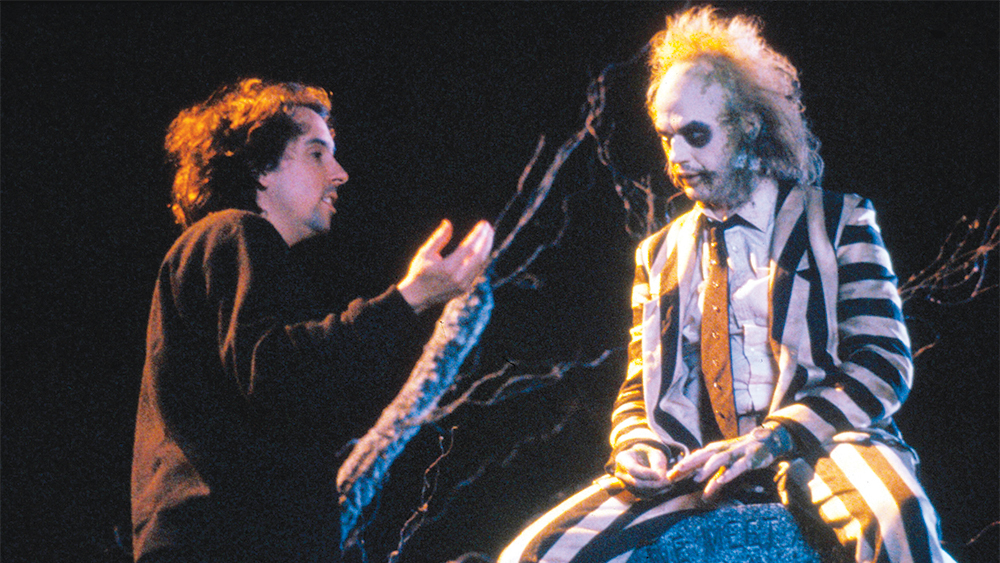
    Say “Beetlejuice” three times and, whoosh! 30 years go by.

    Released on March 30, 1988, “Beetlejuice” gave Michael Keaton and Winona Ryder career-defining roles, made Tim Burton an A-list director (and enabled him to make “Batman” with Keaton), spawned a popular animated series, and made viewers laugh so hard that they’re still bugging Keaton to make a sequel. (Fingers crossed.)

    Still, as often as you’ve re-watched the horror comedy over the past three decades, there’s still plenty you may not know about “Beetlejuice,” including who almost starred in it, how much darker it was supposed to be, which on-set romance blossomed into a marriage, and which titles were (thankfully) rejected. Put on some Harry Belafonte music and read on.
    1. “Beetlejuice” started out as a spec script by Michael McDowell, with revisions by Larry Wilson. Wilson showed it to an executive at Universal, who thought the script was too weird and awful and told Wilson he was committing career suicide by showing it around as a calling card. Nonetheless, McDowell and Wilson quickly sold the screenplay to producer David Geffen.

    2. Burton was looking for a follow-up to his debut film, the hit “Pee-wee’s Big Adventure.” He didn’t like any of the wacky-comedy scripts he was getting (one became Bobcat Goldthwait‘s talking-horse farce “Hot to Trot“). But then Geffen gave him “Beetlejuice.” As it turned out, Burton and McDowell had already worked together on an episode of “Alfred Hitchcock Presents” that McDowell wrote and Burton directed.
    3. The early drafts of the screenplay were much darker, with more gore and violence, as well as more ethnic stereotyping in the character of Beetlejuice. The sequence of the group possession at the dinner party involved a vine-patterned rug coming to life to ensnare the guests, rather than the revised scene of the group being compelled to dance to calypso music. Writer Warren Skaaren was hired to revise the screenplay further.

    4. Burton’s initial idea for the title role was to cast Sammy Davis Jr. It was Geffen who suggested Michael Keaton.
    5. Casting Winona Ryder as Lydia was much easier; Burton picked her because he’d liked her performance in high school drama “Lucas.”

    6. Burton got turned down by a number of actresses before finally settling on Winona Ryder for the role of Lydia Deetz. Previous candidates included Sarah Jessica Parker, Brooke Shields, Molly Ringwald and Diane Lane.
    7. Anjelica Huston nearly played the part of Delia Deetz. It was only after Huston fell ill that Catherine O’Hara was cast as her replacement, and only after O’Hara initially declined the offer.

    8. The film’s outdoor scenes were shot in East Corinth, Vermont. Some of the sets had to be built from scratch, including the Maitlands’ house and the covered bridge where they have their fatal accident. Interiors were largely shot on a Hollywood soundstage.
    9. The movie’s budget was a modest $15 million, including just $1 million for special effects. So most of the effects shots had to be done in camera, or with handmade stop-motion animated puppets that animator Burton added in post-production. Burton felt that the low-budget, hand-crafted effects created a surreal, shabby vibe that suited the story.

    10. The production designer on the film was Bo Welch, who had designed sets on just one other film before (another horror comedy, “The Lost Boys“). Toward the end of the shoot, Burton encouraged Welch to ask out co-star Catherine O’Hara. He did, and the two eventually married.
    11. Welch’s inspiration for the vast bureaucratic limbo that is the movie’s afterlife was the interior of the Johnson Wax building in Oklahoma, designed by Frank Lloyd Wright. The actual set was fairly small, no more than 75 feet wide, but was made to look bigger via matte paintings of columns stretching into the distance.

    12. Warner Bros. wasn’t fond of the title “Beetlejuice” (due to marketing reasons) and suggested the bland “House Ghosts” instead. Burton jokingly suggested “Scared Sheetless,” only to learn to his horror that Warners kinda liked it and was seriously considering using it.13. Late actor Glenn Shadix, who played Otho in the film, was so fond of the song “Day-O” that it was played during his funeral in 2010.

    14. While “Beetlejuice” is notable for its use of catchy Harry Belafonte tunes like “Day-O,” originally Burton planned on using an R&B-focused soundtrack for the film.
    15. “Beetlejuice” earned $74 million at the domestic box office. It was the tenth biggest hit of 1988.

    16. The hair and make-up that transformed Keaton into a rotting ghoul won an Oscar.
    No Merchandising. Editorial Use Only. No Book Cover Usage.
Mandatory Credit: Photo by Moviestore/REX/Shutterstock (1547787a)
Beetlejuice (On Set)
Film and Television

17. For decades, fans have asked Keaton, Ryder, and Burton whether there will ever be a sequel. One seemed to be brewing in recent years, with frequent Burton collaborator Seth Grahame-Smith writing the script, but Burton remained reluctant, and the project has apparently fizzled out. Nonetheless, there were plans to bring a “Beetlejuice” musical to Broadway by late 2018.

  • 15 Things You Never Knew About ‘The Big Lebowski’

    The Dude still abides. Twenty years after its release (on March 6, 1998), who’d have imagined that “The Big Lebowski” would have become such a, like, huge deal, man?

    The Coen brothers’ follow-up to “Fargo” was a box office disappointment compared to their previous hit. But over the years, it became a cult phenomenon, everyone’s favorite stoner movie, even spawning its own fan convention. “Lebowski” also provided Jeff Bridges with the defining role of his acclaimed and varied career, gave similarly unforgettable roles to John Goodman, Julianne Moore, and John Turturro, and proved the coolest project Tara Reid has ever been associated with that didn’t involve flying sharks.

    Still, as many times as you’ve watched it (assuming you ever watched it straight), there’s still much you may not know about it, from the film’s real-life inspirations to why everyone spends so much time bowling. Pour yourself a White Russian and read on.

    1. Most fans know that Bridges’ Jeff “the Dude” Lebowski was inspired by real-life Coen pal Jeff Dowd, a White Russian-drinking movie promoter and veteran activist who really was one of the Seattle Seven. But another inspiration was Peter Exline, a film producer and Vietnam Vet who supplied the catchphrase about the grubby rug that “really tied the room together” and an anecdote about a teen carjacker who made the mistake of leaving his homework in the car. Yet another inspiration was famed screenwriter John Milius (“Apocalypse Now“), whose outsize personality, beard, spectacles, and love of weaponry were apparent models for Goodman’s Walter Sobchak. Milius, in turn, introduced the brothers to Jim Ganzer, subject of Milius’s film “Big Wednesday,” a Malibu surfer who also called himself The Dude.

    2. In plot and tone, “Big Lebowski” owes a major debt to movies adapted from Raymond Chandler’s Los Angeles-set mysteries, specifically “The Big Sleep” (Moore’s heiress Maude Lebowski is partly an homage to Lauren Bacall‘s character) and “The Long Goodbye,” the woozy, shaggy-dog Chandler adaptation that Robert Altman made in 1973. Indeed, “Long Goodbye” feels like the spiritual godfather, via “Lebowski,” to such similar stoner-vibe sleuth movies as “Kiss Kiss Bang Bang,” “Inherent Vice,” and “The Nice Guys.”

    3. Exline belonged to a softball league, but the Coens gave their hero a passion for bowling instead. “Bowling seemed more compelling from a visual point of view,” Joel Coen said. The brothers also thought the sport’s retro design aspects suited the characters. Plus, Joel said, “It’s the only thing that calls itself a sport where you can smoke and drink beer.”

    4. There are a number of in-jokey references to earlier Coen films you may have missed. The ransom note is on the stationery of the Hotel Earl, the fictional inn where most of “Barton Fink” took place. When the private eye played by Jon Polito praises the Dude for playing both sides and being in bed with everyone, the remark (as well as Polito’s casting) is a callback to “Miller’s Crossing.” And Peter Stormare plays a would-be kidnapper again, just as in “Fargo,” only this time, he finally gets to eat his pancakes.

    5. Bridges met Dowd and learned to ape his mannerisms. Much of the Dude’s sparse, shabby wardrobe came from Bridges’ own closet. The Coens recalled that he didn’t ask for much direction on how to play the stoner hero, but before each scene, he’d ask the brothers if the Dude had just smoked a joint on the way over, and if they said yes, he’d rub his eyes until they appeared bloodshot.

    6. Here’s Bridges’ Dude-like explanation of what the movie is about: “I think it’s a film about grace, how amazing it is that we’re all allowed to stay alive on this speck hurled out into space, being as screwed up as we all are.” As to whether the film has any moral resonance, he said, “It may not be apparent to most people at first. But working in it, kind of bathing in this thing, it rang for me. It’s not a real clear thing that you can say, ‘That’s what it means.’ It’s a little different.”

    7. Moore famously makes her entrance as the artistic Maude while suspended naked from the ceiling. “I had no idea what they were going to do,” she said of how the Coens directed that scene. “I assumed I was going to be upright. I didn’t know I was going to be like Superman. That was terrifying. And I was pregnant, and it was three in the morning, and I was 30 feet in the air, and they had to bring me up really fast.” She added, “It was really strange, but it was worth it in the end.”

    8. Why does the film have a cowboy narrator (Sam Elliott)? Elliott couldn’t say, and neither could the filmmakers. “Sam would actually ask us, ‘What am I doing in this movie?’” Ethan Coen recalled. “We didn’t know either.”

    9. When Walter destroys the sports car, he repeatedly bellows, “This is what happens when you f*** a stranger in the ass!” When “Lebowski” aired on Comedy Central, that line was rendered as “This is what happens when you find a stranger in the Alps!”

    10. Bunny’s (Tara Reid) license plate reads “LAPIN,” the French word for rabbit.

    11. Do you like the vintage ’60s-’70s soundtrack? Credit music supervisor T Bone Burnett. This was his first of several collaborations with the Coens, though when he found songs for their next movie, “O Brother, Where Art Thou?“, the resulting collection of old blues and roots-music tunes was a blockbuster soundtrack that sold 8 million copies and won a Grammy for Album of the Year.

    12. The hardest song to get was Townes Van Zandt’s cover of the Rolling Stones’ “Dead Flowers.” The rights belonged to former Stones manager Allen Klein, who wanted $150,000 for the use of the tune. The filmmakers played him a rough cut of the movie, but when he heard the Dude complain about how he hates “the f***in’ Eagles,” Klein stopped the screening and offered them the song for free. Later, Bridges recalled, he ran into Eagles singer Glenn Frey, who was not as delighted by that line. “I can’t remember what he said exactly,” Bridges said,” but my anus tightened a bit.”

    13. “Big Lebowski” cost a reported $15 million to make. It earned back just $17 million in North America but another $28 million overseas.

    14. Aside from the traveling Lebowski Fest, the fan convention that began in 2002, there’s also Dudeism, a religion that claims to have at least 220,000 Dudeist priests who follow the philosophy embodied by the movie’s bathrobe-clad hero. There’s also Abide Yoga, a yoga studio in Cleveland run by Hope Hood (herself a Dudeist priest), with decor inspired by the movie. “If you want to show up in your robe, that’s cool,” she says of her studio’s dress code. “But it’s not required.”

    15. Even the forthcoming “Star Wars” prequel “Solo” cites “Lebowski” as an influence. Its writers recently told Entertainment Weekly that they envision their young Han Solo as an unlikely sleuth caught up in a tricky space-noir plot, with Chewbacca as his shaggy, hot-tempered Walter. “[‘Solo’] has that flavor of a crime world that has weirdness and surprise and people stumbling into things,” co-screenwriter Jon Kasdan says, “and other people very intentionally getting into [trouble]” Can’t wait.

  • Here’s Why ‘Black Panther’ Can’t Be Stopped at the Box Office

    Thanks to “Black Panther,” Disney accountants are facing a new challenge — not that they’re complaining.

    Not only to they have to count the rapidly rising stacks of cash from the box office, but they also have to count the ways the new superhero smash is approaching several box office records.

    For instance, with the Wakanda saga’s estimated $108 million take this weekend, it’s become the second fastest movie ever to reach $400 million in domestic sales (it took just 10 days, tied with “Jurassic World,” and second only to the eight days it took “Star Wars: The Force Awakens“). It’s also the second most lucrative second weekend of any movie ever (again, “Force Awakens,” which earned $149 million its second weekend, is first). And it’s one of just four films to ever to earn $100 million or more on its second weekend. (The other two are “Jurassic World” and “The Avengers.”)

    Already, “Black Panther” is the fifth-highest grossing movie in the Marvel Cinematic Universe, and within a day or so, it’ll overtake “Captain America: Civil War” and “Iron Man 3” to claim third place. It’s the fastest Marvel film to reach $400 million, doing so four days quicker than “The Avengers.” Oh, and the film has already earned $300 million overseas, and it’s not even playing in such major markets as China and Japan yet.

    While last week’s column explored why “Black Panther” was so big so fast out of the gate, its second-weekend success comes from some additional factors. Such as:

    1. Repeat Viewings
    The desire to see “Black Panther” over and over has been strong, helping to keep the movie a top seller on Fandango (yes, people are still buying tickets way in advance, even during the week). This helped sales stay strong even on weekdays. Most distributors are thrilled if a movie earns $20 million or more during its first three-day weekend; “Black Panther” earned that much on a Tuesday.

    2. Mass Audience Appeal
    Before “Black Panther” debuted, some pundits wondered if moviegoers beyond African-Americans would go see it. They need not have worried.

    According to tracking service PostTrak, the audience make-up this weekend was 37 percent white, 33 percent black, 18 percent Hispanic, and 7 percent Asian. Love for the Marvel Cinematic Universe is, well, universal, and “Black Panther” is no exception.

    3. Social Media
    People can’t stop talking about “Black Panther,” especially to their online friends, giving Disney the type of promotion you can’t buy. Although Twitter activity has cooled since the movie’s premiere last weekend, according to social media tracking firm RelishMix, tweets with “Black Panther” hashtags are still averaging about 352,000 a day. Most movies would love to see daily Twitter activity in the 100,000 range, so the “Black Panther” online buzz continues to be exceptionally strong.

    4. The Kids Love It
    Last week, Disney Executive Vice President for Theatrical Distribution Dave Hollis acknowledged to Moviefone that the one demographic area where the PG-13-rated “Black Panther” could have done better was among younger viewers. But he also predicted that those viewers would come in time. This weekend, his prediction started to come true.

    According to PostTrak, 47 percent of this weekend’s audience was under 25, with guys under 25 making up the largest quadrant at 29 percent.

    5. No Competition
    There were three new wide releases this weekend, two of them well-reviewed, but none offered any real threat to Wakandan supremacy.

    Going into the weekend, new Jason Bateman dark comedy “Game Night” had several strikes against it. R-rated comedies haven’t done that well over the last year or so, Bateman was the only reliable comedy box office draw in the cast, and the film’s marketing campaign was weird (the poster showed no faces, just board-game tokens, one with a burglar’s ski mask and one toppled over in a pool of blood). Still, it did pretty well for a grown-up comedy, premiering in second place with an estimated $16.6 million for the weekend — or a little more than “Black Panther” earned on a modest Wednesday.

    Annihilation” also had several strikes against it. It’s a cerebral, philosophical sci-fi drama, and while critics adored it (with an 87 percent fresh rating at Rotten Tomatoes), moviegoers seemed to find it slow and confusing (they gave it a poor C grade at CinemaScore). Its cast, led by Natalie Portman and Jennifer Jason Leigh, was light on box office drawing power.

    The biggest strike, though, may have been distributor Paramount, in the midst of a cold streak that’s lasted more than a year. The studio tried to hedge its bets, by marketing the film as more of a female-driven action thriller than it is, and by selling off the foreign rights to Netflix — meaning that the movie will stream overseas just weeks after playing in theaters here. Nonetheless, “Annihilation” opened in fourth place, with an estimated $11.0 million. It actually earned more per screen than “Game Night” ($5,467 to $4,759), but “Game Night” was playing on nearly 1,500 more screens.

    “Annihilation” could have done better, then, if Paramount had booked it into more theaters, but with “Black Panther,” “Game Night,” “Peter Rabbit,” and “Fifty Shades Freed” all playing on more than 3,000 screens each, there wasn’t that much available.

    The final new wide release was young-adult fantasy-romance “Every Day.” It had weak reviews (50 percent fresh at RT), no recognizable stars, and a modest release pattern (1,667 screens) from the long-dormant independent distributor Orion. Also, the low-budget ($5 million) film spent only an additional $8 to $10 million on marketing. Still, the movie debuted in ninth place with an estimated $3.1 million, which may be enough, over the next few weeks, to put “Every Day” in the black.

    All told, then, “Black Panther” has been a phenomenon, one that profited from the movie’s own strengths, as well as good luck and timing. We’ll not see its like again anytime soon — or at least not until Marvel’s “Avengers: Infinity War” opens in May.

  • Oscar Race 2018: Too Close to Call

    One reason this year’s Oscar race is so exciting? Everything we think we know about it may be wrong.

    For months, the race has seemed to come down to a slugfest between “The Shape of Water” and “Three Billboards Outside Ebbing, Missouri.” Indeed, it’s still very likely that Guillermo del Toro will win a directing Oscar for the former, and that Frances McDormand and Sam Rockwell will win Best Actress and Best Supporting Actor for the latter.

    But Best Picture? What if we’re wrong, and neither of them has the shot we think it does?

    Sure, “Shape” has won a number of Best Picture prizes from critics’ groups, and del Toro has won nearly every directing prize available. It also has more nominations than any other movie this year (13 of them), enough to suggest it has support throughout most branches of the Academy.

    Similarly, “Three Billboards” has won the top prize at the Golden Globes, the Screen Actors Guild Awards (SAGs), and just this past weekend, at the British Academy Awards (BAFTAs). The BAFTAs have a modest track record of predicting who will win on this side of the Atlantic, and many of their other winners this year — del Toro, McDormand, Rockwell, Gary Oldman (Best Actor for “Darkest Hour“), and Allison Janney (Best Supporting Actress for “I, Tonya“) — are expected to repeat at our Academy Awards on March 4.

    But you have to take into account some other factors, including the guild awards and the Academy’s tricky voting process. After all, the Academy voters will be thinking of these things when they fill out their ballots this week.

    Aside from the SAGs, the guild awards aren’t televised, but they still matter because they represent the preferences of the many professions that make up the Academy. They also each anticipate a particular award handed out at the Oscars — the so-called “craft” awards that fill up half your Oscar-pool ballot, like cinematography, production design, make-up, and editing.

    In recent weeks, several of the craft guilds have handed out their own prizes. The American Cinema Editors gave their top award to “Dunkirk.” The Motion Picture Sound Editors honored “Blade Runner 2049.” That film also won with the American Society of Cinematographers. (Cross your fingers, Roger Deakins fans; the cinematographer has gone 0 for 13 at the Oscars, but his “Blade Runner” work may mean that the 14th time’s the charm.) The Visual Effects Society recognized “War for the Planet of the Apes.” And the Art Directors Guild honored “Shape of Water.” Still to come are awards from the costume designers, hair and make-up artists, and sound mixers, all of which will be handed out during the final Oscar balloting period that runs from February 20 through the 27th.

    The fact that these awards spread the wealth all over the place makes it that much harder to guess how they’ll vote for Best Picture, especially since “Blade Runner” and “Apes” aren’t in the running for the top prize. But you can’t even rely on the major guild awards, like the SAGs or the Directors Guild (which honored del Toro) as reliable predictors anymore.

    There used to be a number of hard and fast rules about which precursor awards a movie needed to win or at least be nominated for in order to land a Best Picture Oscar. A movie that didn’t get a SAG Best Ensemble nomination historically has had no chance to win Best Picture. If the Academy voters or the Golden Globes didn’t nominate the movie for Best Director, it wouldn’t win Best Picture either. And if Oscar voters didn’t nominate a movie for writing or acting, or failed to nominate it for any of the craft awards, it had no shot at the top prize either.

    But this year, at least one of those rules will have to go out the window. There’s not one among the nine Best Picture nominees whose victory won’t break at least one of these rules. Six of the nine — “Shape of Water,” “Dunkirk,” “Call Me by Your Name,” “The Post,” “Darkest Hour,” and “Phantom Thread” — didn’t get that SAG nomination. The Globes didn’t nominate the directors of “Get Out,” “Lady Bird,” or “Phantom Thread,” while the Academy didn’t nominate the directors of “Three Billboards,” “Call Me by Your Name,” or “The Post.” Neither group nominated the director of “Darkest Hour.” “Dunkirk” has no Oscar nominations for writing or acting. “Lady Bird,” Get Out,” and “The Post” have no craft nominations.

    Why are these stats important? Because the whole Academy votes on Best Picture, so a film needs the support of the editors, set designers, and hairstylists as well as the producers, directors, writers, and stars whose names appear during a movie’s opening credits.

    Best Picture voting uses a complicated system of proportional representation, in which voters mark not just one choice but several ranked choices. It’s a system, then, that tends to reject the most polarizing, love-it-or-hate-it movies. Rather, the process favors consensus movies — maybe not the ones with the most intense fanbases, but the ones that just enough voters can get behind, the ones that may not get the most first-place votes on Academy members’ ballots but at least are among the top vote-getters on the most members’ lists.

    Seen that way, you have to wonder if the race is really between “Shape of Water” and “Three Billboards” after all. Del Toro’s human-sea monster love story is lyrical and poignant, but is it just too weird a fantasy tale to top all the ballots it needs to win? The lack of a SAG nomination suggests that the support for the movie among actors, the Academy’s biggest branch, is weak. Similarly, “Three Billboards” may feel like a timely expression of rage, but many voters may think its racial politics are problematic, it’s ending is unsatisfying, and it’s not as well directed as at least five other nominees.

    So that leaves an opening for one of the other nominees. Let’s assume that “Call Me by Your Name” and “Phantom Thread” are too exotic, and that “Darkest Hour” doesn’t have enough going for it besides Gary Oldman’s performance. That leaves “The Post,” “Lady Bird,” “Get Out,” and “Dunkirk.” Might one of these have enough broad-based Academy support to overcome the fact that it hasn’t been top-tier enough to earn the precursor awards and nominations that have made “Shape of Water” and “Three Billboards” into leading contenders?

    With “The Post” — obviously, the Academy loves Meryl Streep and Steven Spielberg (though not enough to nominate him for directing this time), and it loves intrepid-journalists-behind-real-life-exposé dramas, like recent Best Picture winner “Spotlight.” But the movie’s near shut-out in precursor awards, not to mention the fact that the Academy nominated it for only two prizes, suggests that the broad-based support for “The Post” is not there.

    “Lady Bird” has been a critics’ favorite for months, and the Academy has a chance to make history by making Greta Gerwig only the second woman ever to win a Best Director Oscar. But its coming-of-age story may feel too low-stakes, and the lack of craft nominations suggests that rank-and-file Academy members didn’t love the film.

    “Get Out” also has a chance to make history, with Jordan Peele potentially becoming the first African-American to earn a Best Director Oscar. His nominated screenplay certainly couldn’t have been more topical or timely. Then again, “Get Out” has the same apparent lack of craft support that “Lady Bird” does, and its horror elements may turn off some Academy members.

    So, “Dunkirk”? It does tell an old-fashioned story of World War II heroism, but its technique is certainly modern. It’s lack of acting and writing nominations may not matter, since individual performance and dialogue were sorta beside the point. The Academy’s craft branches loved it, and Christopher Nolan may finally get his due as a director after numerous Oscar snubs.

    Most of all, “Dunkirk” doesn’t step on anyone’s toes, politically speaking. In an Academy seeking consensus, it may be the least alienating choice. It may not be the movie that Hollywood is most proud of this year, but it may also be the movie that Hollywood is least embarrassed by.

  • 16 Things You Never Knew About ‘Old School’

    “Earmuffs!” Cover your ears if you’re too young, but if you’re of a certain age, you’ll be astonished to hear that it’s been 15 years since “Old School” enrolled at the multiplex.

    Released on February 21, 2003, the modern-day answer to “Animal House” made Will Ferrell into a bankable movie star, put future “Hangover” director Todd Phillips on the raunchy-comedy map, helped coin the phrase “Frat Pack” to describe the loose brotherhood of movie comedy stars that included Ferrell and Vince Vaughn, and introduced a variety of bizarre hazing rituals to American college fraternity life.

    Like midterm exams, “Old School” keeps reappearing, at least in rotation on cable. Still, as often as you’ve watched it, there’s much you may not know about the college comedy. So read on and study carefully; there may be a pop quiz later.
    1. “Old School” was actually Phillips’ third movie about hard-partying college students. The first was his 1997 documentary “Frat House.” Phillips took that movie to the Sundance Film Festival, where he met fabled comedy filmmaker and “Animal House” producer Ivan Reitman. Reitman turned Phillips toward comedy and produced his next two films, campus farce “Road Trip” (2000) and “Old School.”

    2. The idea for a movie about three early-middle-aged men trying to return to their irresponsible fraternity days came from Phillips’s friend, ad man Court Crandall. He earned a story credit on the film, though the final screenplay was written by Phillips and his writing partner, Scot Armstrong.
    3. Armstrong and Phillips wrote the part of Bernard with Vaughn in mind, having been impressed by his comic performances in movies like “Swingers” and “Made.” But Vaughn had done such a good job of establishing himself as a serious dramatic actor that the studio didn’t want him for “Old School.” “They didn’t think I could do comedy!” Vaughn marveled in 2015. “Todd really had to push for me; I think he even told them to watch me on Letterman, to see that I could be funny.”

    4. That’s Phillips, by the way, playing the guy who knocks on Luke Wilson‘s door early on and says, “I’m here for the gangbang.”
    5. Patrick Cranshaw had been acting in films for 50 years before “Old School,” but it was his role as lube-wrestling frat brother Blue that finally made him famous at age 84. He died three years later, but not before hearing countless fans greet him with Ferrell’s line, “You’re my boy, Blue!”

    6. The three leads (Wilson, Vaughn, and Ferrell) teased each other on set. Wilson recalled Ferrell telling him he was sorry he hadn’t yet seen Wilson’s performance in “Legally Bland.” Wilson shot back with a warning that “you might just want to keep one foot back in TV just in case this whole movie thing falls through.”
    7. The house that Wilson’s friends transform into the home of their new fraternity is a real residential house located on Pasadena’s Bushnell Avenue, on a two-block stretch that has been used for locations in several Michael J. Fox movies. The same house appeared in “Back to the Future Part II” (Biff steals a kid’s ball and tosses it onto the house’s balcony), while down the street are George McFly’s 1955 home from the first “Back to the Future” and the house where the 1955 Lorraine lived in that movie — a house that was also where Fox’s character lived in “Teen Wolf.”

    8. The college scenes were largely shot in Los Angeles at UCLA and USC. There’s one helicopter shot of the campus, however, that may look familiar. It’s actually flyover footage of Harvard University, which Phillips recycled from “Road Trip,” though no ground scenes in either film were shot at the Cambridge, Massachusetts campus.
    9. Who’s the wedding singer who inserts subliminal profanities into the lyrics of Bonnie Tyler’s “Total Eclipse of the Heart”? It’s Dan Finnerty of The Dan Band, an act that became the toast of Hollywood nightclubs by performing a repertoire of songs made popular by female singers. A comic who’s married to Kathy Najimy, Finnerty would perform similarly inappropriate songs in Phillips’s “Starsky & Hutch” and “The Hangover.”

    10. Also, the church where Ferrell gets married showed up again two years later in Vaughn and Owen Wilson‘s “Wedding Crashers.”
    11. The last day of the shoot was devoted to the Mitch-a-Palooza party, the one that starts with a surprise performance by Snoop Dogg and ends with Ferrell streaking through town. Ferrell had already shot the streaking sequence — and yes, he ran naked for real, apparently horrifying local lookie-loos who had no idea they were going to be treated to full frontal Ferrell — but he needed some liquid courage to drop trou in front of the rap icon. “To actually be in front of Snoop Dogg that close naked,” Ferrell said, “that was more intimidating than anything.”

    12. Snoop Dogg so wanted to play Huggy Bear in Phillips’s upcoming adaptation of “Starsky & Hutch,” that the director was able to persuade the rapper to cameo as himself in “Old School” as a condition for landing the role he coveted in Phillips’ next movie.
    13. After his scene was complete, Snoop summoned Vaughn to party in his trailer. Wilson was miffed to find out about the revelry later; apparently, no one had invited him.

    14. The budget for “Old School” was reportedly $24 million. It made back $76 million in North America and another $11 million abroad.
    15. “Old School” not only made Ferrell a breakout star, but it also led to the coining of the term “The Frat Pack” to describe the group of comic actors and frequent collaborators that included Ferrell, Vaughn, Luke and Owen Wilson, Ben Stiller, Jack Black, and others.

    16. In 2006, Armstrong wrote a script for a sequel, “Old School Dos,” that would have sent the trio of aging frat boys on spring break. Ferrell and Vaughn nixed the idea as being too much of a retread. Wilson, however, was game, though he said he understood Vaughn and Ferrell’s position. “As funny as those guys are, they are pretty damn thoughtful and would hate to squander the goodwill of the first one with one where it just seemed like the studio was just trying to cash in.”

    Indeed, in 2016, Wilson was still game, saying, “I, of course, would do it at the drop of a hat.”

  • 9 Reasons Why ‘Black Panther’ Changed Everything at the Box Office

    Everyone knew “Black Panther” would be huge, but record-breaking-like-a-summer-movie huge?

    Just a week or so ago, experts had it beating the February opening-weekend record of $132 million that “Deadpool” set two years ago. But the new Marvel movie’s numbers left that R-rated film’s record in the dust.

    With an estimated three-day debut of at least $195 million, “Black Panther” is not only the biggest February opening of all time, but the fifth biggest opening weekend of all time. It’s the second biggest Marvel opening ever, behind only the $207 million of “The Avengers.” (It also beat “Avengers: Age of Ultron’s” three and four day record, which is scary-good.)

    Over the four-day President’s Weekend holiday, Disney is projecting that “Black Panther” will earn $218 million.

    Even Disney claims to be surprised by how big “Black Panther” is. “The volume of business is bigger than any of us could have imagined,” Disney Executive Vice President for Theatrical Distribution Dave Hollis tells Moviefone. “Maybe we shouldn’t be surprised by anything anymore,” he adds.

    Still, he says, “the fact that this stand-alone character story is rivaling the first ‘Avengers’ film is a staggering and unbelievably satisfying result.”

    There’s a lot of credit to go around for the movie’s success. Much of what “Black Panther” had going for it is obvious, but some is less so. Here are nine factors that made the Wakanda saga a winner.

    1. It’s Marvel
    The Marvel brand is now as reliable to audiences as Disney’s other major brands, Pixar and “Star Wars.” This is the 18th Marvel Cinematic Universe movie and the 18th to open at No. 1. (And the ninth to open above $100 million.) “Black Panther” also earned the rare A+ CinemaScore, which Marvel got once before with 2012’s “The Avengers.”

    Of course, the synergy among the far-flung strands of the MCU helps, too. General audiences may not have known who T’Challa was a couple years ago, but introducing him in “Captain America: Civil War” (2016) was effectively the early launch of the marketing campaign for his stand-alone film. (Though Hollis says that the MCU movies started planting Easter eggs about Wakanda even before that, as far back as 2010’s “Iron Man 2.”) Speaking of that campaign…

    2. Disney’s Marketing Muscle
    You can’t accuse the studio of skimping on promotion, that’s for sure.

    The widely reported figures have Disney spending nearly $200 million to make “Black Panther” and another $150 million marketing it. Those are typical figures for an MCU installment. Even so, the Wakanda tale reportedly has a bigger line of merchandise and toys than other Marvel films, and it’s certainly been unavoidable in advertisements and promotional partnerships with various retailers. Then again, Disney also benefitted from a ton of free promotion from entertainment and business journalists who wrote about what a game-changer the film would be.

    3. Timing
    It’s hard to overstate how important it was for African-Americans to have the opportunity to see a big-budget studio movie with a predominantly black cast, a black director and screenwriters, and most of all, a black superhero whose noble and inspirational qualities go well beyond his physical powers.

    Not only are African-Americans an audience hungry to see heroic, complex, fully human representations of themselves on screen, but they’re also avid moviegoers who tend to make up a disproportionate number of the ticket-buyers at the multiplex. A pre-release poll suggested that three out of every four African-Americans wanted to see “Black Panther.” Various tracking services have reported that they made up about 40 percent of the “Black Panther” audience.

    Hollis says Disney now makes a priority of inclusion and representation, not just to be politically correct, but because it makes for better movies and bigger business.

    “Audiences deserve to see themselves on screen, not just because it’s the right thing to do, but because it makes for better, richer storytelling,” he says. He points to such recent hits as the female-fronted “Star Wars” movies, “Moana,” and “Coco” as signs that this strategy is paying off both critically and commercially.

    4. Social Media
    For at least a year, “Black Panther” has been a huge topic on Twitter. Such hashtags as #WhatBlackPantherMeansToMe have made “Black Panther” the most tweeted-about film of 2018.

    And according to social media tracker RelishMix, fans tweeting about the film as the leave the theater are nearly three times as active as “Star Wars” fans leaving “The Last Jedi” were. Also, the film is Marvel Studios’ best reviewed effort — at 97 percent “Fresh” on RT.

    There was some organized anti-“Black Panther” trolling online, from bombing the film with negative reviews on Rotten Tomatoes in order to depress the movie’s audience score, to trying to discourage attendance by posting faked photos of supposed outbreaks of violence at theaters showing the movie. But those efforts appeared to have no effect on turnout. Facebook stepped in to shut down one troll group, and fans are apparently getting more sophisticated at recognizing such campaigns as astroturf.

    5. That Soundtrack Is Great
    Honestly, when was the last time you even cared about a movie’s accompanying original soundtrack album? (Well, maybe Marvel’s two “Guardians of the Galaxy” films.)

    Kendrick Lamar’s “Black Panther” album, announced less than two months ago, has created its own unique advance buzz for the film. It has leveraged the rapper’s own fanbase and social media following (as well as those of guest performers The Weeknd and SZA) to help promote “Black Panther.”

    6. Critics and Fans Love the Movie
    For all the talk about T’Challa as a role model, especially for kids of color, “Black Panther” played to a heavily adult audience. Disney reports that 73 percent of the audience was adults seeing the movie without kids in tow, and that 61 percent of the audience was over 25. That’s not atypical for a Marvel movie, and Hollis says he believes more kids will buy tickets in the days to come, especially with Monday being a school holiday.

    To the extent that the older audience is one that still relies on critics, it certainly helped that reviewers gave the movie an aggregate 97 percent at Rotten Tomatoes. Paying customers liked the movie as much as critics did, judging by the aforementioned A+ CinemaScore.

    7. Women Like the Movie, Too
    CinemaScore also found an even split between men and women among ticket-buyers; Disney tracking found the audience skewed just a little more male, with 55 percent men and 45 percent women. Still, that near-even ratio suggests that “Black Panther” has even more appeal to female audiences than many Marvel movies.

    The reason, naturally, is that T’Challa is surrounded by strong female characters, literally so in the case of The Dora Milaje, a squad of very capable female warriors/bodyguards. In terms of putting both black and female characters at the center of the film, Hollis calls the movie a “twofer” of inclusiveness.

    8. Weak Competition
    Not that anything was going to come close to “Black Panther,” but the rest of the multiplex was practically filled with crickets and tumbleweeds.

    Peter Rabbit” held on to second place in its second weekend, but that meant a take of just an estimated $17.3 million. Animated comedy “Early Man” got great reviews, but it wasn’t able to capitalize on the family audience that was “Black Panther’s” only real vulnerability. According to estimates, it premiered in seventh place with a weak $3.2 million, about a third of its pre-weekend predicted take.

    No doubt “Early Man” suffered from having too much other competition for the family market, including “Peter Rabbit” and the unstoppable “Jumanji: Welcome to the Jungle” (with an estimated $7.9 million, good for fourth place). And the other new wide release, “Samson,” tried to draw the churchgoing crowd, but the Biblical hero didn’t even put a dent in the comic-book hero. Opening in tenth place, “Samson” debuted a hair shy of $2 million, also less than half of what was predicted.

    “We picked a date intentionally that was less crowded,” Hollis says. Not only was there not much competition this weekend, but “Black Panther” will have the mainstream marketplace to itself for another three weeks, until the release of the next Disney epic from an African-American filmmaker: “A Wrinkle in Time,” which is tracking to open above $20 million.

    9. Shattering International Expectations
    Disney’s inclusiveness-and-representation strategy seems to be paying off beyond the United States. (As Hollis says, “We make movies for a global audience, from all walks of life.”)

    Opening in much of the rest of the world this weekend, “Black Panther” earned an estimated $169 million overseas. The film’s $361 million global weekend doesn’t even include such major markets as China, Japan, and Russia, where the movie has yet to open.

    It’s long been conventional wisdom in Hollywood that movies with black stars don’t do well abroad — at least not enough to please Hollywood accountants, who are used to blockbuster releases earning more than half of their global take outside the U.S. The international successes of such stars as Will Smith, Denzel Washington, and the diverse”Fast & Furious” franchise cast should have put that myth to bed long ago. If not, it should end with the near-even split between “Black Panther’s” domestic and international takes.

    As “Black Panther” hurtles toward a potential billion-dollar global take, that old way of thinking is one more glass ceiling that T’Challa will probably shatter.

  • Here’s How ‘Fifty Shades Freed’ Spanked Its Box Office Rivals

    Hey, moviegoers, do you want to see badass women in a realm of opulent wealth? Cartoonish fun suitable for kids? Manly heroism in a geopolitical context? Well, if you wanted those themes, then you had to settle for their treatment in this week’s meh new wide releases: “Fifty Shades Freed,” “Peter Rabbit,” and “The 15:17 to Paris.”

    Box office analysts are so ready to see “Black Panther” blow everything out of the water next weekend that they may not give enough credit to this weekend’s new releases, all of which did surprisingly very well by February standards. Indeed, if it weren’t for the looming Marvel blockbuster, pundits would be crowing about what a great weekend this was, with overall sales up 44 percent from a week ago. You can credit that to three new movies that, together on the marquee, seemed to offer something for everyone.

    Of the new films, “Fifty Shades” seems to have received the least credit from the experts.

    It opened with an estimated $38.8 million, about what was predicted. That’s a steep drop from the $85.2 million debut of “Fifty Shades of Grey” three Februaries ago, and a modest dip from the $46.6 million premiere of “Fifty Shades Darker” last February. You could blame waning interest in the franchise — or you could argue that the first movie’s gross was inflated by lookie-loos outside of the best-selling books’ voyeuristic fan base, and that only those core fans stuck around for the second and third films.

    It’s also the case this year that Valentine’s Day falls on a Wednesday, so there wasn’t that extra incentive to make a weekend date night out of an evening spent watching “Freed.”

    In any case, the “Fifty Shades” trilogy has never gotten much respect from the industry. Mostly because the movies aren’t good. Like, at all. But that didn’t stop the target demographic from seeing the third and final movie. According to tracking service PostTrak, “Freed” drew a crowd that was 81 percent women. And most of them, some 59 percent, were older women (that, is, older than 25). That’s the demographic that Hollywood understands and caters to the least. (To its credit, “Freed” studio Universal seems to appreciate women over 25, enough to generate such hits as “Bridesmaids,” “Trainwreck,” and “Girls Trip.”)
    “Freed” has had the biggest opening weekend of any movie so far this year. It’s in the top 20 of all February openings ever and the top 50 of all R-rated debuts in history. The series is popular not just throughout America (even in the supposedly more puritanical middle-American states) but around the globe. Worldwide, the three movies have earned $1.1 billion to date, an especially huge number considering they cost just $150 million total to make.

    Industry folk may scoff at the series for its poor reviews, lack of demographic range, or declining sales, but I bet Universal wishes E.L. James had written a fourth “Fifty Shades” book so that it could keep adding to a billion-dollar franchise that’s earned back more than seven times its modest cost.

    If “Freed” cornered the women’s market this weekend, then Sony’s “Peter Rabbit” did the same for kids, opening slightly above predictions with an estimated $25.0 million.
    Based loosely on the classic Beatrix Potter children’s tale, the live-action/animated hybrid had the advantages of brand recognition and star power, in the form of human karaoke machine James Corden as its lead and most tireless promoter. The reviews were just okay (58 percent at RT), but families were apparently ready for something new, even with Sony’s own “Jumanji: Welcome to the Jungle” still going strong and with “Paddington 2,” “Ferdinand,” and “Coco” still in theaters. A saturation marketing campaign, including bunny-themed events at malls and libraries, helped a lot.

    That left the Older Guy market, a niche that Clint Eastwood‘s “The 15:17 to Paris” seemed designed to fill. It underperformed a little, debuting in third place with an estimated $12.6 million.
    As we noted when “12 Strong” opened three weeks ago, the war-movie subgenre of War-on-Terror tales of real-life heroism has done well, particularly in the winter months. The all-time classic example, of course, is Eastwood’s own “American Sniper.” No other movie in the subgenre has come anywhere near that movie’s $350 million domestic take, but that hasn’t stopped Hollywood from trying.

    Indeed, “Paris” studio Warner Bros. tried just last month with “12 Strong,” which is still playing in 1,901 theaters and earned $2.7 million this weekend, good for 11th place. You’d think Warners wouldn’t want to cannibalize the success of the earlier film, which has earned about $42 million to date, but the temptation to counterprogram something macho against “Fifty Shades Freed” must have been too strong to resist.

    Nonetheless, “Paris” did only a third as well as “Freed.” A lot of that may have to do with the quality of the film. Eastwood cast the three real-life American heroes, who thwarted a terrorist attack during a 2015 train ride, as themselves. That novelty factor, however, wasn’t enough of a draw to overcome the movie’s reviews, which were poor (20 percent “Rotten” at RT).

    Critics felt that the amateur actors were, well, amateurish. And judging by the movie’s lackluster B- grade at CinemaScore, audiences didn’t warm to “Paris” either, perhaps feeling that the movie had too much backstory and not enough action. Critics usually like Eastwood’s movies, and his fan base is an older one that still reads reviews, so they had to notice that critics felt he’d stumbled this time.

    At least Eastwood keeps his budgets low (“Paris” cost a reported $30 million), so there’s still a chance the film will make a profit.

    The good news continued further down the chart, as “Jumanji” and “The Greatest Showman” proved they both still have legs as long as “Showman” star Hugh Jackman’s. After spending several weeks, off and on, in first place, “Jumanji” may finally be out of the top spot for good. Still, it slipped just ten percent from last week’s business, earning an estimated $9.8 million and coming in fourth.

    With $365.7 million earned over eight weeks, it’s within $8 million of overtaking “Spider-Man 2” as the second biggest domestic grosser in Sony’s history. (The biggest is 2002’s “Spider-Man,” with $403.7 million, a number that’s not out of reach for “Jumanji.”)

    “Showman,” in fifth this week with an estimated $6.4 million, also held on to most of last weekend’s business, with a drop of just 17 percent. It’s earned $146.5 million to date, which makes it the sixth biggest musical of all time. Justin Paul and Benj Pasek, who composed the score, are within $5 million of overtaking their hit from last year, “La La Land,” to become the fourth most lucrative musical.

    All told, this weekend’s movies brought in about $137 million, thanks to a slate of films that seemed to leave no moviegoer ignored.

    Try to remember that next week, even though “Black Panther” is expected to open with a figure greater than this weekend’s entire take.

  • Oscar Race 2018: How the DGA Wins Impact Things

    Here’s how to figure out who’s going to win the Academy Awards on March 4: Ask yourself who Oscar most wants to be seen with.

    Yes, think of it like online dating. That was the metaphor that Directors Guild Awards host Judd Apatow used on Saturday night, joking that Guillermo del Toro‘s DGA portrait photo looked like a profile pic from eHarmony. Del Toro didn’t get the joke at first (though later, when the Mexican director learned what eHarmony is, he chuckled), but he still got the last laugh, winning the DGA’s top prize for directing “The Shape of Water.” That award not only makes him the top contender for Best Director at the Oscars, but it also puts “Shape” at the front of the pack for Best Picture.

    Right now, in the long limbo (nearly six weeks) between the January 23 nominations announcement and the actual Academy Awards ceremony, Oscar is trying out the nominees to see how well they match up with the self-image the Academy wants to present to the world. For the nominees, it’s a seemingly endless cycle of awards ceremonies, screenings, parties, and press opportunities. And all that time, they’re campaigning to win Academy voters’ hearts, whether they know it or not.

    As an organization that’s been through a lot of humiliation over the past few years, whether for the demographics of its nomination slate or for the colossal mix-up of last year’s Best Picture envelopes, the Academy is really looking for one thing from potential winners. All it asks of them is: Don’t embarrass us.

    That’s trickier than it sounds. Which would be less embarrassing for the Academy to honor: del Toro’s delirious interspecies romantic fantasy, or its chief rival, rural ragefest “Three Billboards Outside Ebbing, Missouri“? Would it be awkward to honor “Get Out,” a politically on-point movie that belongs to a disreputable genre (horror)? Or “Lady Bird,” a well-observed character study that doesn’t seem to have a grand statement to make? Or “The Post” or “Dunkirk,” both well-made historical dramas that might seem a bit old-fashioned?

    So far, the Academy rank and file seem to prefer “Shape.” It’s already won prizes from three of the major Hollywood guilds, some members of which also belong to the various professional branches of the Academy. Besides the Directors Guild, “Shape” has also earned the top prizes from the Producers Guild (usually a very strong predictor of Best Picture) and the Art Directors Guild (which gives the film a good chance for a Production Design Oscar). “Three Billboards” has won two guild prizes, from the Casting Society of America (alas, there’s not an equivalent Oscar category) and the Screen Actors Guild (a very important prize, for which “Shape” was not even nominated; no movie since “Braveheart” 22 years ago has won Best Picture without a SAG ensemble nomination).

    Last week also saw “Dunkirk” win the ACE Eddie award, given out by film editors, usually a key indicator of Academy support. (In the last 37 years, only one film — “Birdman” — has won Best Picture without at least being nominated for its editing.) And “Coco” won the Annie, given out by animators, which makes it the Animated Feature to beat at the Oscars.

    These are all helpful for handicapping the Academy Awards below the top categories. Any of these winners would be a credit to Academy voters’ taste. But merit alone isn’t enough. The Academy also wants to be sure that, when the winners get their moment at the podium before hundreds of millions of viewers, they’re someone the Academy won’t be ashamed to be associated with.

    At the very least, it’s up to the nominees to avoid embarrassing the Academy by behaving badly. The infamous counterexample is Russell Crowe, whose turn in 2001’s “A Beautiful Mind” seemed destined to win him a Best Actor trophy. But then he was caught attacking a TV director at the BAFTAs (the British Academy Awards), whom he blamed for cutting short his acceptance speech. Did the Oscars want to be associated with such boorishness? Apparently not, since Denzel Washington took home the statuette instead for “Training Day.”

    Cautionary tales like that are why the annual nominees’ luncheon, a seemingly inconsequential event, is actually the nominees’ best opportunity to campaign before Academy voters and their own peers. Indeed, this used to be a casual, informal event. No more. Now, there are scads of reporters there, a red carpet, and even a live stream on Facebook, so that we could all watch the likes of Willem Dafoe, Laura Dern, and Kobe Bryant (nominated as producer and narrator of animated short “Dear Basketball“) trading words of mutual admiration in between forkfuls of Chilean sea bass.

    Held Monday, this year’s luncheon was still, by all accounts, the same democratic affair it has always been. Some 175 of the 205 nominees came to the event at the Beverly Hilton, where many of them attended the Golden Globes less than a month ago. Live action short directors and sound designers got to dine alongside the likes of Steven Spielberg and Meryl Streep. Everyone was reportedly gracious and supportive of each other, and they were all good sports for standing and posing for long minutes to pose for the annual sprawling “class photo” of the nominees present. It seemed a pleasant and non-competitive event, but all the nominees there were still, in a way, campaigning. They were auditioning like actors proving they can be well-mannered, follow instructions, speak kindly of others, and offer a compelling personal narrative that will resonate with strangers.

    Not everyone showed up to campaign; Daniel Day-Lewis, who has no need to impress anyone after three wins, was absent. So was two-time winner Washington, who doesn’t have much of a chance this year anyway. (Gary Oldman is still the Best Actor front-runner.) Then again, Streep, who also doesn’t have a chance or a need to impress anyone, still came, while likely winner Frances McDormand did not. Does her no-show hurt her chances? At this point, probably not, but the “Three Billboards” star did miss an opportunity to make her case.

    The three oldest nominees also didn’t show. Then again, Christopher Plummer (at 88, the oldest acting nominee ever) and “Call Me by Your Name” screenwriter James Ivory (at 90, the oldest nominee in any Oscar category ever) have long since proven their worthiness to the Academy.

    Legendary French director Agnès Varda (nominated for documentary feature “Faces Places”) also didn’t come, but the 89-year-old’s co-director, visual artist JR, made up for her absence by bringing two life-size cardboard standee versions of Varda, placed at strategic points at the luncheon. Several of the nominees posed for pictures alongside one of the virtual Vardas. It was a clever stunt, one that will certainly make the voters remember Varda and her movie when they see it on the ballot for Best Documentary. It may not win her the prize, but everyone seemed to find Varda a delightful luncheon companion, and she didn’t even have to leave France.

    It fell to Dateline’ just did a four-part series on.”

    There will be other chances for nominees to impress the Academy voters, or at least not humiliate them, between now and the Oscar balloting period (members have from February 20th to the 27th to vote). There are as many as nine other awards ceremonies during that time, including the Writers Guild awards (Feb. 11) and the BAFTAs (Feb. 18), whose winners will help clarify Oscar odds in various categories. It’s a grueling circuit for the nominees, but they’ll have to grin and bear it with poise. If they don’t, they run the risk of being swiped left.